


The SARS-CoV-2 Coronavirus and the COVID-19 Outbreak
- PMID: 32549071
- PMCID: PMC7719995
- DOI: 10.1590/S1677-5538.IBJU.2020.S101
The SARS-CoV-2 Coronavirus and the COVID-19 Outbreak
Abstract
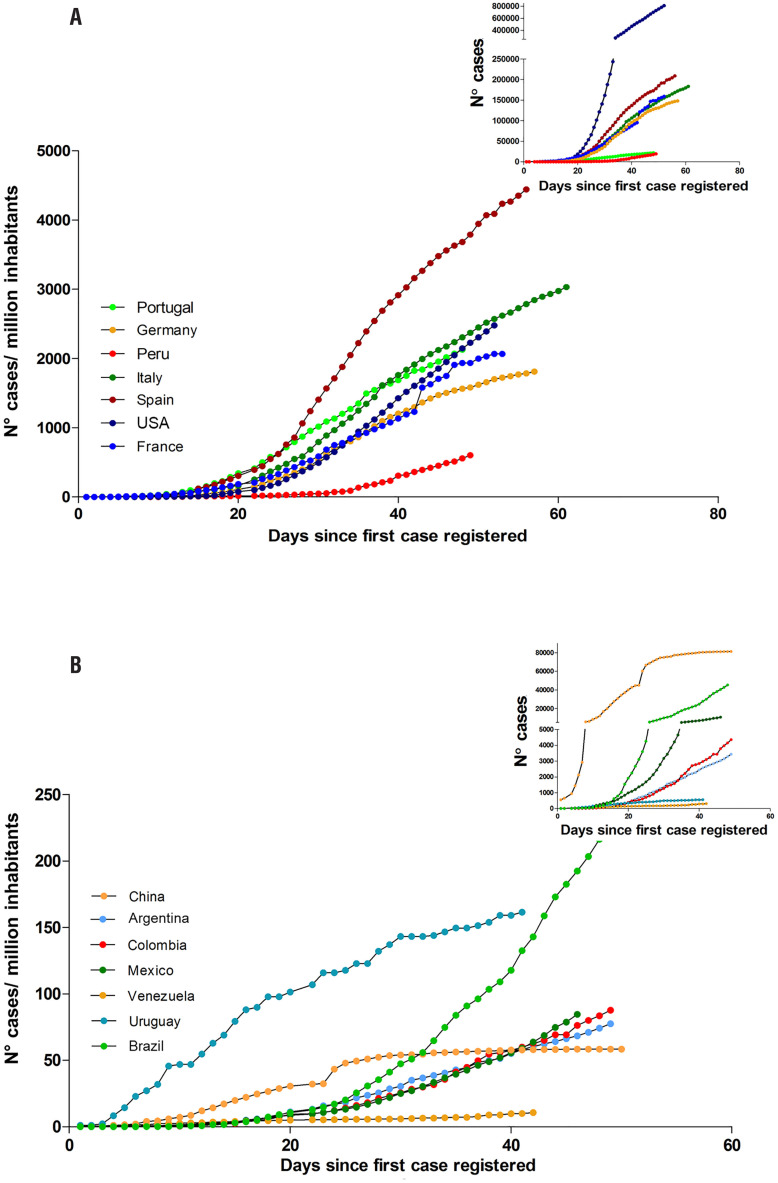
The SARS-CoV-2, a newly identified β-coronavirus, is the causative agent of the third large-scale pandemic from the last two decades. The outbreak started in December 2019 in Wuhan City, Hubei province in China. The patients presented clinical symptoms of dry cough, fever, dyspnea, and bilateral lung infiltrates on imaging. By February 2020, The World Health Organization (WHO) named the disease as Coronavirus Disease 2019 (COVID-19). The Coronavirus Study Group (CSG) of the International Committee on Taxonomy of Viruses (ICTV) recognized and designated this virus as severe acute respiratory syndrome coronavirus 2 (SARS-CoV-2). The SARS-CoV-2 uses the same host receptor, angiotensin-converting enzyme 2 (ACE2), used by SARS-CoV to infect humans. One hypothesis of SARSCoV-2 origin indicates that it is likely that bats serve as reservoir hosts for SARSCoV-2, being the intermediate host not yet determined. The predominant route of transmission of SARS-CoV-2 is from human to human. As of May 10th 2020, the number of worldwide confirmed COVID-19 cases is over 4 million, while the number of global deaths is around 279.000 people. The United States of America (USA) has the highest number of COVID-19 cases with over 1.3 million cases followed by Spain, Italy, United Kingdom, Russia, France and Germany with over 223.000, 218.000, 215.000, 209.000, 176.000, and 171.000 cases, respectively.
Keywords: Coronavirus; Diagnosis; spike protein, SARS-CoV-2 [Supplementary Concept].
Copyright® by the International Brazilian Journal of Urology.
Conflict of interest statement
None declared.
Figures
References
-
- Cheng VC, Lau SK, Woo PC, Yuen KY. Severe acute respiratory syndrome coronavirus as an agent of emerging and reemerging infection. Clin Microbiol Rev. 2007;20:660–694. - PMC - PubMed
- 2. Cheng VC, Lau SK, Woo PC, Yuen KY. Severe acute respiratory syndrome coronavirus as an agent of emerging and reemerging infection. Clin Microbiol Rev. 2007;20:660-94. - PMC - PubMed
-
- Drosten C, Günther S, Preiser W, van der Werf S, Brodt HR, Becker S, et al. Identification of a novel coronavirus in patients with severe acute respiratory syndrome. N Engl J Med. 2003;348:1967–1976. - PubMed
- 3. Drosten C, Günther S, Preiser W, van der Werf S, Brodt HR, Becker S, et al. Identification of a novel coronavirus in patients with severe acute respiratory syndrome. N Engl J Med. 2003;348:1967-76. - PubMed
-
- Ksiazek TG, Erdman D, Goldsmith CS, Zaki SR, Peret T, Emery S, et al. A novel coronavirus associated with severe acute respiratory syndrome. N Engl J Med. 2003;348:1953–1966. - PubMed
- 4. Ksiazek TG, Erdman D, Goldsmith CS, Zaki SR, Peret T, Emery S, et al. A novel coronavirus associated with severe acute respiratory syndrome. N Engl J Med. 2003;348:1953-66. - PubMed
-
- Zaki AM, van Boheemen S, Bestebroer TM, Osterhaus AD, Fouchier RA. Isolation of a novel coronavirus from a man with pneumonia in Saudi Arabia. N Engl J Med. 2012;367:1814–1820. Erratum in: N Engl J Med. 2013;369:394. - PubMed
- 5. Zaki AM, van Boheemen S, Bestebroer TM, Osterhaus AD, Fouchier RA. Isolation of a novel coronavirus from a man with pneumonia in Saudi Arabia. N Engl J Med. 2012;367:1814-20. Erratum in: N Engl J Med. 2013;369:394. - PubMed
Publication types
MeSH terms
LinkOut - more resources
Full Text Sources
Other Literature Sources
Miscellaneous
