


The rs1991517 polymorphism is a genetic risk factor for congenital hypothyroidism
- PMID: 32550104
- PMCID: PMC7266893
- DOI: 10.1007/s13205-020-02273-7
The rs1991517 polymorphism is a genetic risk factor for congenital hypothyroidism
Abstract
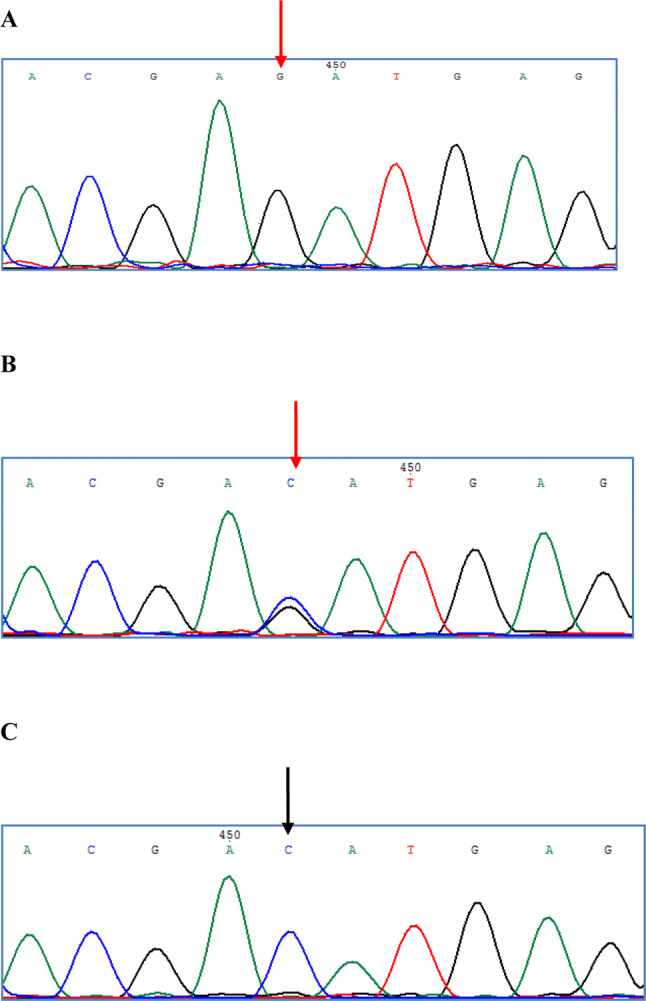
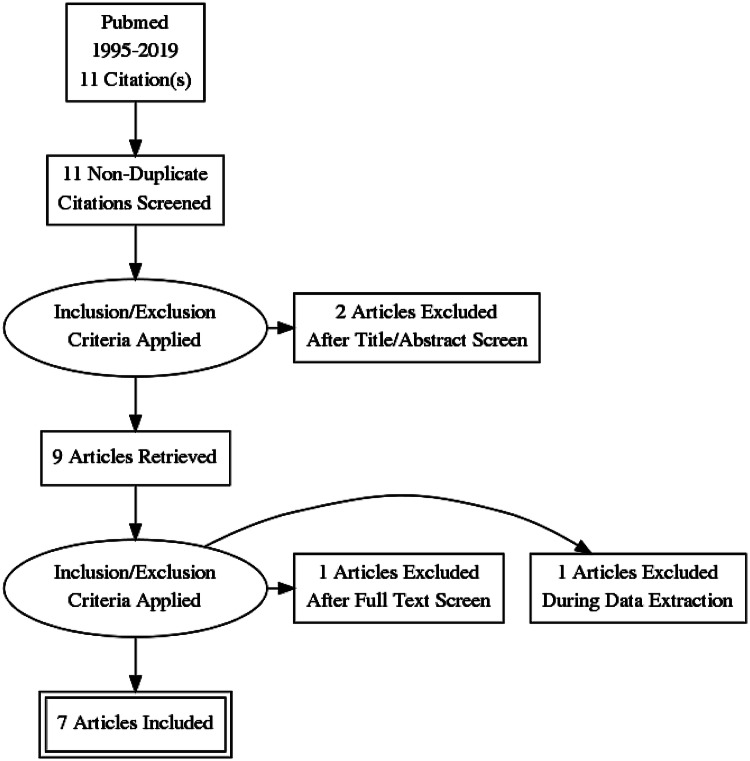
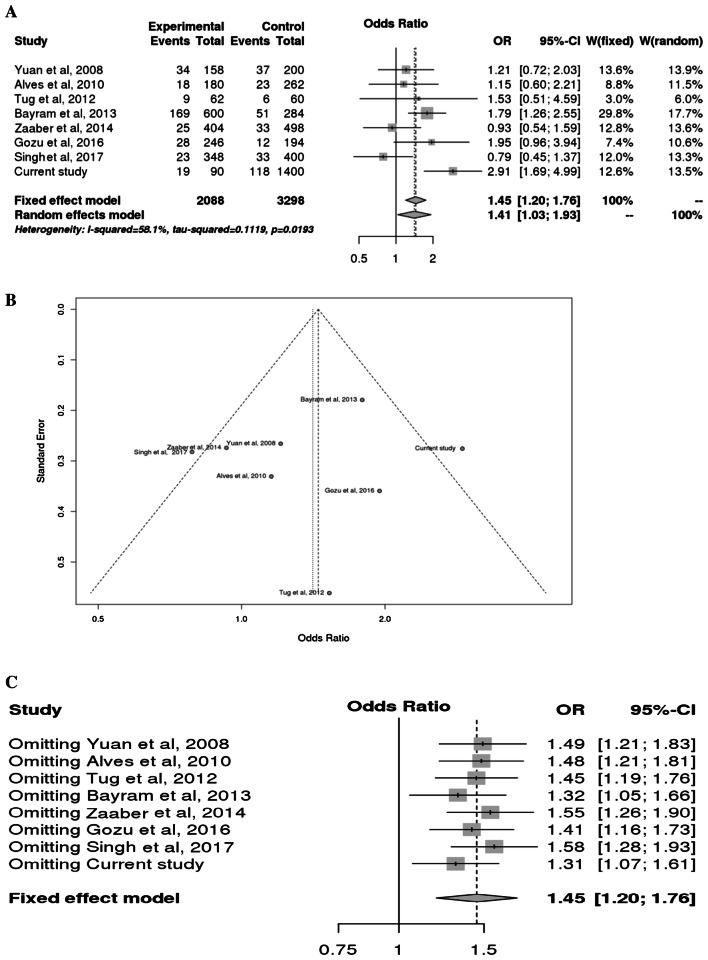
The objective of the current study is to explore the association of thyroid-stimulating hormone receptor (TSHR) rs1991517 polymorphism (c.2337 C > G, p.D727E) with congenital hypothyroidism (CH) through a case-control study followed by a meta-analysis. The case-control study was based on 45 CH subjects and 700 healthy controls. Meta-analysis comprised of seven published studies and our current findings (1044 CH cases and 1649 healthy controls). The allele contrast model showed that the presence of G- allele increased CH risk by 45% (OR: 1.45, 95% CI 1.20-1.76) and 41% (OR: 1.41, 95% CI 1.03-1.93) in fixed effect and random effect models, respectively. The GG- genotype is associated with 2.3-fold (95% CI 1.32-3.99) increased risk for CH in the fixed-effect model. I 2 (0.58) and Cochran's Q test (Q: 16.72, p = 0.02) revealed evidence of heterogeneity in the association. No publication bias was observed by Egger's test (p = 0.70). Sensitivity analysis revealed that even after excluding any study this polymorphism is associated with risk for CH. The rs1991517 mutation alters the binding affinity to cAMP (ΔG of 727D vs.727E: - 7.27 vs. - 7.34 kcal/mol). In conclusion, rs1991517 is a genetic risk factor for CH and exerts its impact by altering cAMP-mediated signal transduction.
Keywords: Congenital hypothyroidism; D727E; Meta-analysis; Thyroid-stimulating hormone receptor.
© King Abdulaziz City for Science and Technology 2020.
Conflict of interest statement
Conflict of interestThe authors declare that they have no conflict of interest.
Figures

References
-
- Balmiki N, Bankura B, Guria S, Das TK, Pattanayak AK, Sinha A, Chakrabarti S, Chowdhury S, Das M. Genetic analysis of thyroid peroxidase (TPO) gene in patients whose hypothyroidism was found in adulthood in West Bengal, India. Endocr J. 2014;61:289–296. doi: 10.1507/endocrj.ej13-0237. - DOI - PubMed
LinkOut - more resources
Full Text Sources
