


The landscape of microbiota research in Iran; a bibliometric and network analysis
- PMID: 32550166
- PMCID: PMC7270223
- DOI: 10.1007/s40200-020-00488-2
The landscape of microbiota research in Iran; a bibliometric and network analysis
Abstract
Objectives: To introduce bibliometric features of Iranian documents on microbiota and to provide descriptive information about retrieved documents related to the medical sciences and documents utilizing molecular techniques for microbiota detection.
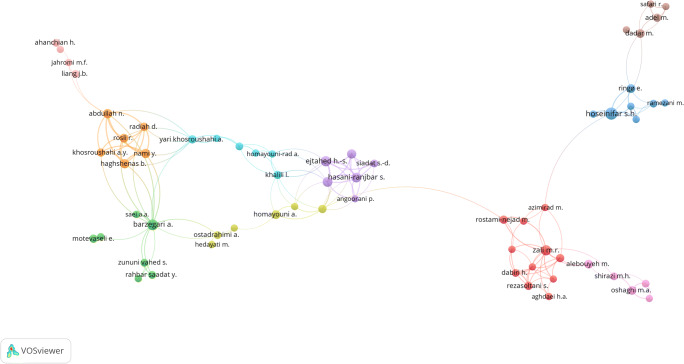
Methods: This is a descriptive bibliometric study of all Iranian documents on microbiota in any language that were indexed in Scopus before 7 September 2019. We assessed the research performance through statistical analysis of the bibliometric indicators, including number of publications, citations, institutions and journals activities, co-citations and bibliographic couplings, and network analysis of co-authorships, countries' collaborations, terms and keywords.
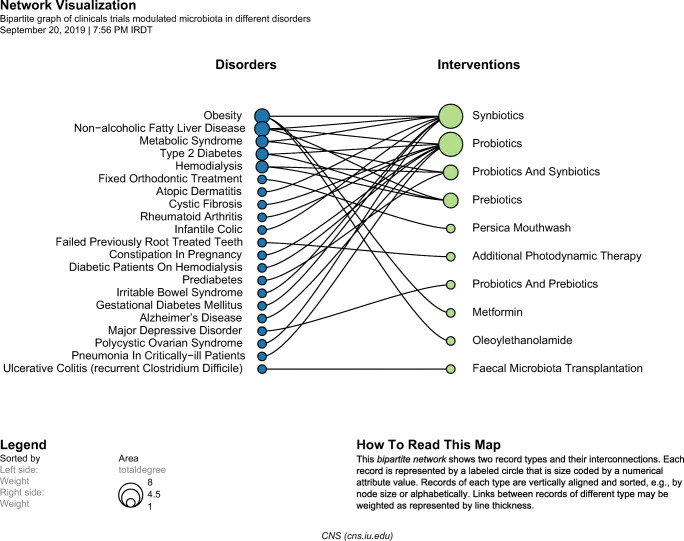
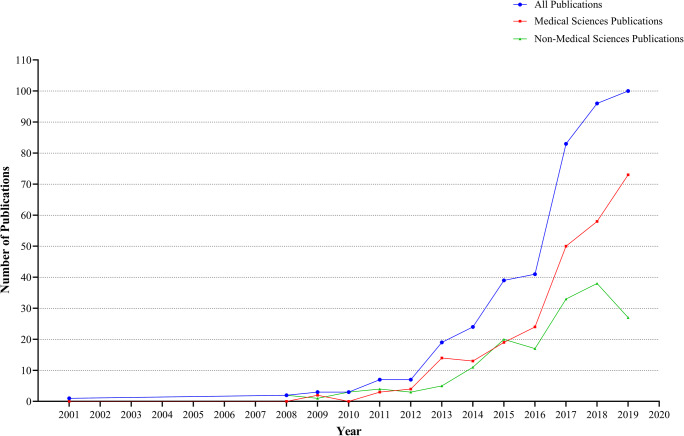
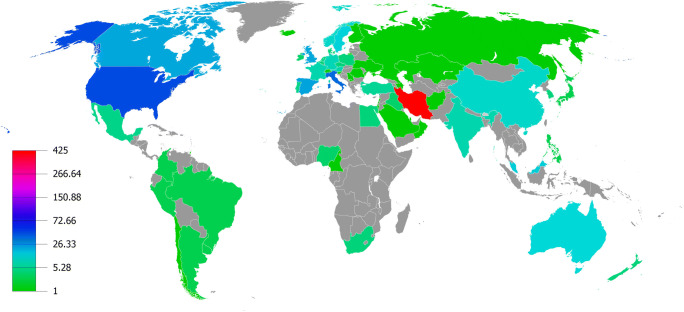
Results: We extracted 425 relevant documents, 260 of which pertain to the medical sciences. The most focused microbiota modulating interventions and diseases in 33 clinical trials are 'synbiotics' (n = 8) and 'probiotics' (n = 8), and 'Obesity' (n = 3) and 'non-alcoholic fatty liver disease' (n = 3), respectively. During the last decade, Iranian microbiota publications have increasingly grown with a constant upward slope, particularly in the area of medical sciences after 2016. Citation counting reveals that originals and reviews have been cited 4221 times, with an average 10.76 citations and H-index of 34. The most significant performance in publishing Iranian microbiota documents belongs to 'Tehran University of Medical Sciences' as the active institution (n = 89 publications) and the supporting sponsor (n = 19), 'Microbial Pathogenesis' as the productive journal (n = 12), 'Seidavi A' as the most authorships (n = 19), and 'the United States' as the collaborative country (n = 46).
Conclusions: The qualitative and quantitative information of this study will be a practical guidance for future study planning and policy-decision making.
Keywords: Bibliometrics; Iran; Microbiome; Microbiota; Scientometrics.
© Springer Nature Switzerland AG 2020.
Conflict of interest statement
Conflict of interestThe authors declare that they have no competing interests.
Figures
References
-
- Sokolov-Mladenović S, Cvetanović S, Mladenović I. R&D expenditure and economic growth: EU28 evidence for the period 2002–2012. Econ Res-Ekonomska istraživanja. 2016;29(1):1005–1020.
-
- Sharifi V, Rahimi Movaghar A, Mohammadi M, Goodarzi R, Izadian E, Farhoudian A et al. Analysis of mental health research in the Islamic Republic of Iran over 3 decades: a scientometric study. 2008. - PubMed
-
- Ataie-Ashtiani B. Chinese and Iranian scientific publications: fast growth and poor ethics. Sci Eng Ethics. 2017;23(1):317–319. - PubMed
-
- Agarwal A, Durairajanayagam D, Tatagari S, Esteves SC, Harlev A, Henkel R, Roychoudhury S, Homa S, Puchalt NG, Ramasamy R, Majzoub A, Ly KD, Tvrda E, Assidi M, Kesari K, Sharma R, Banihani S, Ko E, Abu-Elmagd M, Gosalvez J, Bashiri A. Bibliometrics: tracking research impact by selecting the appropriate metrics. Asian J Androl. 2016;18(2):296–309. - PMC - PubMed
LinkOut - more resources
Full Text Sources
