


Therapeutic effects of in vivo- differentiated stem cell and Matricaria chamomilla L. Oil in diabetic rabbit
- PMID: 32550197
- PMCID: PMC7271296
- DOI: 10.1007/s40200-020-00530-3
Therapeutic effects of in vivo- differentiated stem cell and Matricaria chamomilla L. Oil in diabetic rabbit
Abstract
Background: The main goal of diabetes therapy is to control blood glucose levels.
Objectives: In this study, the effect of Matricaria chamomilla L. oil as an herbal agent, on therapeutic properties of poly L-lactic acid-based (PLLA) scaffold loaded with differentiated stem cells, is examined in the diabetic rabbit.
Methods: Adipose mesenchymal stem cells (AMSCs) were isolated from male New Zealand White rabbits and after seeding on the PLLA scaffold differentiated in the pancreatic region. In vivo differentiation of AMSCs toward pancreatic progenitor cells was evaluated by quantitative analysis of gene expressions and immunohistochemistry. Then, one normal and five diabetic groups including blank diabetic, scaffold, oil + scaffold, and differentiated cell + scaffold or oil + scaffold were assessed after 21 days of treatment. After the assessment, the diabetic groups were evaluated by clinical parameters and pancreatic histological sections.
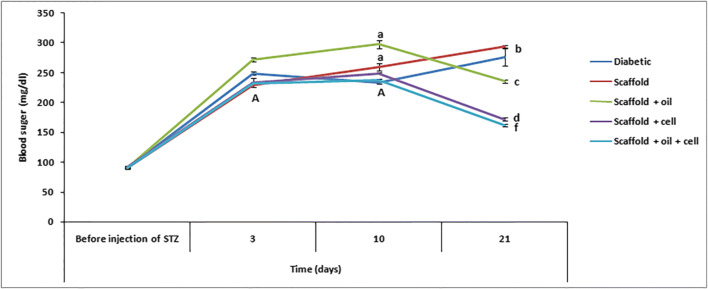
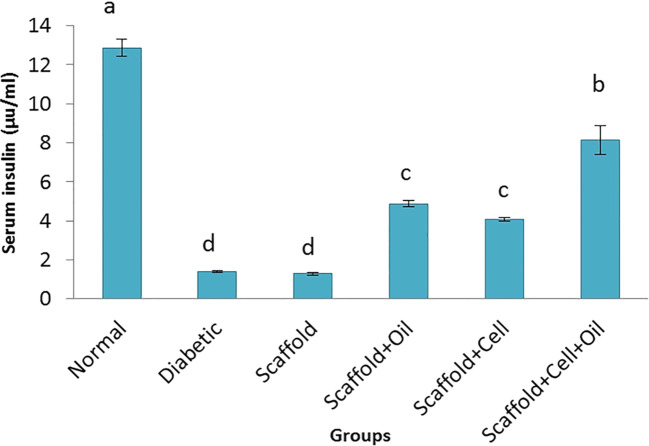
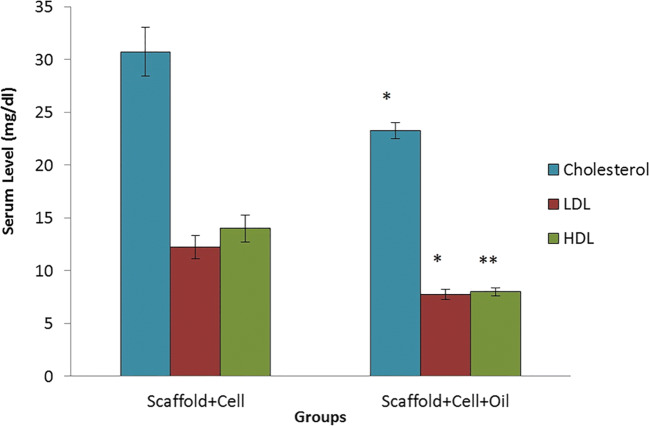
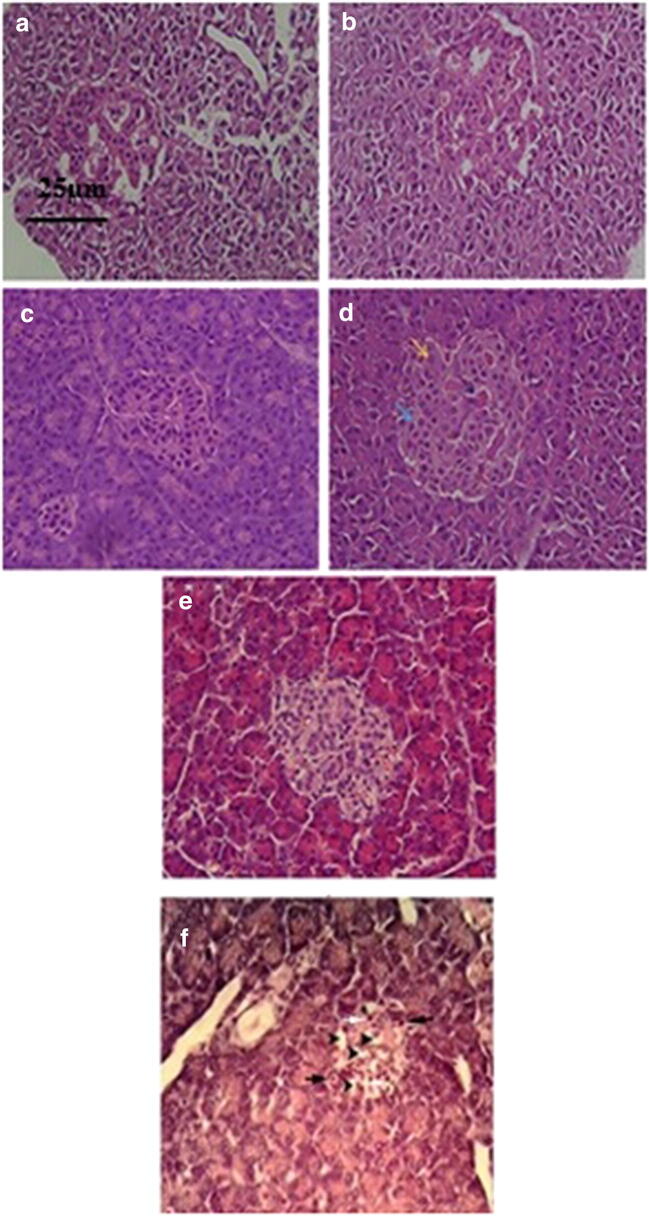
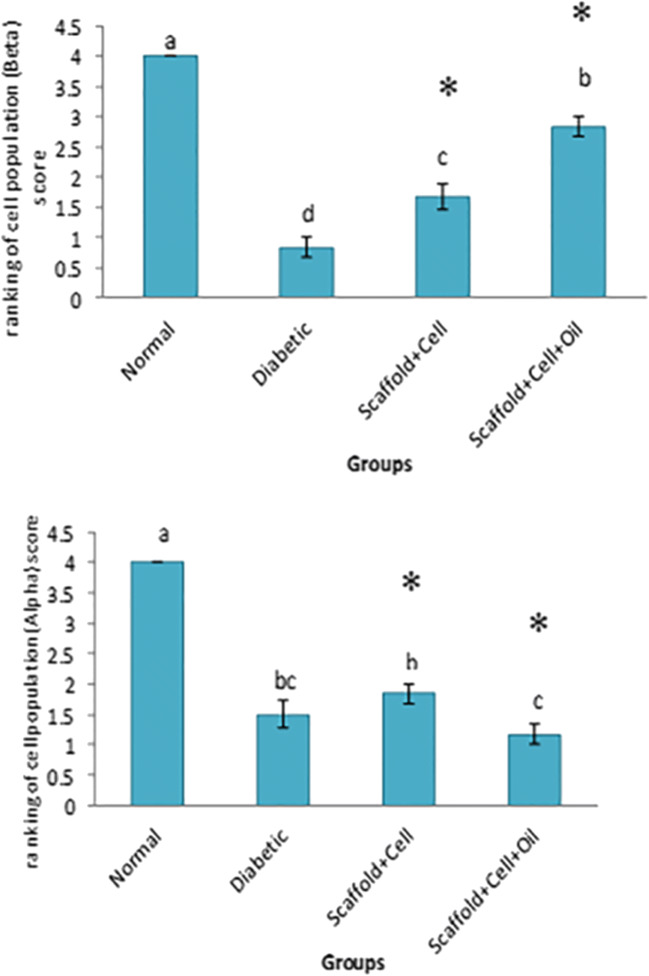
Results: It was found that AMSCs were differentiated to insulin-producing cells (IPCs) in the pancreatic environment which then used for implantation. Blood glucose in the oil + scaffold, cell + scaffold, and oil + cell + scaffold groups showed a significant decrease after 21 days. In the above mentioned three groups, insulin secretion was increased significantly. Chamomile oil also caused a significant decrease in High-density lipoprotein (HDL), Low-density lipoprotein (LDL), and total cholesterol levels. According to histological sections results, in cell + scaffold and oil + cell + scaffold groups, β cells were significantly increased compared to blank diabetic group.
Conclusions: Together these data demonstrated chamomile oil along with in vivo-differentiated stem cell is a promising new treatment for diabetes.
Keywords: Chamomile Oil; Diabetes; PLLA Scaffold; Rabbit; Stem Cells.
© Springer Nature Switzerland AG 2020.
Conflict of interest statement
Conflict of interestThe authors declare that they have no conflict of interest.
Figures
References
-
- Al-Amin et al., ZM, Thomson M, Al-Qattan KK, Peltonen-Shalaby R, Ali M. Anti-diabetic and hypolipidaemic properties of ginger (Zingiberofficinale) in streptozotocin-induced diabetic rats. Br J Nutr. 2006;96:660–6. - PubMed
-
- Aurich et al., H, Soda M, Kaltvaber P, Vetter M, Weise A, Liehr T, Brulport M, Hengstler JG, Dollinger MM, Fleig WE, Christ B. Hepatocyte differentiation of mesenchymal stem cells from human adipose tissue in vitro promotes hepatic integration in vivo. Gut. 2009;58:570–81. - PubMed
-
- Bakhtina et al., A, Tohfafarosh M, Lichtler A, Arinzeh TL. Characterization and differentiation potential of rabbit mesenchymal stem cells for translational regenerative medicine. In Vitro Cell Dev Biol Anim. 2014;50:251–60. - PubMed
-
- Bertassoli et al., BM, Neto A, Oliveira FDD, Arroyo MAM, Ferrao JSP, Silva JBD, Pignatari GC, Braga PB. Mesenchymal stem cells: emphasis in adipose tissue. Brazilian Archives of Biology Technology. 2013;56:607–17.
LinkOut - more resources
Full Text Sources
