. 2020 May 14;11(6):1330-1334.
doi: 10.1021/acsmedchemlett.0c00163. eCollection 2020 Jun 11.

Discovery of Diphenylacetamides as CXCR7 Inhibitors with Novel β-Arrestin Antagonist Activity

Affiliations

Discovery of Diphenylacetamides as CXCR7 Inhibitors with Novel β-Arrestin Antagonist Activity

Elnaz Menhaji-Klotz et al. ACS Med Chem Lett. .

Abstract

The atypical chemokine receptor CXCR7 has been studied in various disease settings including immunological diseases and heart disease. Efforts to elucidate the role of CXCR7 have been limited by the lack of suitable chemical tools with a range of pharmacological profiles. A high-throughput screen was conducted to discover novel chemical matter with the potential to modulate CXCR7 receptor activity. This led to the identification of a series of diphenylacetamides confirmed in a CXCL12 competition assay indicating receptor binding. Further evaluation of this series revealed a lack of activity in the functional assay measuring β-arrestin recruitment. The most potent representative, compound 10 (K i = 597 nM), was determined to be an antagonist in the β-arrestin assay (IC50 = 622 nM). To our knowledge, this is the first reported small molecule β-arrestin antagonist for CXCR7, useful as an in vitro chemical tool to elucidate the effects of CXCL12 displacement with β-arrestin antagonism in models for diseases such as cardiac injury and suitable as starting point for hit optimization directed toward an in vivo tool compound for studying CXCR7 receptor pharmacology.


Conflict of interest statement

The authors declare no competing financial interest.

Figures
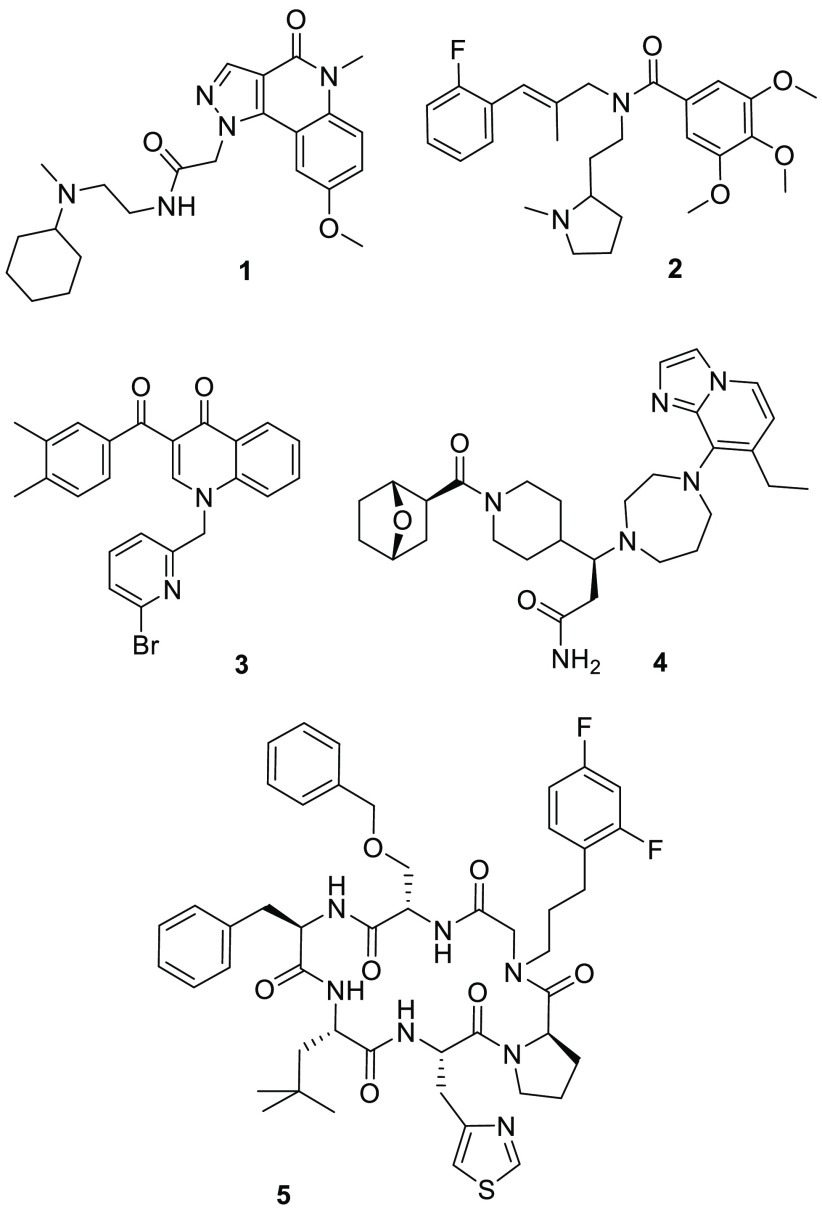
Figure 1
Figure 1
Structures of representative chemotypes of CXCR7 modulators described in the literature acting as agonists of the β-arrestin pathway.
Figure 2
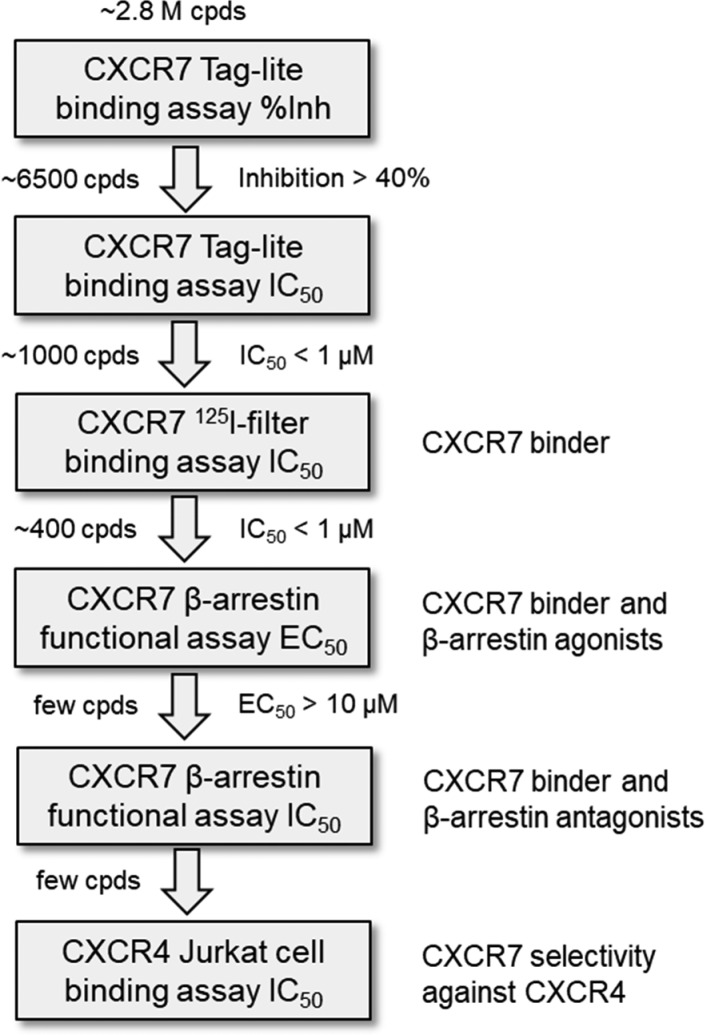
Figure 2
Screening cascade to identify selective CXCR7 modulators with different pharmacologies.
Scheme 1
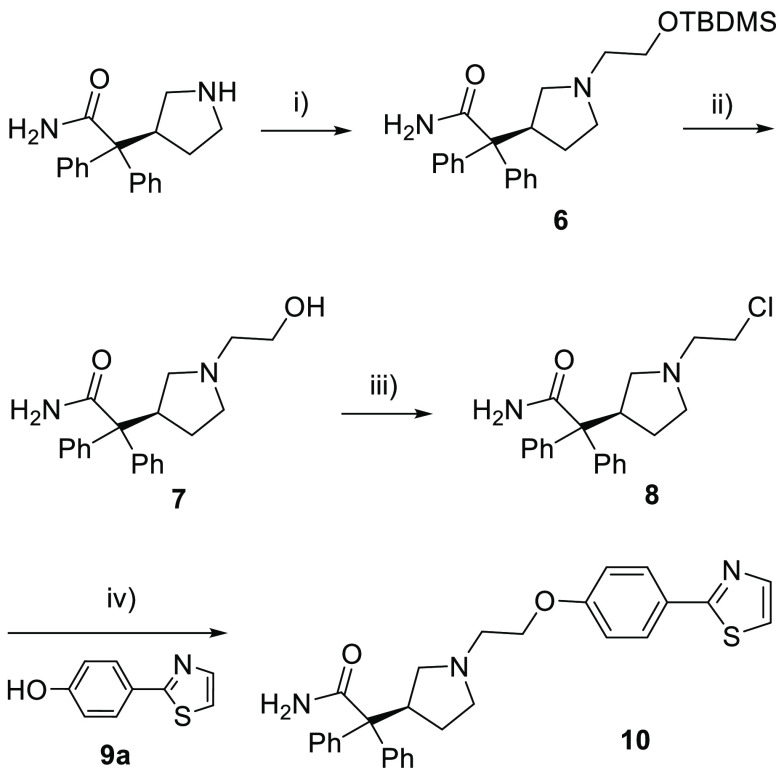
Scheme 1. Synthesis of Compound 10
For description of synthesis of compounds see the Supporting Information. Reagents and conditions: (i) 2-bromoethoxy-tert-butyldimethylsilane, K2CO3, MeCN, 80 °C, 70%; (ii) HCl in dioxane, CH2Cl2, rt, 41%; (iii) SOCl2, CHCl3, 85 °C, 92%; (iv) Cs2CO3, DMF, 100 °C, 40%.
Figure 3
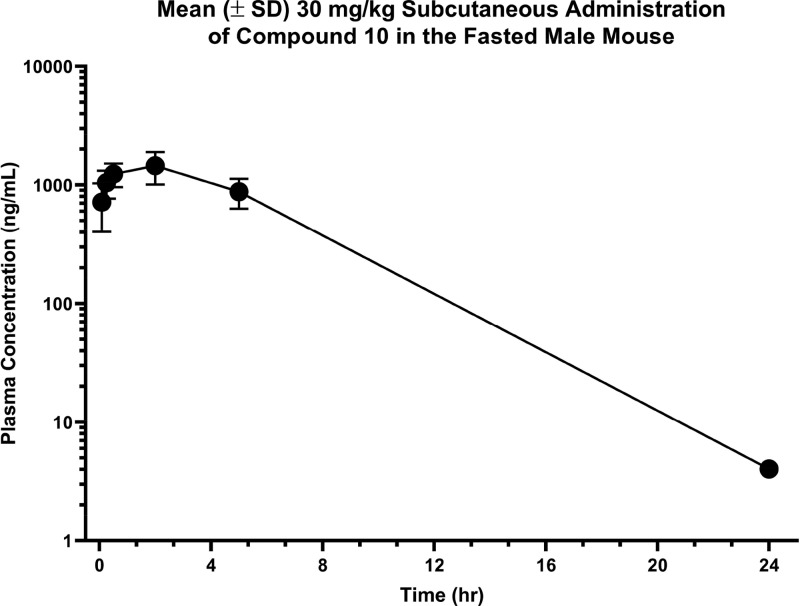
Figure 3
Pharmacokinetic evaluation of 10.

References

    1. Wang C.; Chen W.; Shen J. CXCR7 Targeting and Its Major Disease Relevance. Front. Pharmacol. 2018, 9, 641. 10.3389/fphar.2018.00641. - DOI - PMC - PubMed
    1. Al-Toub M.; Almohawes M.; Vishnubalaji R.; Alfayez M.; Aldahmash A.; Kassem M.; Alajez N. M. CXCR7 signaling promotes breast cancer survival in response to mesenchymal stromal stem cell-derived factors. Cell Death Discovery 2019, 5, 87. 10.1038/s41420-019-0169-3. - DOI - PMC - PubMed
    1. Qian T.; Liu Y.; Dong Y.; Zhang L.; Dong Y.; Sun Y.; Sun D. CXCR7 regulates breast tumor metastasis and angiogenesis in vivo and in vitro. Mol. Med. Rep. 2017, 17, 3633–3639. 10.3892/mmr.2017.8286. - DOI - PMC - PubMed
    1. Ngamsri K.-C.; Müller A.; Bösmüller H.; Gamper-Tsigaras J.; Reutershan J.; Konrad F. M. The Pivotal Role of CXCR7 in Stabilization of the Pulmonary Epithelial Barrier in Acute Pulmonary Inflammation. J. Immunol. 2017, 198, 2403–2413. 10.4049/jimmunol.1601682. - DOI - PubMed
    1. Chang H. C.; Huang P. H.; Syu F. S.; Hsieh C. H.; Chang S. L.; Lu J.; Chen H. C. Critical involvement of atypical chemokine receptor CXCR7 in allergic airway inflammation. Immunology 2018, 154, 274–284. 10.1111/imm.12881. - DOI - PMC - PubMed

LinkOut - more resources