Results of frozen elephant trunk from the international E-vita Open registry
- PMID: 32551250
- PMCID: PMC7298229
- DOI: 10.21037/acs-2020-fet-25
Results of frozen elephant trunk from the international E-vita Open registry
Abstract
Background: Over the years, frozen elephant trunk (FET) has become the treatment of choice for multisegmental thoracic aortic disease. This multicenter study presents the evolution of FET results using the E-vita Open hybrid graft with respect to institutional experience and time.
Methods: The data of International E-vita Open registry were studied according to the institutional experience of the participating centers (high- versus low-volume centers) and according to the evolution of FET treatment during time (1st period, 2005-2011 versus 2nd period, 2012-2018). Overall, 1,165 patients were enrolled in the study with a wide variety of multisegmental thoracic aortic pathologies and aortic emergencies. Participating centers determined their own surgical protocol.
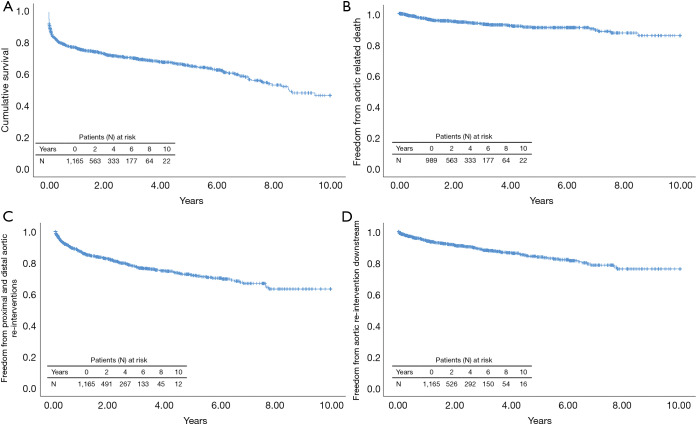
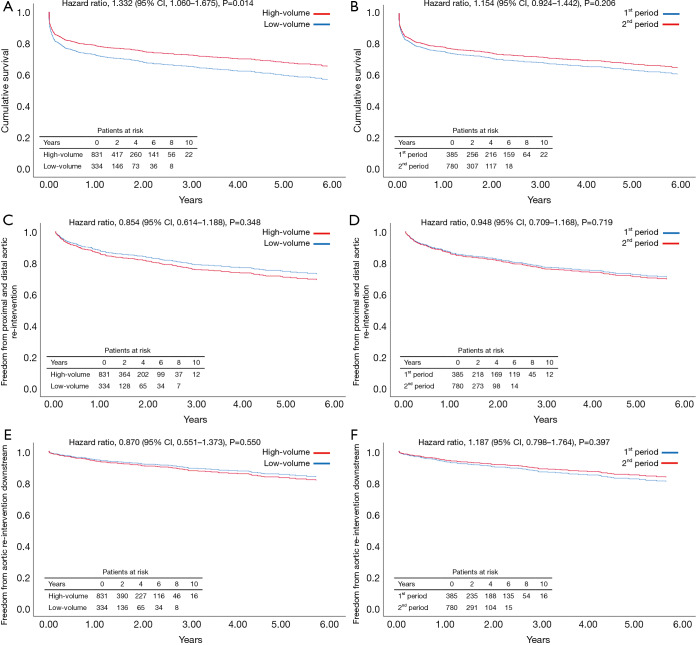
Results: The overall 30-day mortality was 12%. Short- and long-term survival were higher in high- versus low-volume centers (P=0.048 and P=0.013, respectively). In the 2nd time period, cerebral complications were reduced significantly (P=0.015). Incidence of permanent spinal cord-related symptoms was reduced to 3% in the 2nd time period, but did not reach statistical significance. Hypothermic circulatory arrest time (P<0.001) and incidence of postoperative temporary renal replacement therapy (P=0.008) were significantly reduced in the 2nd time period. Ten-year survival and freedom from aortic-related death rates were 46.6% and 85.7%, respectively, for the entire group. The freedom from distal aortic re-interventions for a new or progressive residual aortic disease was 76.0%.
Conclusions: Evolution of FET arch repair techniques with the E-vita Open graft and increasing institutional experience were associated with improved results. Progression of residual aortic disease makes close follow-up with aortic imaging mandatory in such patients.
Keywords: Frozen elephant trunk (FET); aortic aneurysm; aortic arch; aortic dissection.
2020 Annals of Cardiothoracic Surgery. All rights reserved.
Conflict of interest statement
Conflicts of Interest: HJ was the consultant to Jotec GmbH during the study period. The other authors have no conflicts of interest to declare.
Figures
References
-
- Tsagakis K, Wendt D, Dimitriou AM, et al. The frozen elephant trunk treatment is the operation of choice for all kinds of arch disease. J Cardiovasc Surg (Torino) 2018;59:540-6. - PubMed
LinkOut - more resources
Full Text Sources