


The role of oxidation of low-density lipids in pathogenesis of osteoarthritis: A narrative review
- PMID: 32552129
- PMCID: PMC7303502
- DOI: 10.1177/0300060520931609
The role of oxidation of low-density lipids in pathogenesis of osteoarthritis: A narrative review
Abstract
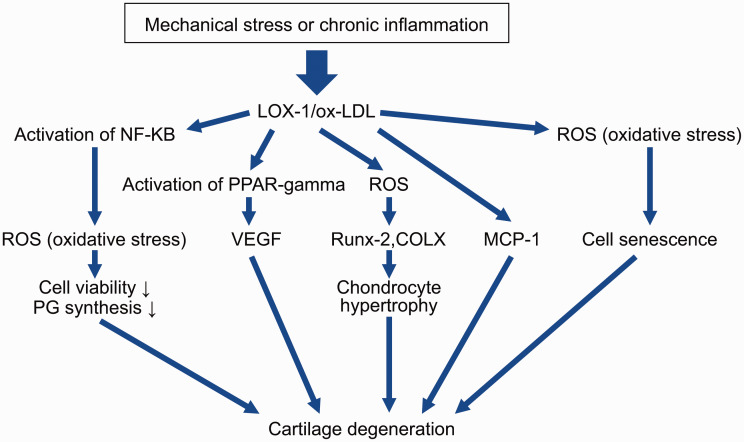
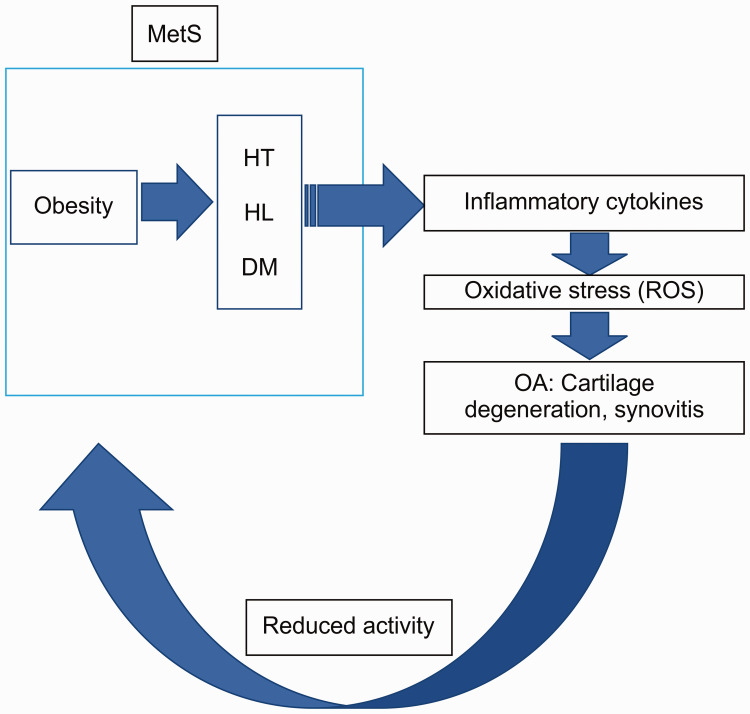
Osteoarthritis (OA) is a chronic joint disorder that causes degeneration of cartilage, synovial inflammation, and formation of osteophytes. Aging, obesity, and sex are considered the main risk factors of OA. Recent studies have suggested that metabolic syndrome (MetS) disorders, such as hypertension, hyperlipidemia, diabetes mellitus, and obesity, may be involved in the pathogenesis and progression of OA. MetS disorders are common diseases that also result in atherosclerosis. Researchers believe that OA and atherosclerosis have underlying similar molecular mechanisms because the prevalence of both diseases increases with age. Oxidation of low-density lipoprotein (ox-LDL) is believed to play a role in the pathogenesis of atherosclerosis. Recent reports have shown that ox-LDL and low-density lipoprotein receptor 1 (LOX-1) are involved in the pathogenesis of OA. The purpose of this narrative review is to summarize the current understanding of the role of the LOX-1/ox-LDL system in the pathogenesis of OA and to reveal common underlying molecular pathways that are shared by MetS in OA and the LOX-1/ox-LDL system.
Keywords: Osteoarthritis; atherosclerosis; low-density lipoprotein; metabolic syndrome; oxidation; pathogenesis.
Figures
References
-
- Yoshimura N, Muraki S, Oka H, et al. Cohort profile: research on osteoarthritis/osteoporosis against disability study. Int J Epidemiol 2010; 39: 988–995. - PubMed
-
- Lernout T, Labalette C, Sedel L, et al. Cost analysis in total hip arthroplasty: experience of a teaching medical center located in Paris. Orthop Traumatol Surg Res 2010; 96: 113–123. - PubMed
-
- Delanois RE, Mistry JB, Gwam CU, et al. Current epidemiology of revision total knee arthroplasty in the United States. J Arthroplast 2017; 32: 2663–2668. - PubMed
Publication types
MeSH terms
Substances
LinkOut - more resources
Full Text Sources
Medical
