


Progress Toward Rubella Elimination - Western Pacific Region, 2000-2019
- PMID: 32555136
- PMCID: PMC7302473
- DOI: 10.15585/mmwr.mm6924a4
Progress Toward Rubella Elimination - Western Pacific Region, 2000-2019
Abstract
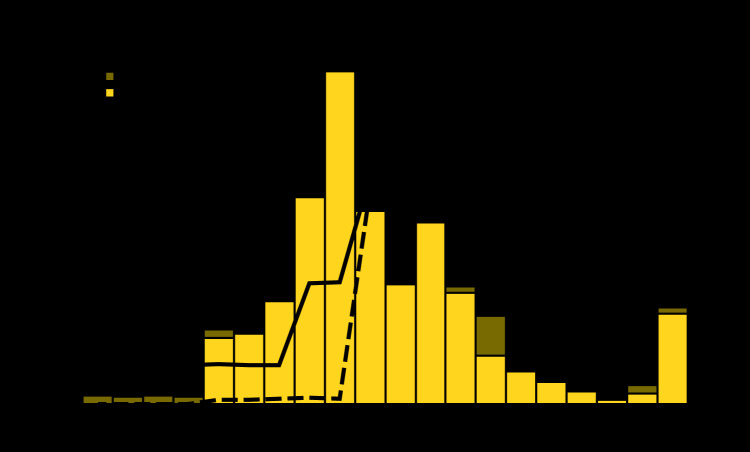
Rubella is the leading vaccine-preventable cause of birth defects. Rubella typically manifests as a mild febrile rash illness; however, infection during pregnancy, particularly during the first trimester, can result in miscarriage, fetal death, or a constellation of malformations known as congenital rubella syndrome (CRS), commonly including one or more visual, auditory, or cardiac defects (1). In 2012, the Regional Committee of the World Health Organization (WHO) Western Pacific Region (WPR)* committed to accelerate rubella control, and in 2017, resolved that all countries or areas (countries) in WPR should aim for rubella elimination† as soon as possible (2,3). WPR countries are capitalizing on measles elimination activities, using a combined measles and rubella vaccine, case-based surveillance for febrile rash illness, and integrated diagnostic testing for measles and rubella. This report summarizes progress toward rubella elimination and CRS prevention in WPR during 2000-2019. Coverage with a first dose of rubella-containing vaccine (RCV1) increased from 11% in 2000 to 96% in 2019. During 1970-2019, approximately 84 million persons were vaccinated through 62 supplementary immunization activities (SIAs) conducted in 27 countries. Reported rubella incidence increased from 35.5 to 71.3 cases per million population among reporting countries during 2000-2008, decreased to 2.1 in 2017, and then increased to 18.4 in 2019 as a result of outbreaks in China and Japan. Strong sustainable immunization programs, closing of existing immunity gaps, and maintenance of high-quality surveillance to respond rapidly to and contain outbreaks are needed in every WPR country to achieve rubella elimination in the region.
Conflict of interest statement
All authors have completed and submitted the International Committee of Medical Journal Editors form for disclosure of potential conflicts of interest. No potential conflicts of interest were disclosed.
Figures
References
-
- World Health Organization Regional Committee for the Western Pacific. Regional strategy and plan of action for measles and rubella elimination in the Western Pacific. Manila, Philippines: World Health Organization Regional Committee for the Western Pacific; 2018. https://iris.wpro.who.int/bitstream/handle/10665.1/14227/9789290618515-e...
-
- World Health Organization Regional Committee for the Western Pacific. Resolution WPR/RC63.R5: elimination of measles and acceleration of rubella control. Manila, Philippines: World Health Organization Regional Committee for the Western Pacific; 2012. https://iris.wpro.who.int/bitstream/handle/10665.1/8025/WPR_RC063_Res05_...
-
- World Health Organization Regional Committee for the Western Pacific. Resolution WPR/RC68.R1: measles and rubella elimination. Manila, Philippines: World Health Organization Regional Committee for the Western Pacific; 2017. https://iris.wpro.who.int/bitstream/handle/10665.1/13717/WPR-RC068-Res01...
MeSH terms
Substances
LinkOut - more resources
Full Text Sources
Medical
