


The negative impact of the COVID-19 lockdown on pain and physical function in patients with end-stage hip or knee osteoarthritis
- PMID: 32556438
- PMCID: PMC7299668
- DOI: 10.1007/s00167-020-06104-3
The negative impact of the COVID-19 lockdown on pain and physical function in patients with end-stage hip or knee osteoarthritis
Abstract
Purpose: The purpose of this study was to evaluate pain, functional impairment, mental health, and daily activity in patients with end-stage hip and knee osteoarthritis (OA) during the COVID-19 lockdown.
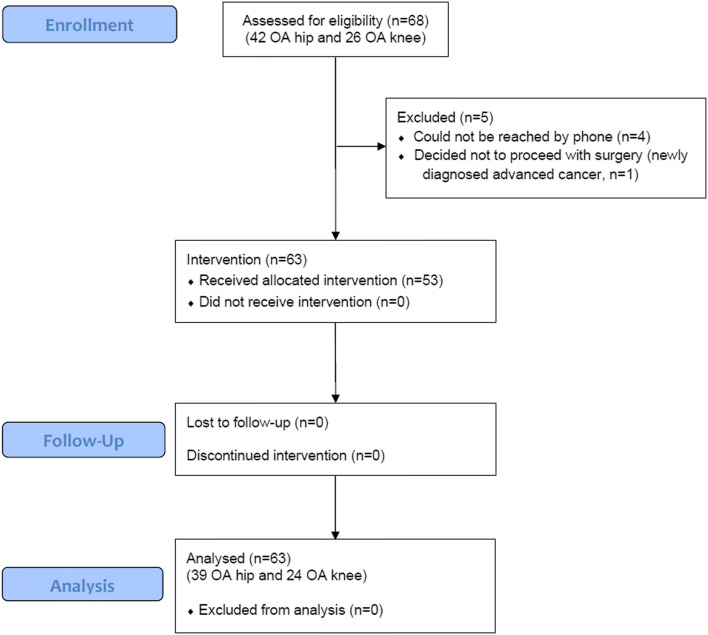
Methods: The study included 63 patients, with hip or knee OA, who had been scheduled for arthroplasty that was postponed because of COVID-19. Patients were evaluated by telephone interviews during the first week after lockdown, in the fourth week, and again at the end of the lockdown. Patients rated their pain level on the basis of a visual analog scale (VAS) and completed WOMAC, SF-12 and Tegner activity scale (TAS) questionnaires.
Results: VAS and WOMAC scores increased significantly during lockdown, while physical activity significantly decreased. At the final evaluation, VAS and WOMAC showed a significant negative correlation with TAS. The SF-12 subscale scores showed a significant decrease of the physical component during the lockdown, while the mental component remained largely unchanged. Patients with knee OA showed a faster progress of pain compared to those with hip OA. 50 patients (79%) stated they wished to have arthroplasty as soon as possible.
Conclusion: The COVID-19 lockdown had a significant impact on pain, joint function, physical function, and physical activity in patients with end-stage hip and knee OA.
Level of evidence: II (Prospective cohort study).
Keywords: Arthroplasty; COVID-19; Mental health; Osteoarthritis, hip; Osteoarthritis, knee; Physical functional performance.
Conflict of interest statement
The authors declare that they have neither financial nor non-financial competing interests.
References
-
- Angst F, Ewert T, Lehmann S, Aeschlimann A, Stucki G. The factor subdimensions of the Western Ontario and McMaster Universities Osteoarthritis Index (WOMAC) help to specify hip and knee osteoarthritis. a prospective evaluation and validation study. J Rheumatol. 2005;32:1324–1330. - PubMed
-
- Bellamy N, Buchanan WW, Goldsmith CH, Campbell J, Stitt LW. Validation study of WOMAC: a health status instrument for measuring clinically important patient relevant outcomes to antirheumatic drug therapy in patients with osteoarthritis of the hip or knee. J Rheumatol. 1988;15:1833–1840. - PubMed
MeSH terms
LinkOut - more resources
Full Text Sources
Research Materials
