


Oral preexposure prophylaxis continuation, measurement and reporting
- PMID: 32558660
- PMCID: PMC8635251
- DOI: 10.1097/QAD.0000000000002598
Oral preexposure prophylaxis continuation, measurement and reporting
Abstract
Objective: The aim of this study was to appropriately plan for rollout and monitor impact of oral preexposure prophylaxis (PrEP). It is important to understand PrEP continuation and come to a consensus on how best to measure PrEP continuation. This study reviews data on PrEP continuation to document how it is reported, and to compare continuation over time and across populations.
Design: A systematic review and meta-analysis.
Methods: We searched MEDLINE, Embase and Global Health and reviewed abstracts from HIV conferences from 2017 to 2018 for studies reporting primary data on PrEP continuation. Findings were summarized along a PrEP cascade and continuation was presented by population at months 1, 6 and 12, with random-effects meta-analysis.
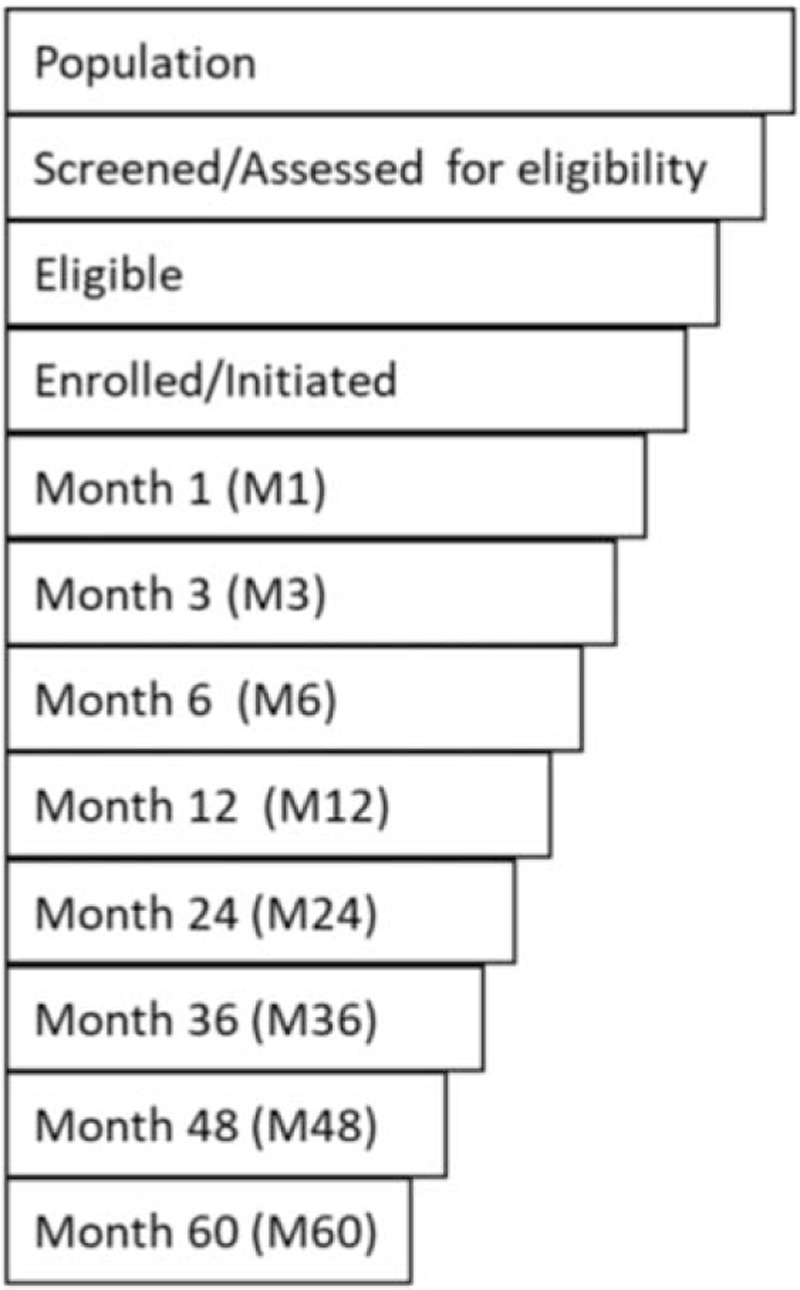
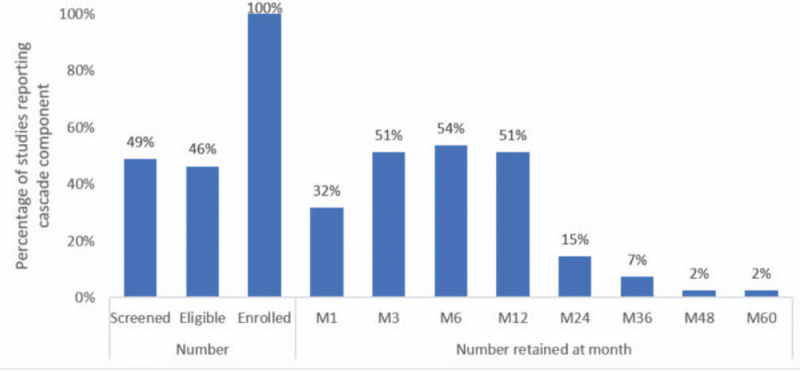
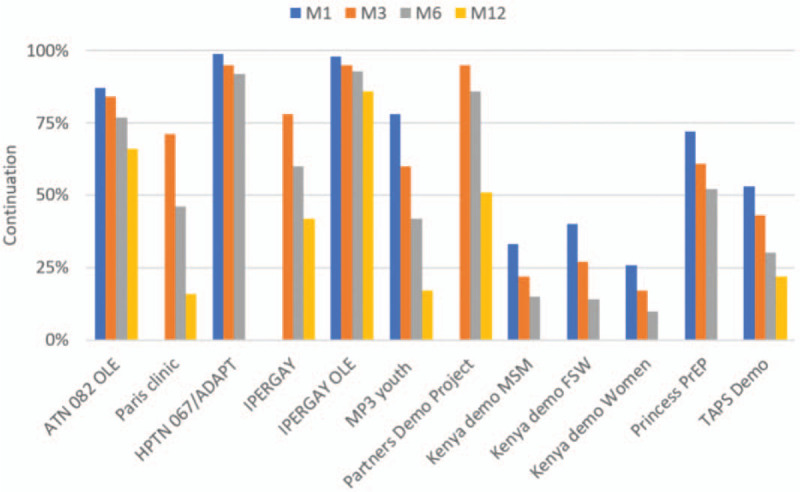
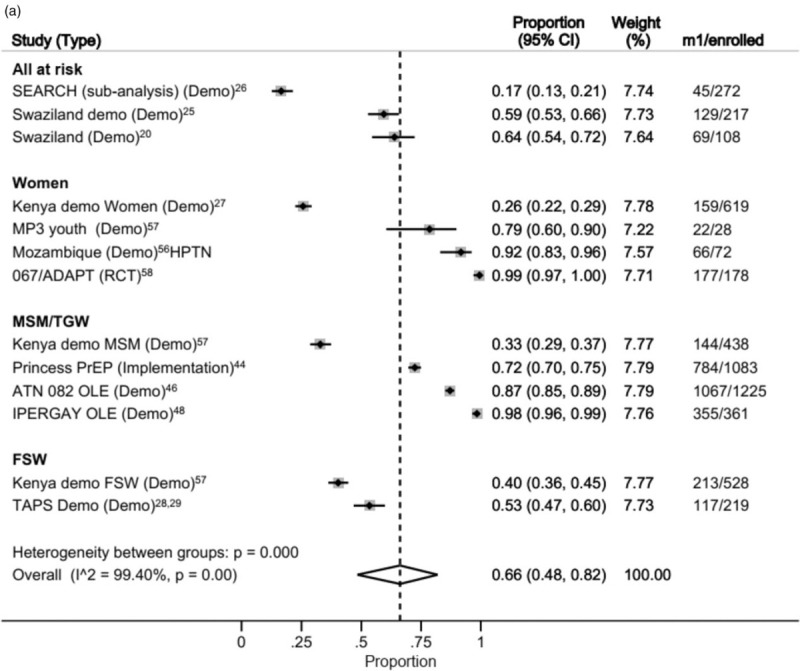
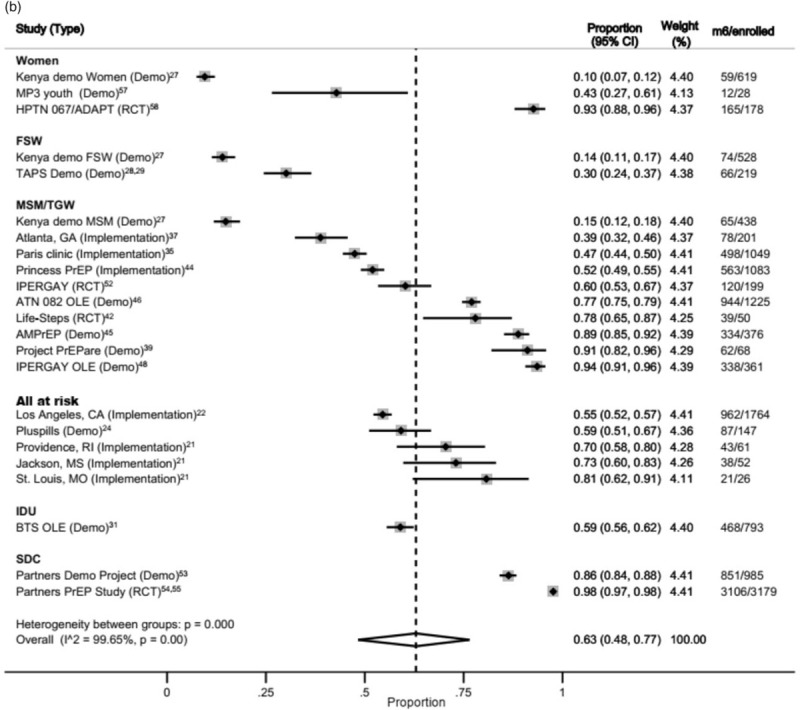
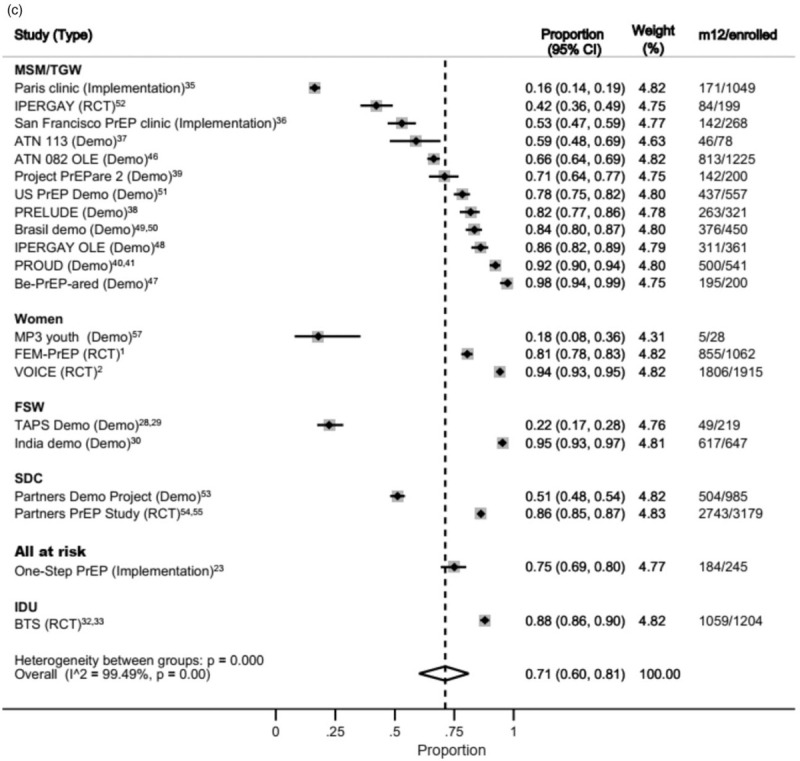
Results: Of 2578 articles and 596 abstracts identified, 41 studies were eligible covering 22 034 individuals. Continuation data were measured and reported inconsistently. Results showed high discontinuation at month 1 and persistent discontinuation at later time points in many studies. Pooled continuation estimates were 66% at month 1 [n = 5348; 95% confidence interval (95% CI): 48-82], 63% at month 6 (n = 13 629; 95% CI: 48-77) and 71% at month 12 (n = 14 933; 95% CI: 60-81; higher estimate than previous timepoints due to inclusion of different studies). Adequate data were not available to reliably compare estimates across populations.
Conclusion: This review found that discontinuation at one month was high, suggesting PrEP initiations may be a poor measure of effectiveness. Continuation declined further over time in many studies, indicating existing cross-sectional indicators may not be adequate to understand PrEP use patterns. Studies do not measure continuation consistently, and consensus is needed.
Conflict of interest statement
K.S. conducted the systematic review, data validation, data analysis, data interpretation and led writing. H.G. contributed to study design, data interpretation and review. J.L. conducted the systematic review and supported study design, data analysis, data interpretation and writing. G.G. contributed to study design, data analysis, data interpretation and review. K.K. contributed to study design, data interpretation and review. K.T. contributed to study design, data interpretation and review. J.O. contributed to study design, data validation, data interpretation and review. F.T.P. contributed to study design, data interpretation and review.
Figures
References
-
- Rees H, Delany-Moretlwe SA, Baron D, Lombard C, Gray G, Myer L, et al.Facts 001 Phase III trial of pericoital tenofovir 1% gel for HIV prevention in women.Conference on Retroviruses and Opportunistic Infections. Seattle, WA, USA (abstr); 2015.
Publication types
MeSH terms
LinkOut - more resources
Full Text Sources
Medical
Miscellaneous
