


MTXPK.org: A Clinical Decision Support Tool Evaluating High-Dose Methotrexate Pharmacokinetics to Inform Post-Infusion Care and Use of Glucarpidase
- PMID: 32558929
- PMCID: PMC7484917
- DOI: 10.1002/cpt.1957
MTXPK.org: A Clinical Decision Support Tool Evaluating High-Dose Methotrexate Pharmacokinetics to Inform Post-Infusion Care and Use of Glucarpidase
Abstract
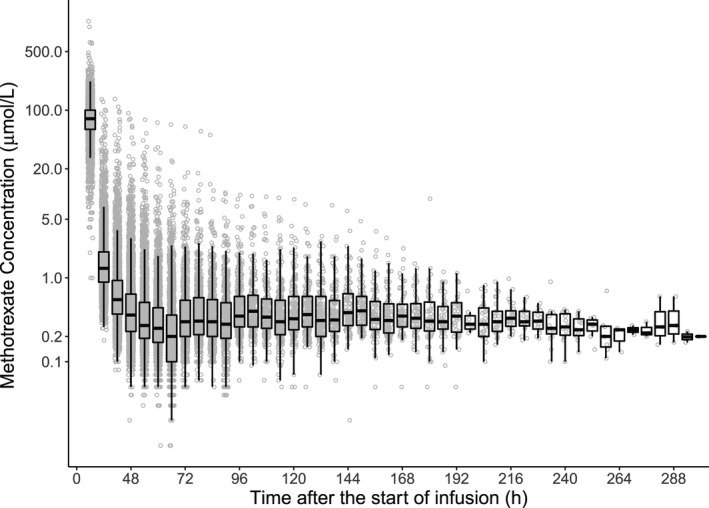
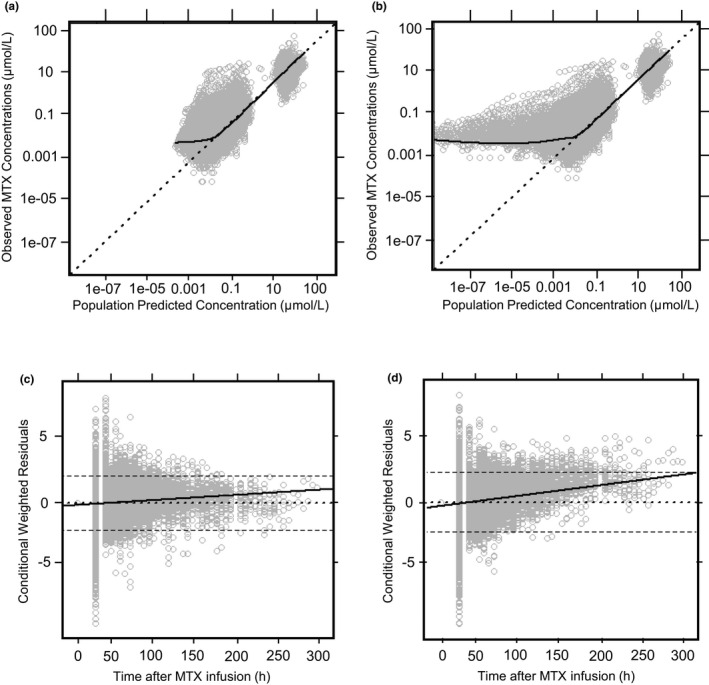
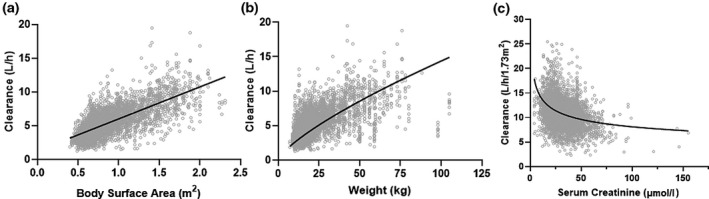
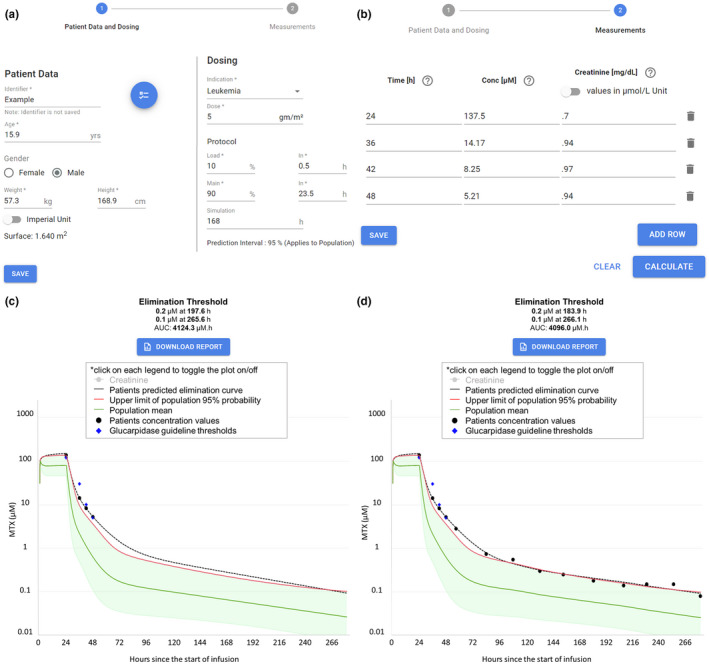
Methotrexate (MTX), an antifolate, is administered at high doses to treat malignancies in children and adults. However, there is considerable interpatient variability in clearance of high-dose (HD) MTX. Patients with delayed clearance are at an increased risk for severe nephrotoxicity and life-threatening systemic MTX exposure. Glucarpidase is a rescue agent for severe MTX toxicity that reduces plasma MTX levels via hydrolysis of MTX into inactive metabolites, but is only indicated when MTX concentrations are > 2 SDs above the mean excretion curve specific for the given dose together with a significant creatinine increase (> 50%). Appropriate administration of glucarpidase is challenging due to the ambiguity in the labeled indication. A recent consensus guideline was published with an algorithm to provide clarity in when to administer glucarpidase, yet clinical interpretation of laboratory results that do not directly correspond to the algorithm prove to be a limitation of its use. The goal of our study was to develop a clinical decision support tool to optimize the administration of glucarpidase for patients receiving HD MTX. Here, we describe the development of a novel 3-compartment MTX population pharmacokinetic (PK) model using 31,672 MTX plasma concentrations from 772 pediatric patients receiving HD MTX for the treatment of acute lymphoblastic leukemia and its integration into the online clinical decision support tool, MTXPK.org. This web-based tool has the functionality to utilize individualized demographics, serum creatinine, and real-time drug concentrations to predict the elimination profile and facilitate model-informed administration of glucarpidase.
© 2020 The Authors. Clinical Pharmacology & Therapeutics published by Wiley Periodicals LLC on behalf of American Society for Clinical Pharmacology and Therapeutics.
Conflict of interest statement
L.B.R. and T.M. received research funding from BTG International. N.P. is president of Medimatics, a company that provides consulting services on medical information systems located in Maastricht, The Netherlands. All other authors declared no competing interests for this work. As an Associate Editor for
Figures
References
-
- Jolivet, J. , Cowan, K.H. , Curt, G.A. , Clendeninn, N.J. & Chabner, B.A. The pharmacology and clinical use of methotrexate. N. Engl. J. Med. 309, 1094–1104 (1983). - PubMed
-
- Schmiegelow, K. et al Long‐term results of NOPHO ALL‐92 and ALL‐2000 studies of childhood acute lymphoblastic leukemia. Leukemia 24, 345–354 (2010). - PubMed
-
- Toft, N. et al Results of NOPHO ALL2008 treatment for patients aged 1–45 years with acute lymphoblastic leukemia. Leukemia 32, 606–615 (2018). - PubMed
-
- Widemann, B.C. et al High‐dose methotrexate‐induced nephrotoxicity in patients with osteosarcoma. Cancer 100, 2222–2232 (2004). - PubMed
-
- Brown, P. et al Pediatric acute lymphoblastic leukemia, version 2.2020, NCCN clinical practice guidelines in oncology. J. Natl. Compr. Canc. Netw. 18, 81–112 (2020). - PubMed
Publication types
MeSH terms
Substances
LinkOut - more resources
Full Text Sources
Medical
