Review
. 2020 Jun 16;7(2):78.
doi: 10.3390/vetsci7020078.

Palmitoylethanolamide and Related ALIAmides: Prohomeostatic Lipid Compounds for Animal Health and Wellbeing

Affiliations
Review

Palmitoylethanolamide and Related ALIAmides: Prohomeostatic Lipid Compounds for Animal Health and Wellbeing

Enrico Gugliandolo et al. Vet Sci. .

Abstract

Virtually every cellular process is affected by diet and this represents the foundation of dietary management to a variety of small animal disorders. Special attention is currently being paid to a family of naturally occurring lipid amides acting through the so-called autacoid local injury antagonism, i.e., the ALIA mechanism. The parent molecule of ALIAmides, palmitoyl ethanolamide (PEA), has being known since the 1950s as a nutritional factor with protective properties. Since then, PEA has been isolated from a variety of plant and animal food sources and its proresolving function in the mammalian body has been increasingly investigated. The discovery of the close interconnection between ALIAmides and the endocannabinoid system has greatly stimulated research efforts in this field. The multitarget and highly redundant mechanisms through which PEA exerts prohomeostatic functions fully breaks with the classical pharmacology view of "one drug, one target, one disease", opening a new era in the management of animals' health, i.e., an according-to-nature biomodulation of body responses to different stimuli and injury. The present review focuses on the direct and indirect endocannabinoid receptor agonism by PEA and its analogues and also targets the main findings from experimental and clinical studies on ALIAmides in animal health and wellbeing.

Keywords: ALIAmides; autacoid local injury antagonism; endocannabinoid; palmitoylethanolamide PEA; wellbeing.


Conflict of interest statement

The authors declare no conflict of interest.

Figures
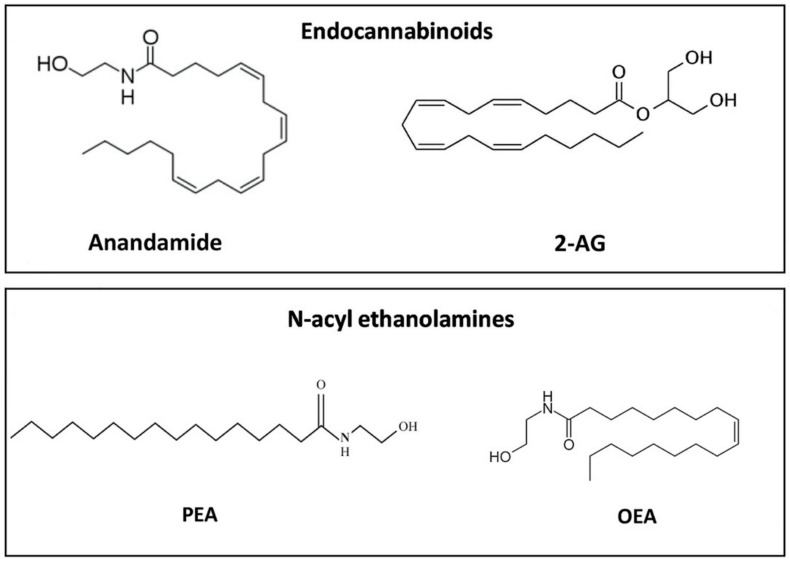
Figure 1
Figure 1
Chemical structure of representative endocannabinoids and related N-acyl ethanolamines.
Figure 2
Figure 2
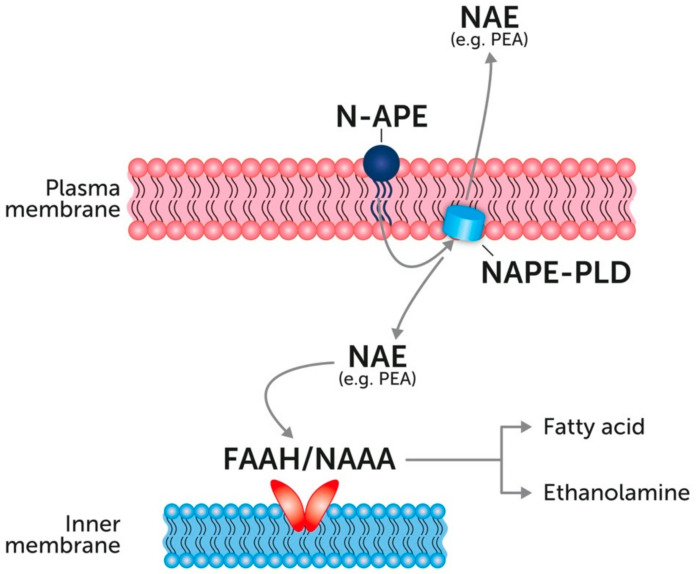
The main biosynthetic and degradative pathways of N-acyl ethanolamines (NAEs). Modified from [56]. NAE: N-acyl ethanolamines; NAPE-PLD: N-acyl phosphatidylethanolamine phospholipase D; NAPE: N-acyl phosphatidylethanolamine; FAAH: fatty acid amide hydrolase; NAAA: N-Acylethanolamine acid amidase
Figure 3
Figure 3
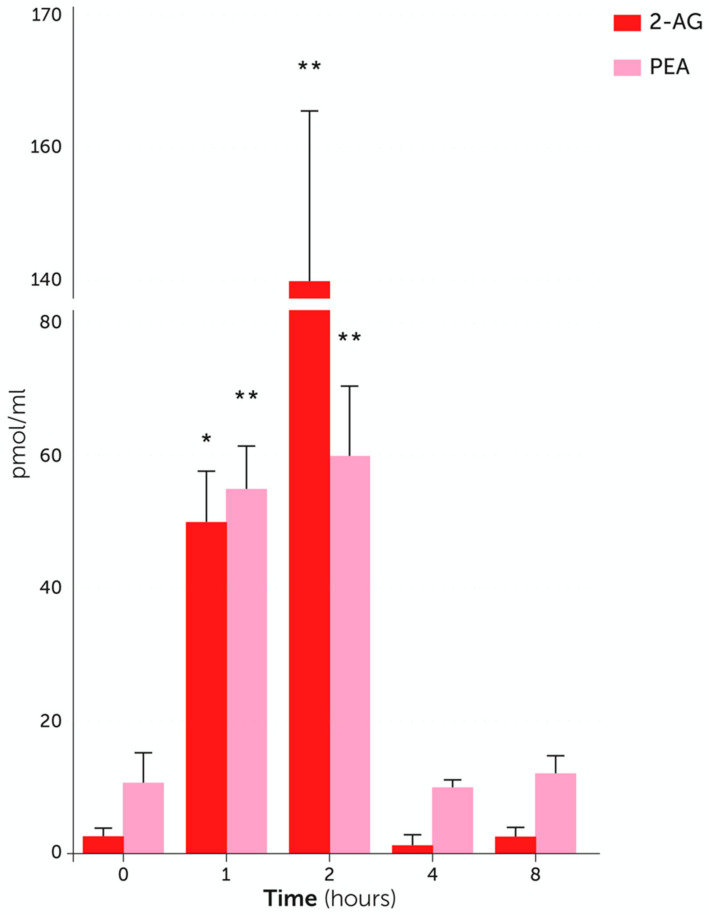
PEA (palmitoyl ethanolamide) entourage effect on 2-AG (2-arachydonoylglycerol). Following a single dietary supplementation with PEA-um to hypersensitive Beagle dogs, 2-AG plasma levels are significantly elevated, with a slight delay compared to PEA ones. * p < 0.05 and ** p < 0.001 versus time 0. Modified from [87].
Figure 4
Figure 4
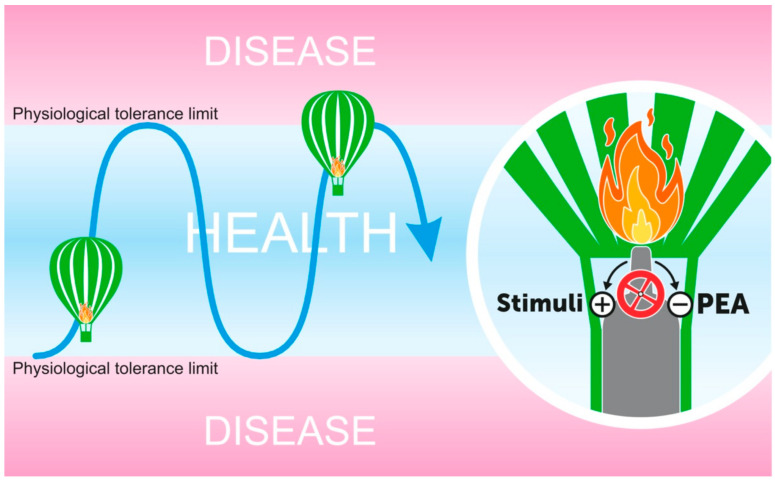
The prohomeostatic function of PEA: A conceptual view. Just like a hot air balloon floating in the sky, tissue homeostasis requires persistent monitoring and adjustments as conditions change. If the flame from the burner is too high (+), the rising balloon might overcome the upper safety limits. On the contrary, if the air inside the balloon is too cool, the opposite might happen. PEA helps to finely tune the “burner knob” and counterbalances the excessive burst, and related tissue hyper-reactivity, in response to high-intensity stimuli (-).
Figure 5
Figure 5
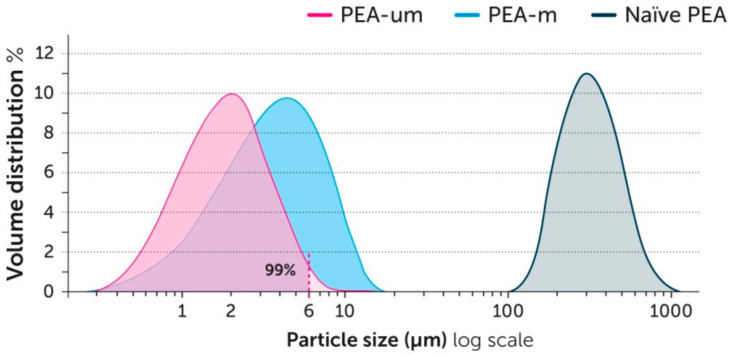
Particle size distribution profile of different PEA formulations. More than 99% and about 60% by weight of PEA-um has a particle size lower than 6 and 2 μm, respectively.
Figure 6
Figure 6
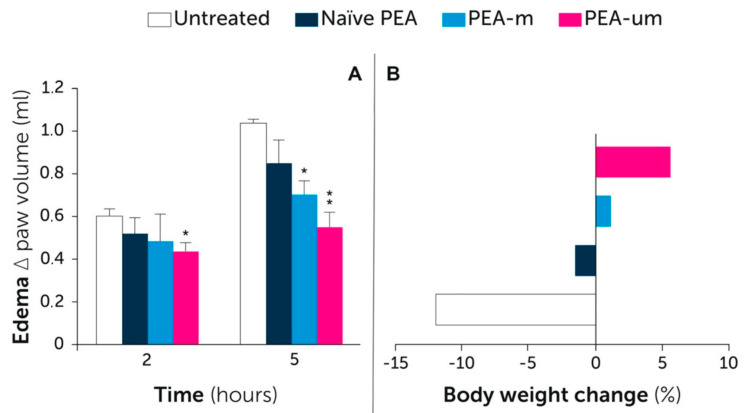
Superior activity of PEA-um compared to other PEA formulations. (A) Effect on inflammatory edema. Only the most relevant time points are depicted. See text for further details. * p < 0.05 and ** p < 0.01 vs. untreated group. Modified from [124]. (B) Effect on colitis-induced change in body weight. Modified from [125]. Naïve PEA: non-micronized PEA; PEA-m: micronized PEA; PEA-um: ultramicronized PEA.
Figure 7
Figure 7
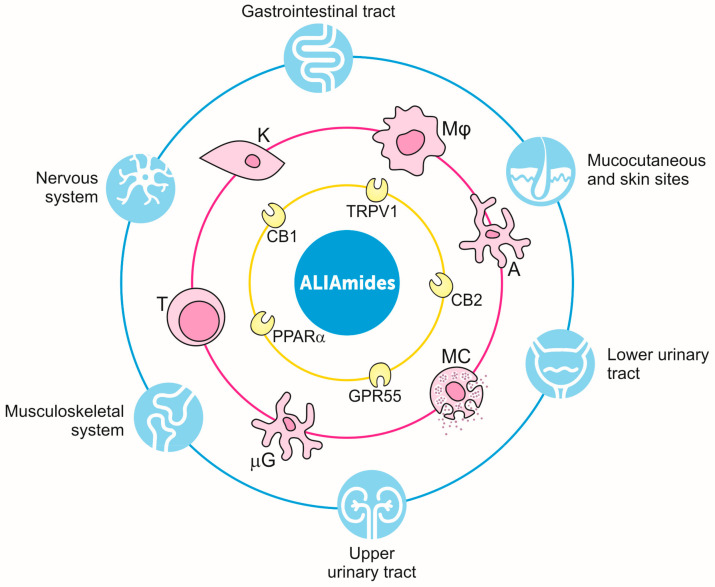
ALIAmides for animal health from a Galileian perspective. Schematic representation of the multitarget function of ALIAmides. Directly and indirectly acting through multiple cannabinoid receptors (yellow ring), PEA and related ALIAmides target different cell populations (pink ring), supporting health maintenance in a variety of body systems (light blue ring). See text for further details. A, astrocyte; CB1, cannabinoid receptor type 1; CB2, cannabinoid receptor type 2; GPR55, G-protein-coupled receptor 55; K, keratinocyte; MC, mast cell; MΦ, macrophage; μG, microglia; PPARα, peroxisome proliferator-activated receptor α; T, T cells; TRPV1, transient receptor potential vanilloid 1.

References

    1. Zohoori F.V. Nutrition and Diet Monogr. Oral. Sci. 2020;28:1–13. - PubMed
    1. Panagiotou G., Nielsen J. Nutritional systems biology: Definitions and approaches. Annu. Rev. Nutr. 2009;29:329–339. doi: 10.1146/annurev-nutr-080508-141138. - DOI - PubMed
    1. Davies M. Veterinary clinical nutrition: Success stories: An overview. Proc. Nutr. Soc. 2016;75:392–397. doi: 10.1017/S002966511600029X. - DOI - PubMed
    1. Gupta R.C., Srivastava A., Lall R. Nutraceuticals in Veterinary Medicine. 1st ed. Springer Nature; Cham, Switzerland: 2019. pp. 7–9.
    1. Saevik B.K., Bergvall K., Holm B.R., Saijonmaa-Koulumies L.E., Hedhammar A., Larsen S., Kristensen F. A randomized, controlled study to evaluate the steroid sparing effect of essential fatty acid supplementation in the treatment of canine atopic dermatitis. Vet. Dermatol. 2004;15:137–145. doi: 10.1111/j.1365-3164.2004.00378.x. - DOI - PubMed

LinkOut - more resources