Review
. 2020 Jun 17;9(6):1900.
doi: 10.3390/jcm9061900.

Prognostic Biomarkers in Endometrial Cancer: A Systematic Review and Meta-Analysis

Affiliations
Review

Prognostic Biomarkers in Endometrial Cancer: A Systematic Review and Meta-Analysis

Eva Coll-de la Rubia et al. J Clin Med. .

Abstract

Endometrial cancer (EC) is the sixth most common cancer in women worldwide and its mortality is directly associated with the presence of poor prognostic factors driving tumor recurrence. Stratification systems are based on few molecular, and mostly clinical and pathological parameters, but these systems remain inaccurate. Therefore, identifying prognostic EC biomarkers is crucial for improving risk assessment pre- and postoperatively and to guide treatment decisions. This systematic review gathers all protein biomarkers associated with clinical prognostic factors of EC, recurrence and survival. Relevant studies were identified by searching the PubMed database from 1991 to February 2020. A total number of 398 studies matched our criteria, which compiled 255 proteins associated with the prognosis of EC. MUC16, ESR1, PGR, TP53, WFDC2, MKI67, ERBB2, L1CAM, CDH1, PTEN and MMR proteins are the most validated biomarkers. On the basis of our meta-analysis ESR1, TP53 and WFDC2 showed potential usefulness for predicting overall survival in EC. Limitations of the published studies in terms of appropriate study design, lack of high-throughput measurements, and statistical deficiencies are highlighted, and new approaches and perspectives for the identification and validation of clinically valuable EC prognostic biomarkers are discussed.

Keywords: ESMO-ESGO-ESTRO risk classification; TCGA; endometrial adenocarcinoma; endometrial cancer; prognosis; prognostic; protein biomarker; recurrence; risk assessment; uterine cancer.


Conflict of interest statement

The authors declare no conflict of interest.

Figures
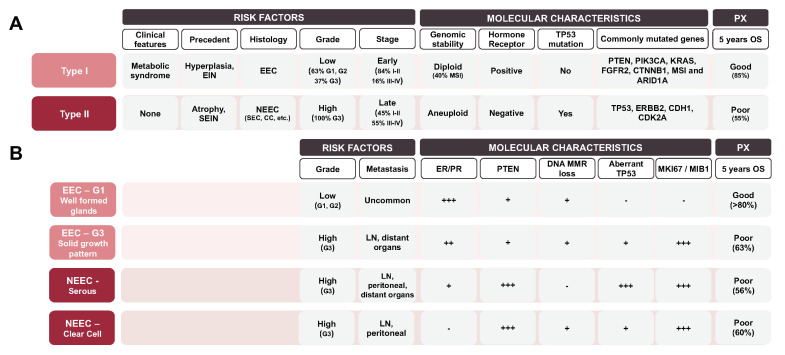
Figure 1
Figure 1
Principle features of the two different subtypes described in the dualistic classification model of endometrial cancer (EC) by Bokhman et al. [7] (A) Risk factors, molecular characteristics and prognosis of the dualistic classification. (B) Deconstruction of the dualistic model according to the different histological grades that exist on endometrioid-endometrial cancers (EECs) and the two most common histological subtypes of non-endometrioid endometrial cancers (NEECs). PX: prognosis; OS: overall survival; SEC: serous EC; CC: clear cell EC; EIN: endometrial intraepithelial neoplasia; MSI: microsatellite stability instable; SCNAs: somatic copy number alterations load; Sp.Mlc.alterations: specific molecular alterations; MMR: miss-match repair proteins: SEIN: serous endometrial intra-neoplasia; LN: lymph node status; +++: present/high; ++ frequent; + occasional; - absent/low.
Figure 2
Figure 2
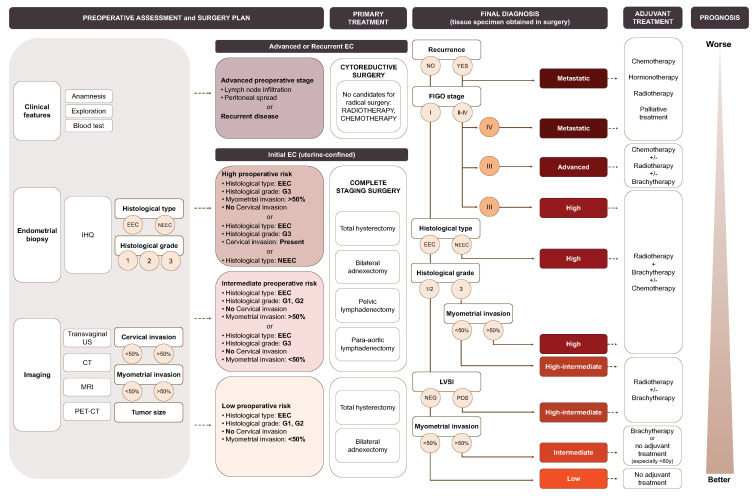
The EC risk stratification system according to the ESMO-ESGO-ESTRO (European Society for Medical Oncology-European Society of Gynaecological Oncology-European SocieTy for radiotherapy & Oncology) consensus [13] and its associated primary and adjuvant treatment. Clinical, molecular and pathological characteristics used to predict EC treatment and decision tree showing the clinical and pathological features used for the final definition of EC treatment. IHQ: immunohistochemistry; Transvaginal US: transvaginal ultrasonography; CT: computed tomography; MRI: magnetic resonance imaging; PET-CT: positron emission tomography; EEC: Endometrioid endometrial cancer; NEEC: non-endometrioid endometrial cancer; LVSI: lymphovascular space invasion. The information is scaled down to provide a result on the associated risk, primary and adjuvant treatments, and prognosis.
Figure 3
Figure 3
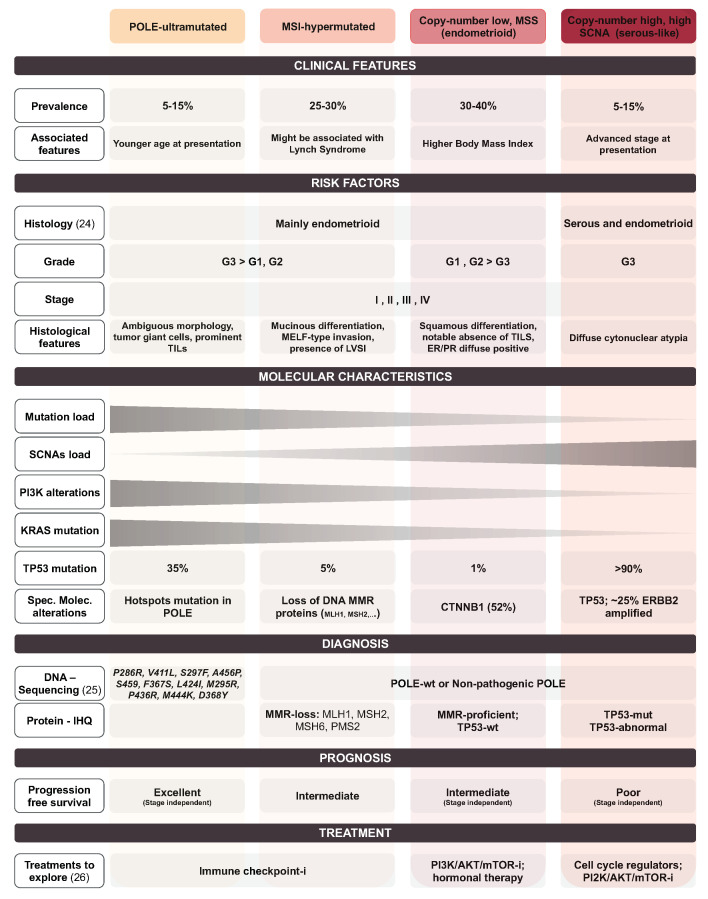
Clinical features, risk factors, molecular characteristics, diagnosis, prognosis and treatment associated with each subgroup of the TCGA classification system [15,16,26]. MSI: microsatellite stability instable; SCNA: somatic copy number alterations load; IHQ: immunohistochemistry; Sp.Mlc.alterations: specific molecular alterations; MMR: miss-match repair proteins; mut: mutated; wt: wild-type; -i: inhibitors.
Figure 4
Figure 4
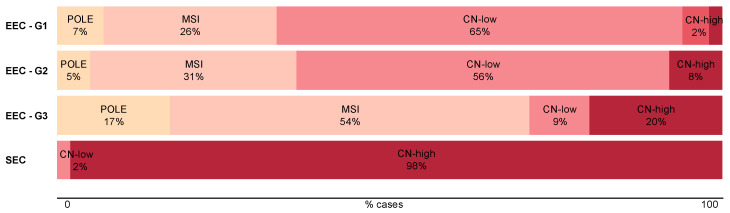
Assessment of TCGA novel classification. Itemization of the TCGA subgroups in the dualistic model. The data used for this figure corresponds to the TCGA cohort [15].
Figure 5
Figure 5
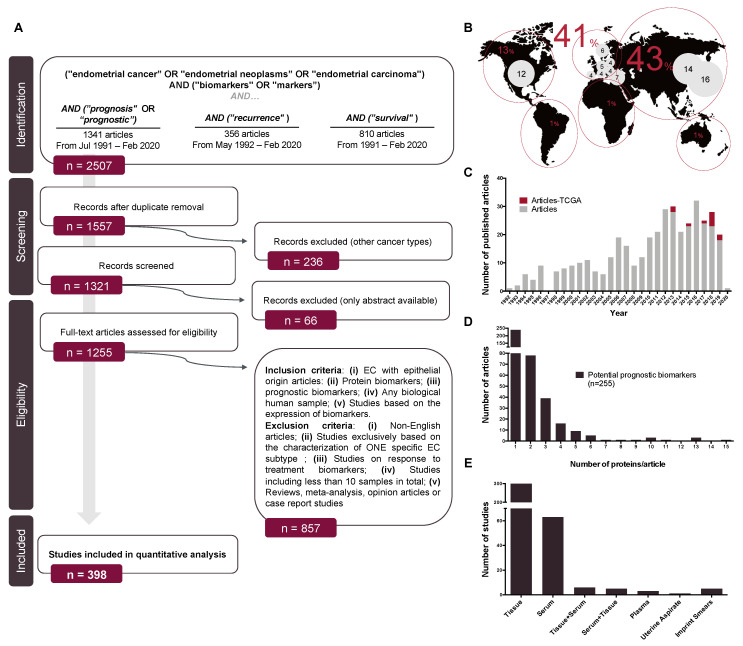
Search strategy and global overview. (A) Flow diagram depicting the steps followed for the selection of the studies included in this review; (B) world distribution of the selected articles; (C) distribution of the selected studies across years. Articles including TCGA classification in their dataset are marked in dark green; (D) distribution of the number of protein biomarkers evaluated in each of the studies included in this review; (E) Distribution of the studies according to the clinical sample used in the study.
Figure 6
Figure 6
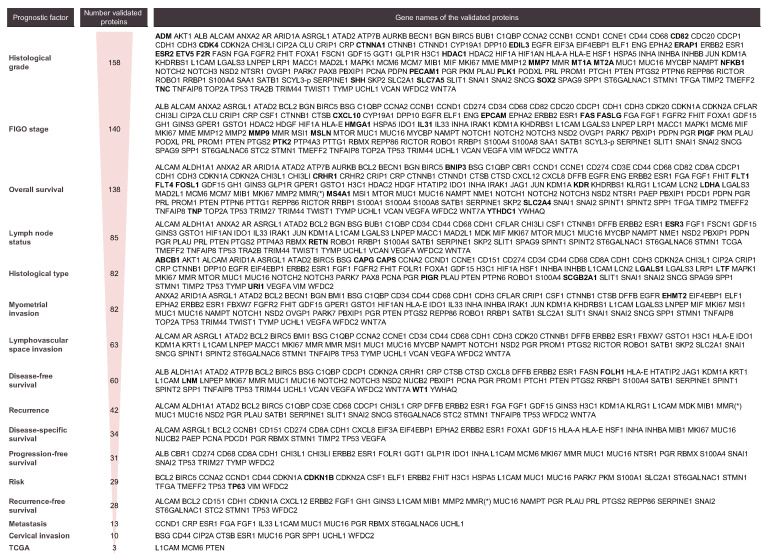
List of proteins associated with each prognostic factor. Proteins linked only to one specific parameter are highlighted in bold.
Figure 7
Figure 7
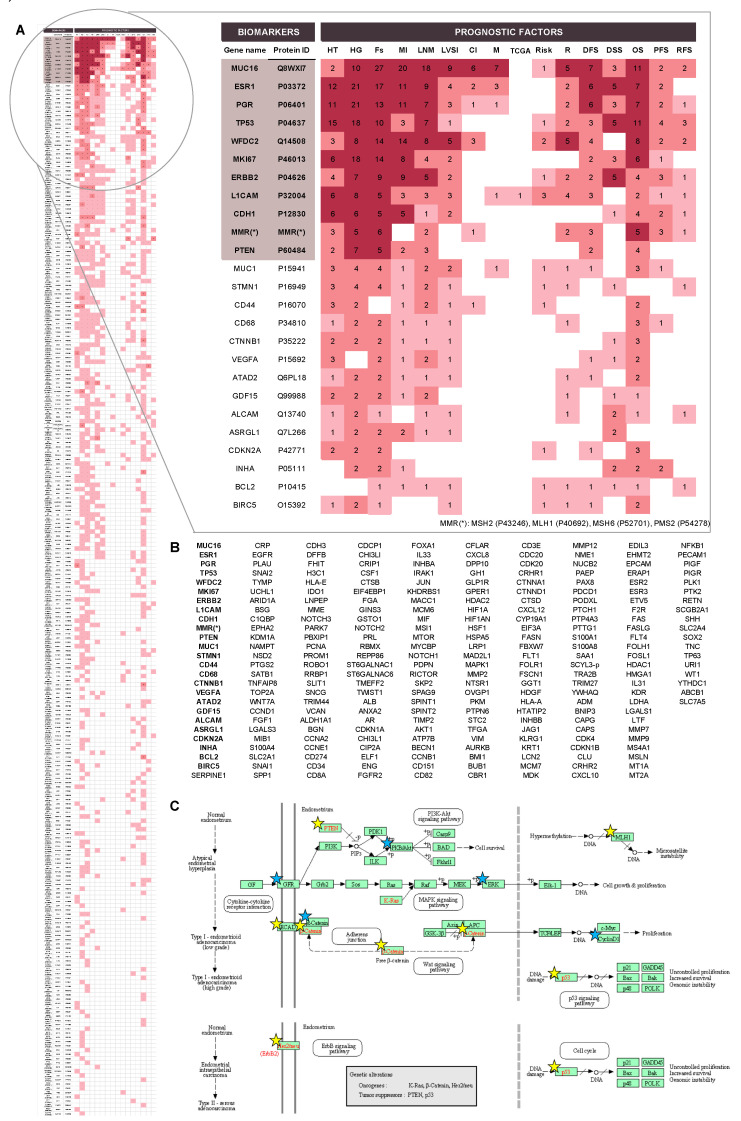
Overview of the validated biomarkers. (A) Full perspective of all validated biomarkers: (i) dark red when protein was validated five or more times for that parameter; (ii) red: when protein was validated in more than one study; (iii) light red: protein validated in one study. List of the top-25 most studied proteins as prognostic factor biomarkers is zoomed in. For each protein, the number of studies in which it was validated appears; (B) list of proteins validated, at least in one study, for one of the considered parameters. Ordered regarding the number of independent studies where they were validated. In bold, the top-25 most studied proteins; (C) EC disease Pathway Map obtained from the KEGG DISEASE database [30,59,60]. The proteins from the 11 most studied proteins list are highlighted by yellow stars, while the top-25 are highlighted by blue stars. HT: histological type; HG: histological grade; Fs: FIGO stage; MI: myometrial invasion; LNS: lymph node status; LVSI: lymphovascular space invasion; CI: cervical invasion; M: metastasis; TCGA: TCGA classification; R: recurrence; DFS: disease-free survival; DSS: disease-specific survival; OS: overall survival; PFS: progression-free survival; RFS: recurrence-free survival.
Figure 8
Figure 8
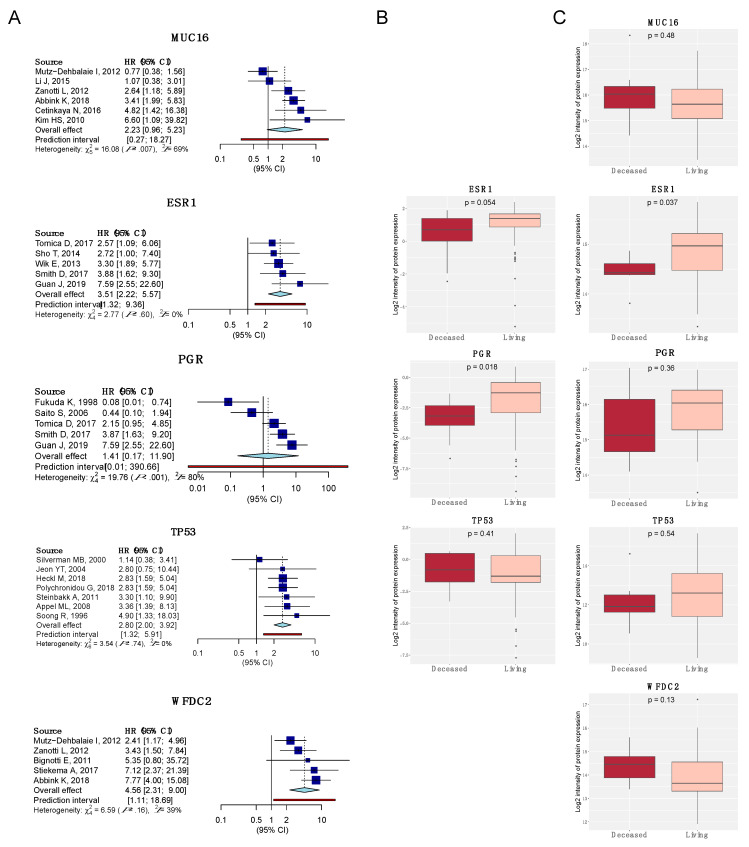
Meta-analysis on OS of the most studied biomarkers regarding prognosis in EC (MUC16, ESR1, PGR, TP53, and WFDC2, respectively). (A) Forest plots. Diamond in light blue represents the point estimate and confidence intervals when combining all studies; (B) expression boxplots using the RPPA data of the TCGA cohort (n = 200:20 deceased–plotted in red; 178 living–plotted in light red) [15]; (C) Expression boxplots using the mass spectrometry data of the CPTAC cohort (n = 100:7 deceased–plotted in red; 38 living–plotted in light red) [32].
Figure 9
Figure 9
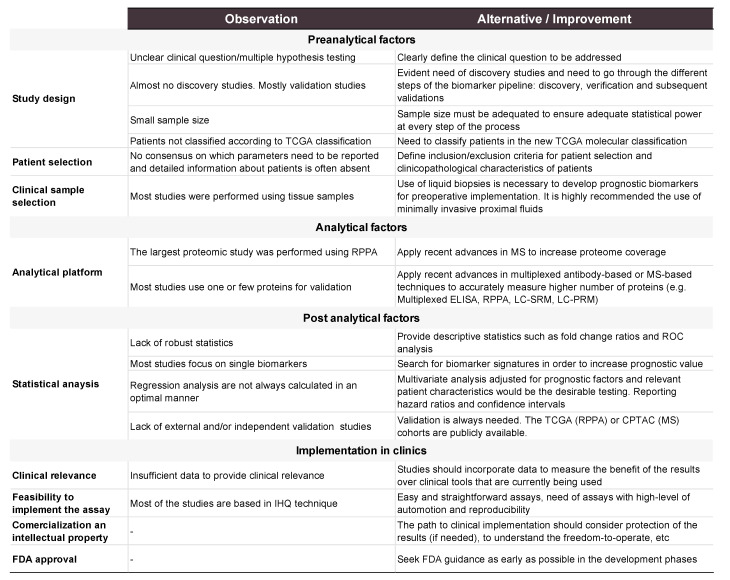
Outline of the preanalytical, analytical, and post-analytical factors detected in the articles reviewed and recommendations of alternatives to consider for future studies.

References

    1. Bray F., Ferlay J., Soerjomataram I., Siegel R.L., Torre L.A., Jemal A. Global cancer statistics 2018: GLOBOCAN estimates of incidence and mortality worldwide for 36 cancers in 185 countries. CA Cancer J. Clin. 2018;68:394–424. doi: 10.3322/caac.21492. - DOI - PubMed
    1. American Cancer Society . Cancer Facts & Figures 2018. American Cancer Society; Atlanta, GA, USA: 2017.
    1. Dueholm M., Hjorth I.M.D., Dahl K., Hansen E.S., Ørtoft G. Ultrasound Scoring of Endometrial Pattern for Fast-track Identification or Exclusion of Endometrial Cancer in Women with Postmenopausal Bleeding. J. Minim. Invasive Gynecol. 2019;26:516–525. doi: 10.1016/j.jmig.2018.06.010. - DOI - PubMed
    1. Clarke M.A., Long B.J., Del Mar Morillo A., Arbyn M., Bakkum-Gamez J.N., Wentzensen N. Association of endometrial cancer risk with postmenopausal bleeding in women a systematic review and meta-analysis. JAMA Intern. Med. 2018;178:1201–1208. doi: 10.1001/jamainternmed.2018.2820. - DOI - PMC - PubMed
    1. Colombo N., Creutzberg C., Amant F., Bosse T., González-Martín A., Ledermann J., Marth C., Nout R., Querleu D., Mirza M.R., et al. Corrigendum. Ann. Oncol. 2017;28:iv167–iv168. doi: 10.1093/oxfordjournals.annonc.a010865. - DOI - PubMed