


Acute pancreatic injuries: A complication of Stevens-Johnson syndrome/toxic epidermal necrolysis associated with cytotoxic immunocell activation
- PMID: 32561372
- PMCID: PMC7297678
- DOI: 10.1016/j.jaad.2020.06.043
Acute pancreatic injuries: A complication of Stevens-Johnson syndrome/toxic epidermal necrolysis associated with cytotoxic immunocell activation
Abstract
Background: Complications involving internal organs are usually present in Stevens-Johnson syndrome (SJS) and toxic epidermal necrolysis (TEN). However, pancreatic complications are rarely reported and studied.
Objective: To summarize clinical characteristics of SJS/TEN-associated acute pancreatic injuries and to investigate underlying inflammatory mechanisms.
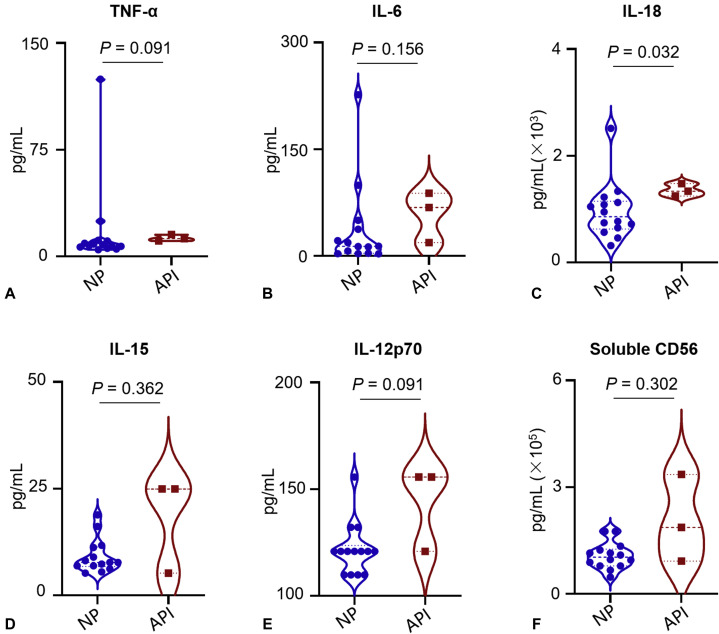
Methods: Clinical records of 124 inpatients with SJS/TEN were reviewed. Serum levels of tumor necrosis factor α, interleukin (IL) 6, IL-18, IL-15, IL-12p70, and soluble CD56 were determined in 18 healthy donors and 17 patients with SJS/TEN, including 3 with acute pancreatic injuries.
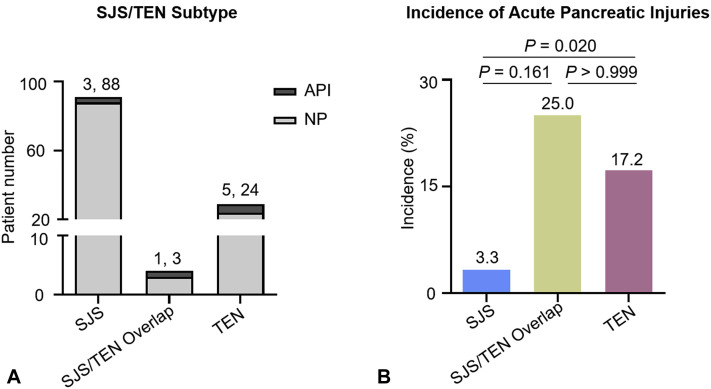
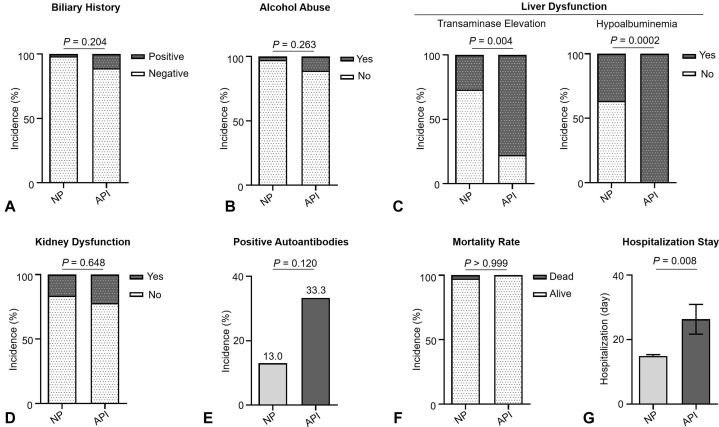
Results: Acute pancreatic injury was diagnosed in 7.3% of patients (9/124) in the SJS/TEN cohort. Elevation of serum transaminase level and hypoalbuminemia occurred more frequently in patients with acute pancreatic injuries compared with those without pancreatic symptoms (P = .004 and <.001, respectively). Although acute pancreatic injury did not alter mortality rate of SJS/TEN, it was associated with longer hospitalization stays (P = .008). Within the serum cytokines whose levels were elevated in SJS/TEN, only IL-18 was found to be selectively increased in patients with acute pancreatic injuries compared with those without them (P = .03).
Limitations: Cohort was small.
Conclusion: Acute pancreatic injury is a gastrointestinal complication of SJS/TEN in which hepatotoxicity is more likely to occur. Overexpression of IL-18 might be involved in this unique entity.
Keywords: Stevens-Johnson syndrome; complication; cytokine storm; interleukin 18; liver dysfunction; pancreatitis; toxic epidermal necrolysis.
Copyright © 2020 American Academy of Dermatology, Inc. Published by Elsevier Inc. All rights reserved.
Figures

References
-
- Duong T.A., Valeyrie-Allanore L., Wolkenstein P., et al. Severe cutaneous adverse reactions to drugs. Lancet. 2017;390:1996–2011. - PubMed
-
- Struck M.F., Hilbert P., Mockenhaupt M., et al. Severe cutaneous adverse reactions: emergency approach to non-burn epidermolytic syndromes. Intensive Care Med. 2010;36:22–32. - PubMed
-
- Bastuji-Garin S., Fouchard N., Bertocchi M., et al. SCORTEN: a severity-of-illness score for toxic epidermal necrolysis. J Invest Dermatol. 2000;115:149–153. - PubMed
-
- Lee H.Y., Walsh S.A., Creamer D. Long-term complications of Stevens-Johnson syndrome/toxic epidermal necrolysis (SJS/TEN): the spectrum of chronic problems in patients who survive an episode of SJS/TEN necessitates multidisciplinary follow-up. Br J Dermatol. 2017;177:924–935. - PubMed
-
- Yamane Y., Matsukura S., Watanabe Y., et al. Retrospective analysis of Stevens-Johnson syndrome and toxic epidermal necrolysis in 87 Japanese patients—treatment and outcome. Allergol Int. 2016;65:74–81. - PubMed
MeSH terms
Substances
LinkOut - more resources
Full Text Sources
Other Literature Sources
Medical
Research Materials
Miscellaneous
