


Hypoxia in bone metastasis and osteolysis
- PMID: 32561416
- PMCID: PMC7429356
- DOI: 10.1016/j.canlet.2020.06.004
Hypoxia in bone metastasis and osteolysis
Abstract
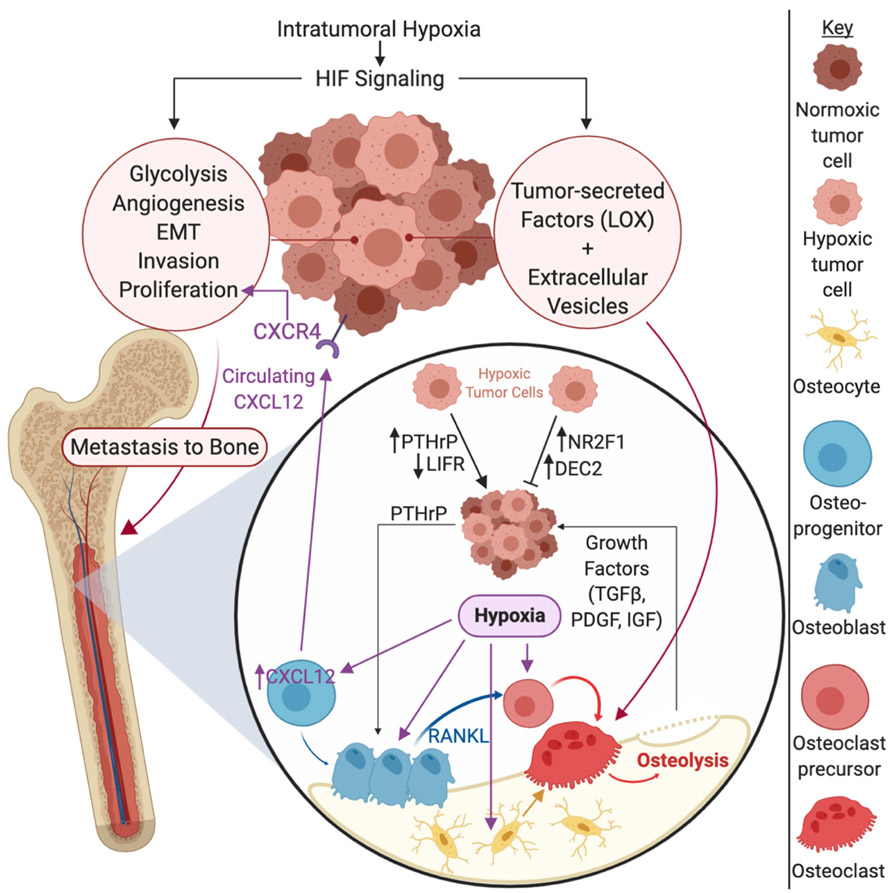
Hypoxia is a common feature in tumors, driving pathways that promote epithelial-to-mesenchymal transition, invasion, and metastasis. Clinically, high levels of hypoxia-inducible factor (HIF) expression and stabilization at the primary site in many cancer types is associated with poor patient outcomes. Experimental evidence suggests that HIF signaling in the primary tumor promotes their dissemination to the bone, as well as the release of factors such as LOX that act distantly on the bone to stimulate osteolysis and form a pre-metastatic niche. Additionally, the bone itself is a generally hypoxic organ, fueling the activation of HIF signaling in bone resident cells, promoting tumor cell homing to the bone as well as osteoclastogenesis. The hypoxic microenvironment of the bone also stimulates the vicious cycle of tumor-induced bone destruction, further fueling tumor cell growth and osteolysis. Furthermore, hypoxia appears to regulate key tumor dormancy factors. Thus, hypoxia acts both on the tumor cells as well as the metastatic site to promote tumor cell metastasis.
Keywords: Cancer; Dormancy; HIF; Oxygen; Vasculature.
Copyright © 2020 Elsevier B.V. All rights reserved.
Conflict of interest statement
Conflict of interest statement
The authors have nothing to disclose.
Figures
References
-
- Vaupel P, Hockel M, and Mayer A, Detection and characterization of tumor hypoxia using pO2 histography. Antioxid Redox Signal, 2007. 9(8): p. 1221–35. - PubMed
-
- Tian H, McKnight SL, and Russell DW, Endothelial PAS domain protein 1 (EPAS1), a transcription factor selectively expressed in endothelial cells. Genes Dev, 1997. 11(1): p. 72–82. - PubMed
Publication types
MeSH terms
Grants and funding
LinkOut - more resources
Full Text Sources
Medical
