


Epigenome-wide association study of attention-deficit/hyperactivity disorder in adults
- PMID: 32561708
- PMCID: PMC7305172
- DOI: 10.1038/s41398-020-0860-4
Epigenome-wide association study of attention-deficit/hyperactivity disorder in adults
Abstract
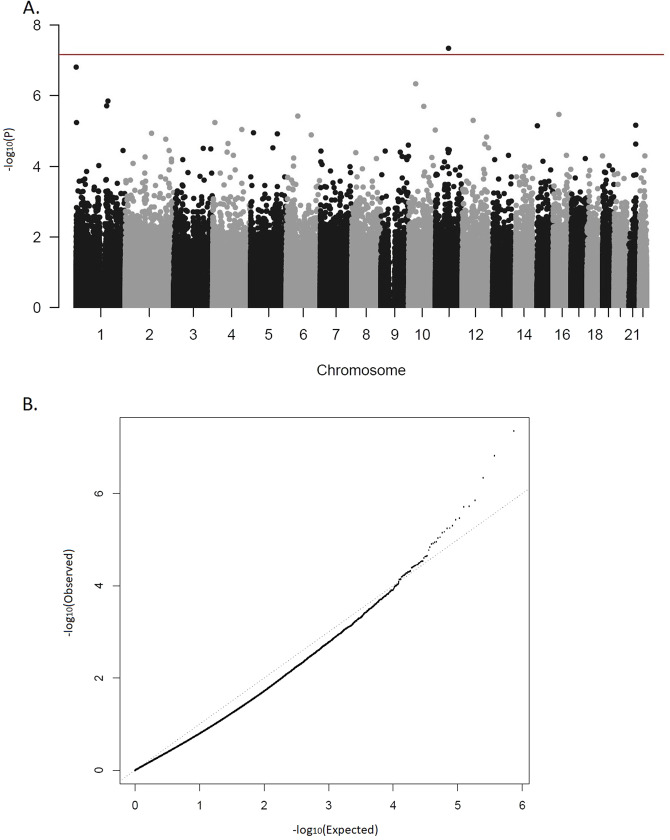
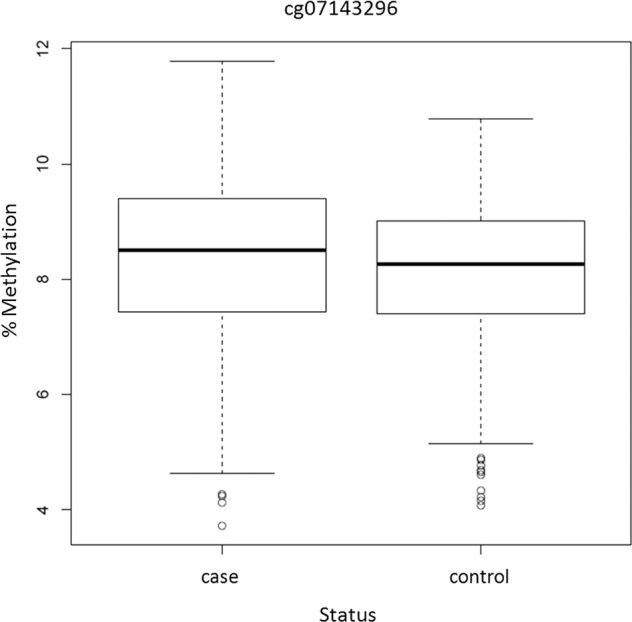
Attention-deficit/hyperactivity disorder (ADHD) is a highly heritable neurodevelopmental disorder that often persists into adulthood. There is growing evidence that epigenetic dysregulation participates in ADHD. Given that only a limited number of epigenome-wide association studies (EWASs) of ADHD have been conducted so far and they have mainly focused on pediatric and population-based samples, we performed an EWAS in a clinical sample of adults with ADHD. We report one CpG site and four regions differentially methylated between patients and controls, which are located in or near genes previously involved in autoimmune diseases, cancer or neuroticism. Our sensitivity analyses indicate that smoking status is not responsible for these results and that polygenic risk burden for ADHD does not greatly impact the signatures identified. Additionally, we show an overlap of our EWAS findings with genetic signatures previously described for ADHD and with epigenetic signatures for smoking behavior and maternal smoking. These findings support a role of DNA methylation in ADHD and emphasize the need for additional efforts in larger samples to clarify the role of epigenetic mechanisms on ADHD across the lifespan.
Conflict of interest statement
Paula Rovira, Dr. Sánchez-Mora, Dr. Pagerols, Laura Vilar-Ribó, Lorena Arribas, Gemma Shireby, Dr. Hannon, Prof. Mill, Dr. Soler Artigas and Dr. Ribasés reported no biomedical financial interests or potential conflicts of interest. Vanesa Richarte has served on the speakers for Eli Lilly, Rubio and Shire in the last 5 years. She has received travel awards from Eli Lilly and Co. and Shire for participating in psychiatric meetings. The ADHD Program has received unrestricted educational and research support from Eli Lilly and Co., Janssen-Cilag, Shire, Rovi, Psious and Laboratorios Rubió in the past 2 years. Montserrat Corrales received travel awards for taking part in psychiatric meetings from Shire. Christian Fadeuilhe received fees to give talks for Shire, Ferrer, Italfarmaco and Otsuka in the last 5 years. He also received travel awards (air tickets +hotel) for taking part in psychiatric meetings from Janssen-Cilag, Rubió, Shire, Lundbeck, Otsuka and Ferrer. Prof. Casas has received travel grants and research support from Eli Lilly and Co., Janssen-Cilag, Shire and Lundbeck and served as consultant for Eli Lilly and Co., Janssen-Cilag, Shire and Lundbeck. Prof. Ramos-Quiroga was on the speakers’ bureau and/or acted as consultant for Eli-Lilly, Janssen-Cilag, Novartis, Shire, Lundbeck, Almirall, Braingaze, Sincrolab, Medice, and Rubió in the last 5 years. He also received travel awards (air tickets + hotel) for taking part in psychiatric meetings from Janssen-Cilag, Rubió, Shire, Medice and Eli- Lilly. The Department of Psychiatry chaired by him received unrestricted educational and research support from the following companies in the last 5 years: Eli-Lilly, Lundbeck, Janssen- Cilag, Actelion, Shire, Ferrer, Oryzon, Roche, Psious, and Rubió.
Figures
References
Publication types
MeSH terms
LinkOut - more resources
Full Text Sources
Medical
