New directions in the treatment of opioid withdrawal
- PMID: 32563380
- PMCID: PMC7385662
- DOI: 10.1016/S0140-6736(20)30852-7
New directions in the treatment of opioid withdrawal
Abstract
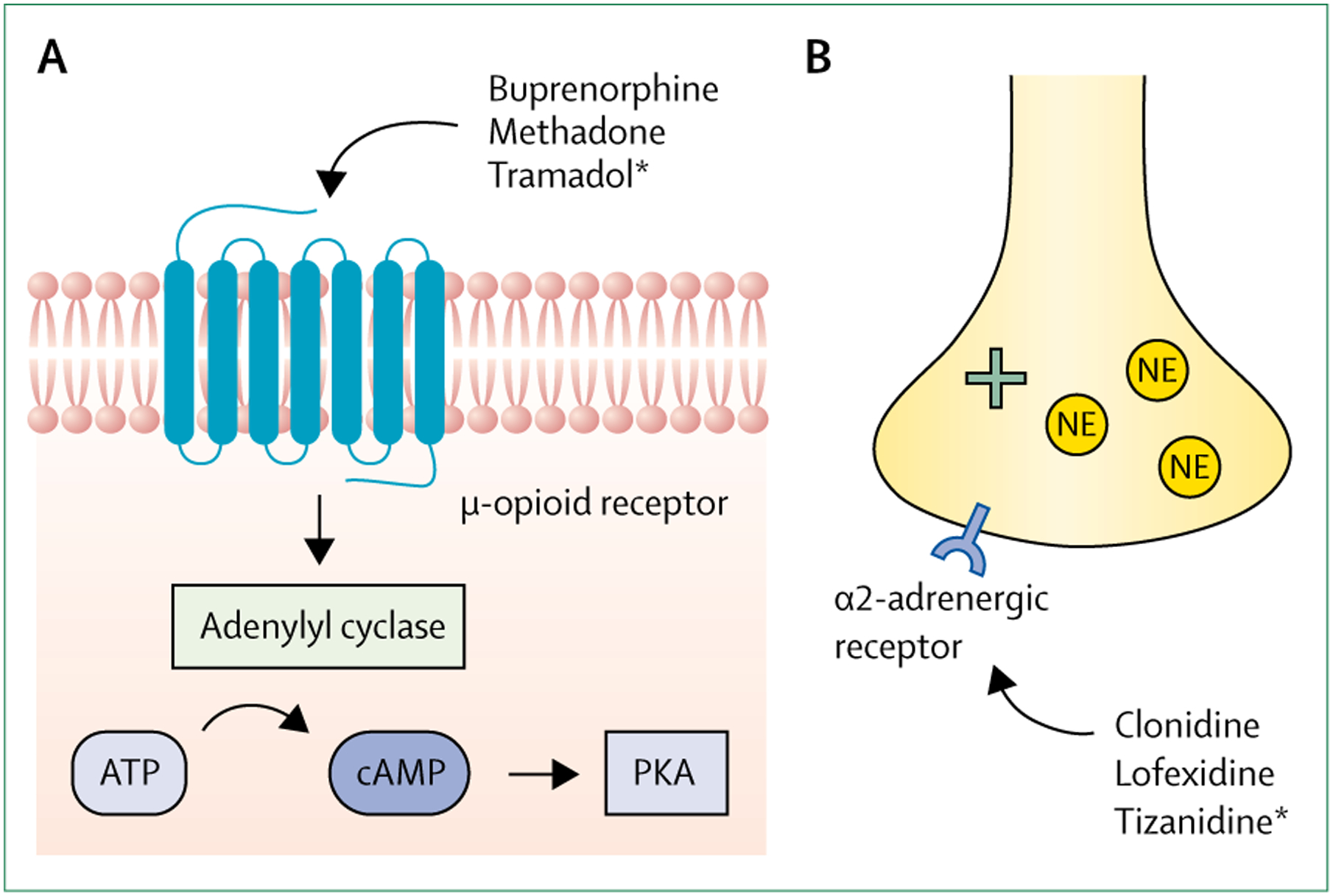
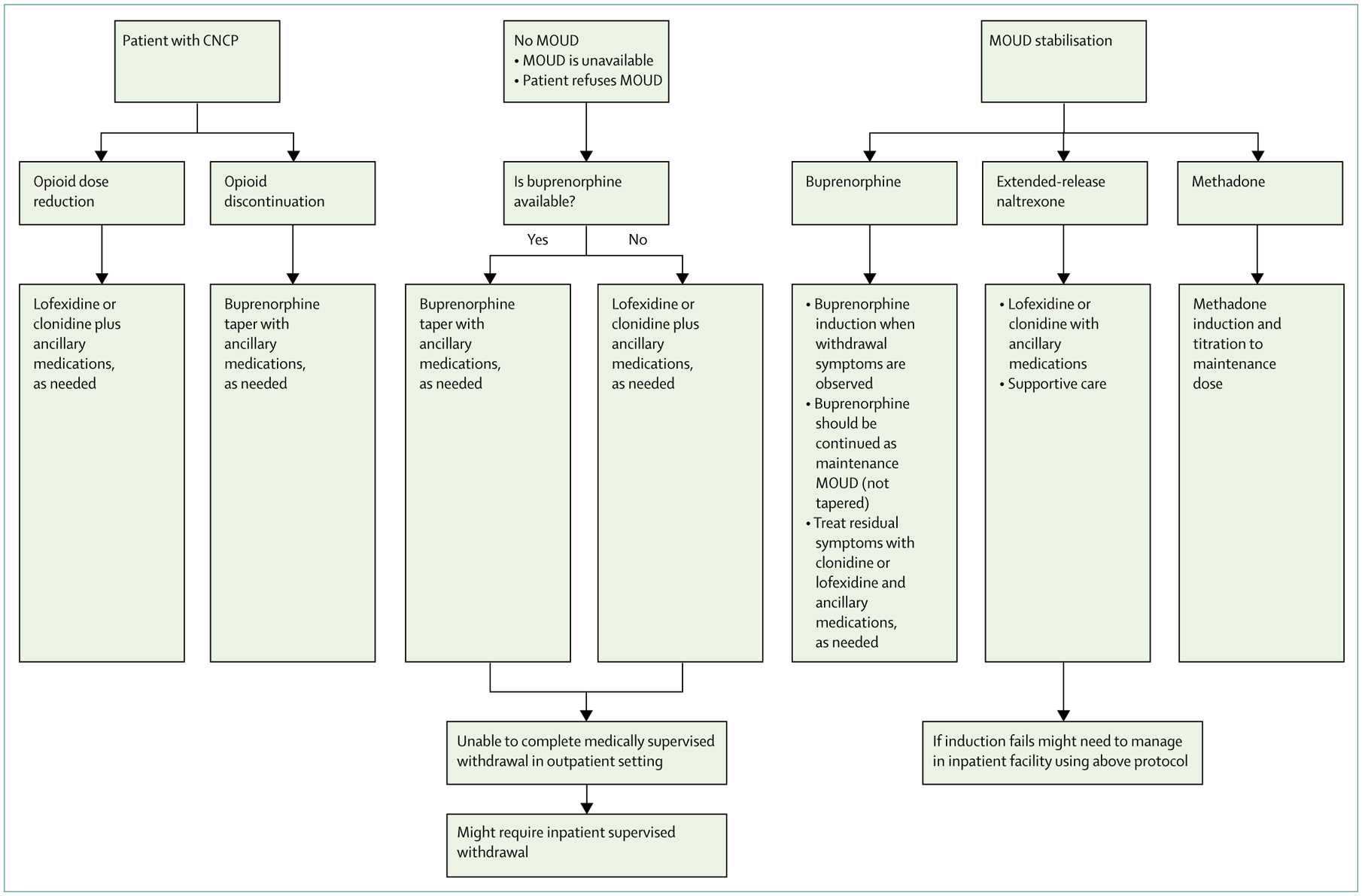
The treatment of opioid withdrawal is an important area of clinical concern when treating patients with chronic, non-cancer pain, patients with active opioid use disorder, and patients receiving medication for opioid use disorder. Current standards of care for medically supervised withdrawal include treatment with μ-opioid receptor agonists, (eg, methadone), partial agonists (eg, buprenorphine), and α2-adrenergic receptor agonists (eg, clonidine and lofexidine). Newer agents likewise exploit these pharmacological mechanisms, including tramadol (μ-opioid receptor agonism) and tizanidine (α2 agonism). Areas for future research include managing withdrawal in the context of stabilising patients with opioid use disorder to extended-release naltrexone, transitioning patients with opioid use disorder from methadone to buprenorphine, and tapering opioids in patients with chronic, non-cancer pain.
Copyright © 2020 Elsevier Ltd. All rights reserved.
Conflict of interest statement
Declaration of interests
ABS has received personal fees from the Dana Foundation. FRL receives grant support from the US National Institute on Drug Abuse, Substance Abuse and Mental Health Services Administration, and US WorldMeds, was an unpaid member of a Scientific Advisory Board for Alkermes and US WorldMeds but did not personally receive any compensation in the form of cash payments (honoraria or consulting fees), food and beverages (FRL declined food and beverages in both circumstances), or travel reimbursement. FRL receives medication at no charge for an ongoing study from US WorldMeds. JJM declares no competing interests.
Figures
References
-
- Kraepelin E Morphinism In: Psychiatrie: ein Lehrbuch für Studierende und Aerzte, 6th edn. Leipzig: Verlag von Johann Ambrosius Barth; 1899.
-
- Darke S, Larney S, Farrell M. Yes, people can die from opiate withdrawal. Addiction 2017; 112: 199–200. - PubMed
-
- Oesterle TS, Thusius NJ, Rummans TA, Gold MS. Medication-assisted treatment for opioid-use disorder. Mayo Clin Proc 2019; 94: 2072–86. - PubMed
Publication types
MeSH terms
Substances
Grants and funding
LinkOut - more resources
Full Text Sources
Other Literature Sources
Medical
Research Materials