. 2020 Jun 20;16(7):76.
doi: 10.1007/s11306-020-01695-x.

GlycA, a novel marker for low grade inflammation, reflects gut microbiome diversity and is more accurate than high sensitive CRP in reflecting metabolomic profile

Affiliations

GlycA, a novel marker for low grade inflammation, reflects gut microbiome diversity and is more accurate than high sensitive CRP in reflecting metabolomic profile

Kati Mokkala et al. Metabolomics. .

Abstract

Introduction: Gut microbiota is, along with adipose tissue, recognized as a source for many metabolic and inflammatory disturbances that may contribute to the individual's state of health.

Objectives: We investigated in cross-sectional setting the feasibility of utilizing GlycA, a novel low grade inflammatory marker, and traditional low grade inflammatory marker, high sensitivity CRP (hsCRP), in reflecting serum metabolomics status and gut microbiome diversity.

Methods: Fasting serum samples of overweight/obese pregnant women (n = 335, gestational weeks: mean 13.8) were analysed for hsCRP by immunoassay, GlycA and metabolomics status by NMR metabolomics and faecal samples for gut microbiome diversity by metagenomics. The benefits of GlycA as a metabolic marker were investigated against hsCRP.

Results: The GlycA concentration correlated with more of the metabolomics markers (144 out of 157), than hsCRP (55 out of 157) (FDR < 0.05). The results remained essentially the same when potential confounding factors known to associate with GlycA and hsCRP levels were taken into account (P < 0.05). This was attributable to the detected correlations between GlycA and the constituents and concentrations of several sized VLDL-particles and branched chain amino acids, which were statistically non-significant with regard to hsCRP. GlycA, but not hsCRP, correlated inversely with gut microbiome diversity.

Conclusion: GlycA is a superior marker than hsCRP in assessing the metabolomic profile and gut microbiome diversity. It is proposed that GlycA may act as a novel marker that reflects both the gut microbiome and adipose tissue originated metabolic aberrations; this proposal will need to be verified with regard to clinical outcomes.

Clinical trial registration: ClinicalTrials.gov, NCT01922791, August 14, 2013.

Keywords: GlycA; Gut microbiome diversity; Low grade inflammation; Metabolomics; hsCRP.


Conflict of interest statement

All authors declares that he/she has no conflict of interest.

Figures

Fig. 1
Fig. 1
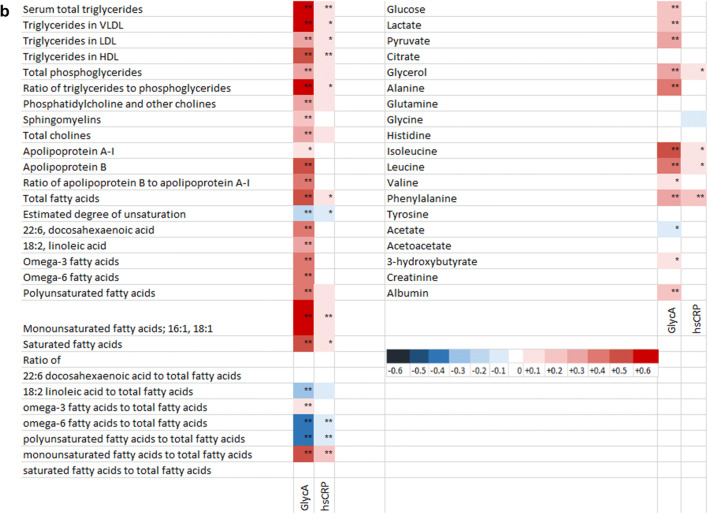
Heatmap of the Pearson correlation between inflammatory markers and metabolomics variables. *FDR < 0.05; **FDR < 0.01
Fig. 1
Fig. 1
Heatmap of the Pearson correlation between inflammatory markers and metabolomics variables. *FDR < 0.05; **FDR < 0.01
Fig. 2
Fig. 2
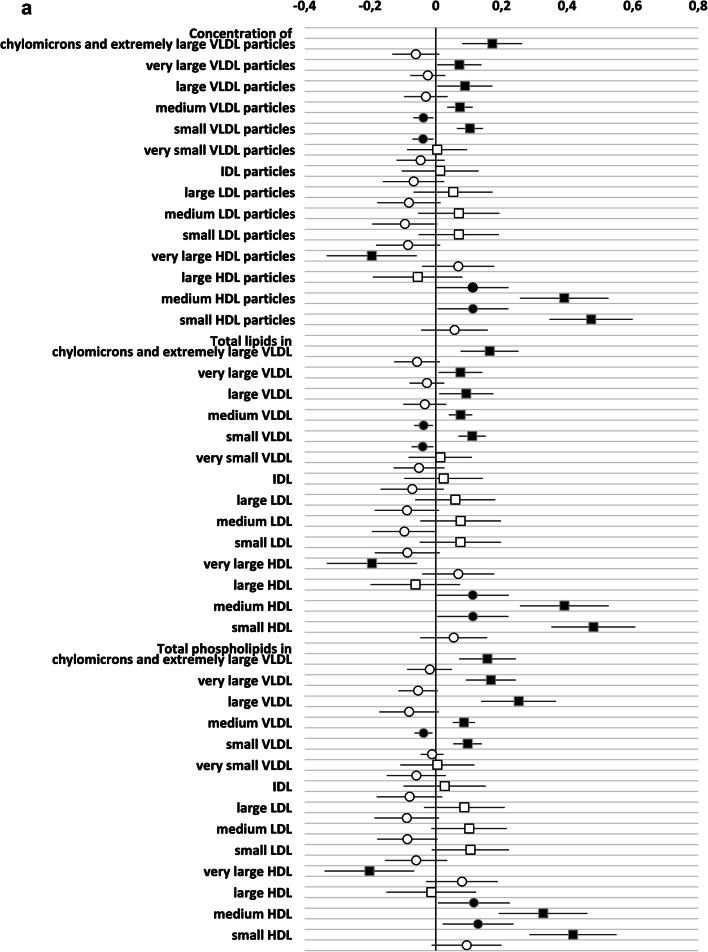
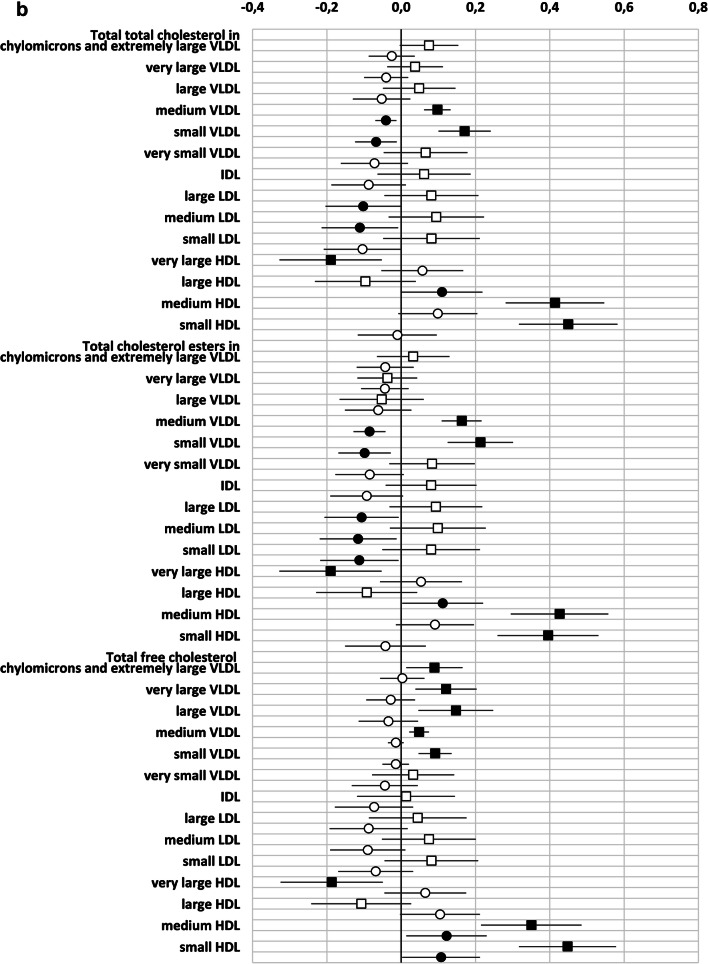
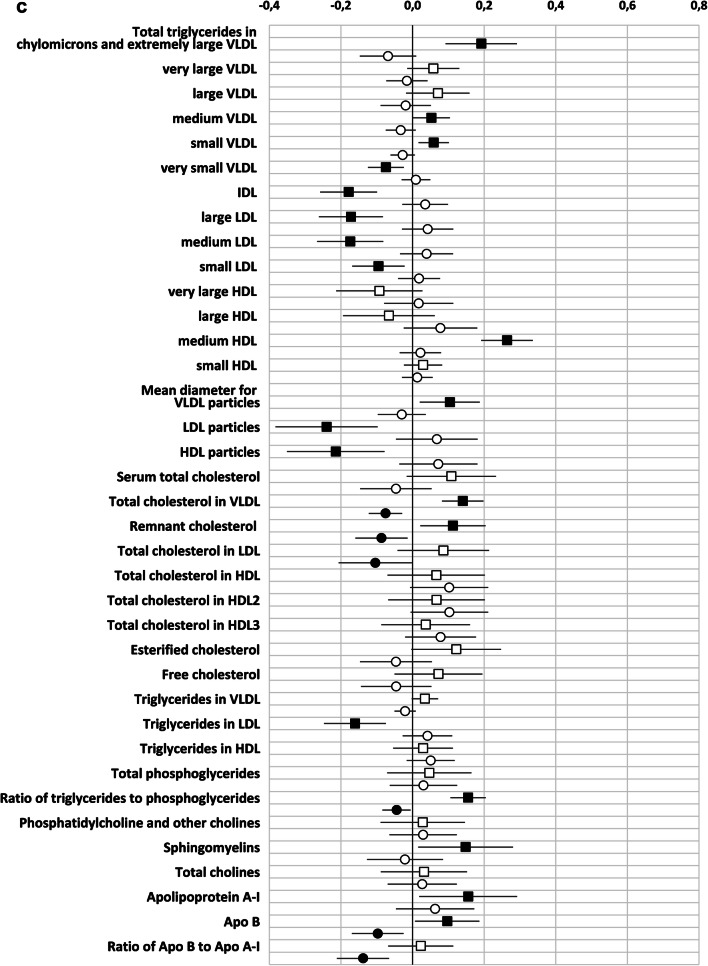
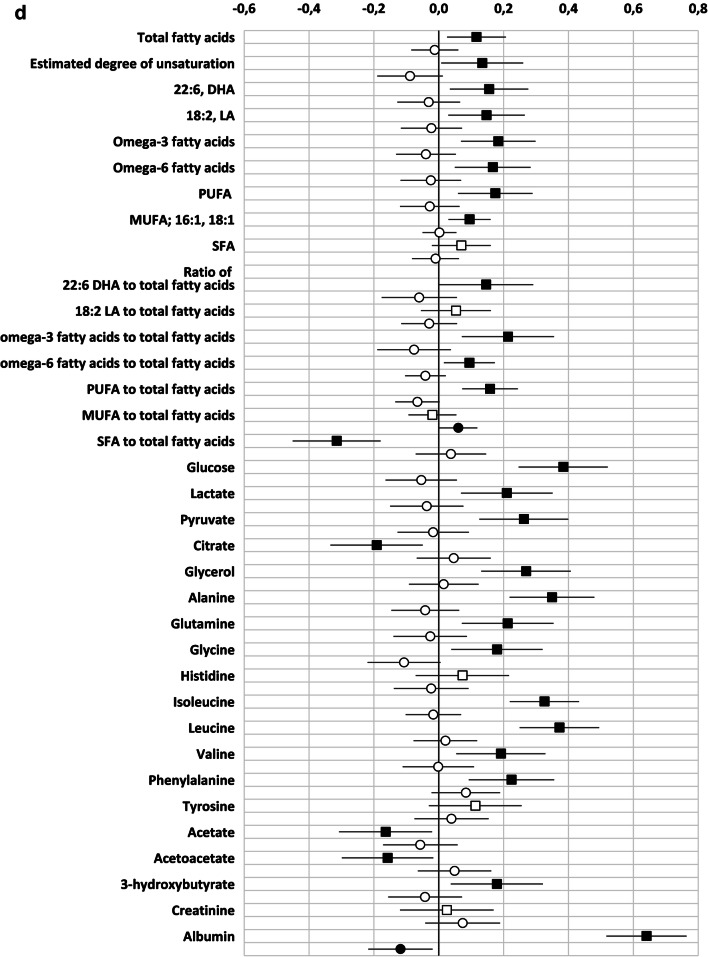
a-d Unstandardized beta (95% CI) of the linear regression between GlycA (squares) and hsCRP (circles) with metabolic variables. Both inflammatory markers and the metabolites are divided by their standard deviation. Black squares/circles indicate statistically significant correlation between inflammatory marker and metabolic variables (P < 0.05). DHA docosahexaenoic acid, FA fatty acids, LA linoleic acids, MUFA monounsaturated fatty acids, PUFA polyunsaturated fatty acids; Remnant cholesterol (non-HDL, non-LDL -cholesterol)
Fig. 2
Fig. 2
a-d Unstandardized beta (95% CI) of the linear regression between GlycA (squares) and hsCRP (circles) with metabolic variables. Both inflammatory markers and the metabolites are divided by their standard deviation. Black squares/circles indicate statistically significant correlation between inflammatory marker and metabolic variables (P < 0.05). DHA docosahexaenoic acid, FA fatty acids, LA linoleic acids, MUFA monounsaturated fatty acids, PUFA polyunsaturated fatty acids; Remnant cholesterol (non-HDL, non-LDL -cholesterol)
Fig. 2
Fig. 2
a-d Unstandardized beta (95% CI) of the linear regression between GlycA (squares) and hsCRP (circles) with metabolic variables. Both inflammatory markers and the metabolites are divided by their standard deviation. Black squares/circles indicate statistically significant correlation between inflammatory marker and metabolic variables (P < 0.05). DHA docosahexaenoic acid, FA fatty acids, LA linoleic acids, MUFA monounsaturated fatty acids, PUFA polyunsaturated fatty acids; Remnant cholesterol (non-HDL, non-LDL -cholesterol)
Fig. 2
Fig. 2
a-d Unstandardized beta (95% CI) of the linear regression between GlycA (squares) and hsCRP (circles) with metabolic variables. Both inflammatory markers and the metabolites are divided by their standard deviation. Black squares/circles indicate statistically significant correlation between inflammatory marker and metabolic variables (P < 0.05). DHA docosahexaenoic acid, FA fatty acids, LA linoleic acids, MUFA monounsaturated fatty acids, PUFA polyunsaturated fatty acids; Remnant cholesterol (non-HDL, non-LDL -cholesterol)

References

    1. Bell JD, Brown JC, Nicholson JK, Sadler PJ. Assignment of resonances for 'acute-phase' glycoproteins in high resolution proton NMR spectra of human blood plasma. FEBS Letters. 1987;215(2):311–315. doi: 10.1016/0014-5793(87)80168-0. - DOI - PubMed
    1. Calder PC, Ahluwalia N, Brouns F, Buetler T, Clement K, Cunningham K, et al. Dietary factors and low-grade inflammation in relation to overweight and obesity. British Journal of Nutrition. 2011;106(Suppl 3):S5–78. doi: 10.1017/S0007114511005460. - DOI - PubMed
    1. Cani PD, Amar J, Iglesias MA, Poggi M, Knauf C, Bastelica D, et al. Metabolic endotoxemia initiates obesity and insulin resistance. Diabetes. 2007;56(7):1761–1772. doi: 10.2337/db06-1491. - DOI - PubMed
    1. Connelly MA, Otvos JD, Shalaurova I, Playford MP, Mehta NN. GlycA, a novel biomarker of systemic inflammation and cardiovascular disease risk. Journal of Translational Medicine. 2017;15(1):219. doi: 10.1186/s12967-017-1321-6. - DOI - PMC - PubMed
    1. Fizelova M, Jauhiainen R, Kangas AJ, Soininen P, Ala-Korpela M, Kuusisto J, et al. Differential associations of inflammatory markers with insulin sensitivity and secretion: The prospective METSIM study. Journal of Clinical Endocrinology and Metabolism. 2017;102(9):3600–3609. doi: 10.1210/jc.2017-01057. - DOI - PMC - PubMed

Publication types

MeSH terms

Associated data