


Exposure to endocrine-disrupting chemicals and anthropometric measures of obesity: a systematic review and meta-analysis
- PMID: 32565448
- PMCID: PMC7311014
- DOI: 10.1136/bmjopen-2019-033509
Exposure to endocrine-disrupting chemicals and anthropometric measures of obesity: a systematic review and meta-analysis
Abstract
Objective: Endocrine-disrupting chemicals (EDCs) are viewed as a major potential link between the environment and obesity development. We did a systematic review and meta-analysis to examine the association between exposure to EDCs and obesity.
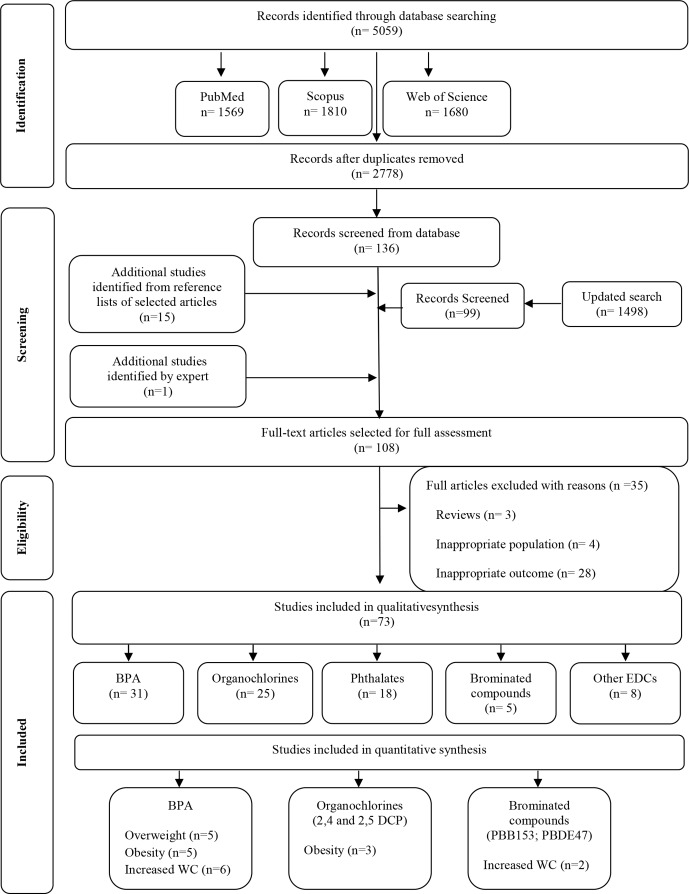
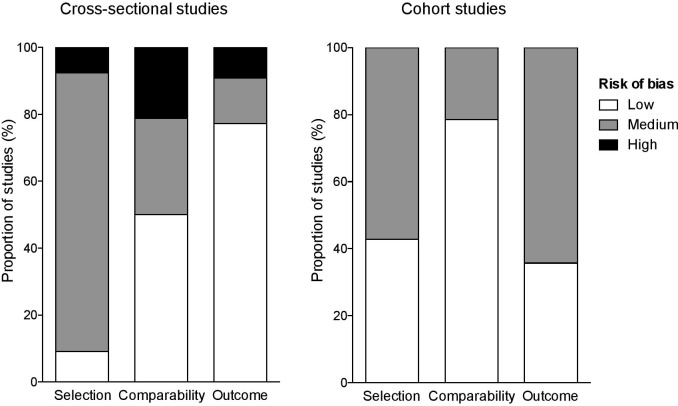
Data sources, design and eligibility criteria: PubMed, Scopus and Web of Science were searched from inception to 6 June 2018 for studies primarily addressing the association between exposure to EDCs after the age of 2 years and anthropometric measures of obesity or body fat. The Newcastle-Ottawa scale was used to assess the risk of bias.
Data extraction and synthesis: Two independent reviewers screened and conducted data extraction and synthesis. A third reviewer resolved disagreements.
Results: A total of 73 studies investigating bisphenol A (32 286 individuals), organochlorine compounds (34 567 individuals), phthalates (21 401 individuals), polybrominated biphenyls (2937 individuals), polycyclic aromatic hydrocarbons (5174 individuals), parabens (4097 individuals), benzoic acid (3671 individuals) and polyfluoroalkyl substances (349 individuals) met our inclusion criteria. Most had a cross-sectional design and low or medium risk of bias. In qualitative analysis, bisphenol A and phthalates were consistently associated with general and abdominal obesity, in children and adults, and some studies suggested this association was age-dependent and gender-dependent. Meta-analysis indicated a significant association between exposure to bisphenol A and overweight (OR 1.254, 95% CI 1.005 to 1.564), obesity (OR 1.503, 95% CI 1.273 to 1.774) and increased waist circumference (OR 1.503, 95% CI 1.267 to 1.783) in adults, and between exposure to 2,5-dichlorophenol and obesity in children (OR 1.8, 95% CI 1.1018 to 3.184).
Conclusion: Most observational studies supported a positive association between obesity and exposure to EDCs. Although causality cannot be determined from these data, they underscore the need to limit human exposure to EDCs in light of the evidence from animal and cell-based studies indicating the effects of these chemicals on adiposity.
Prospero registration number: CRD42018074548.
Keywords: abdominal obesity; endocrinology disrupting chemicals; obesity; pediatric obesity.
© Author(s) (or their employer(s)) 2020. Re-use permitted under CC BY-NC. No commercial re-use. See rights and permissions. Published by BMJ.
Conflict of interest statement
Competing interests: None declared.
Figures

References
Publication types
MeSH terms
Substances
LinkOut - more resources
Full Text Sources
Medical
Miscellaneous
