


The potential role of pomegranate and its nano-formulations on cerebral neurons in aluminum chloride induced Alzheimer rat model
- PMID: 32565686
- PMCID: PMC7296487
- DOI: 10.1016/j.sjbs.2020.04.045
The potential role of pomegranate and its nano-formulations on cerebral neurons in aluminum chloride induced Alzheimer rat model
Abstract
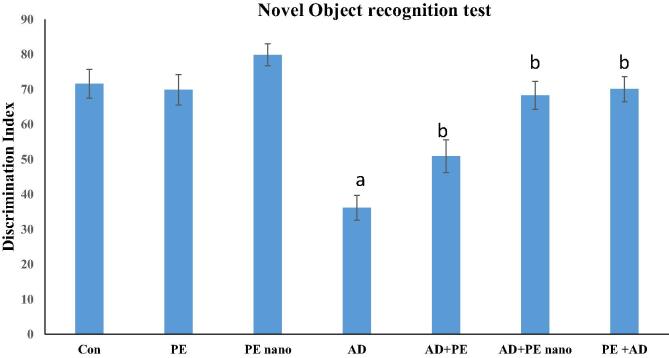
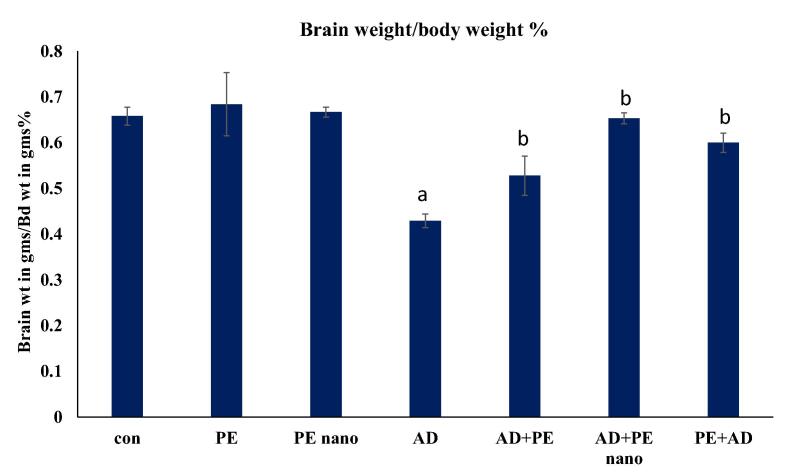
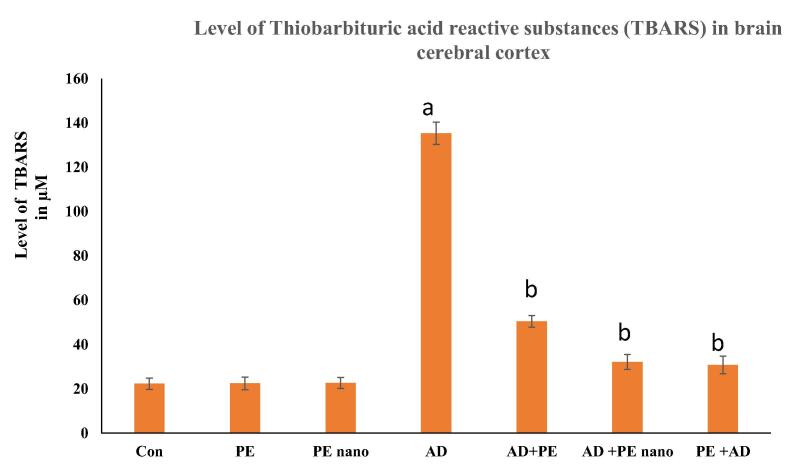
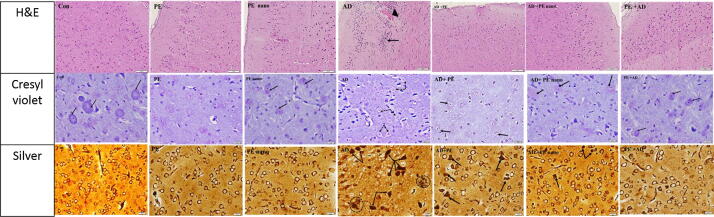
The oxidative stress leading to degenerative changes in the brain of Alzheimer's disease (AD) is evident. Our aim was to evaluate the therapeutic and protective effects of pomegranate extract (PE) and pomegranate extract-loaded nanoparticles (PE nano) in an AlCl 3-induced AD rat model. Nanoparticles were synthesized with a PE load of 0.68% w/w, and 70 male Wistar rats were divided into 7 groups: Group I was the control, Group II received PE., Group III received PE nano for 2 weeks, Group IV received AlCl 3 (50 mg/kg) daily orally for 4 weeks, Group V received PE for 2 weeks, Group VI received PE nano for 2 weeks, and Groups V and VI were started after AlCl 3 administration was stopped. Group VII received PE for 2 weeks and was stopped before AlCl 3 was administered. The Results revealed that the discrimination index in the novel object recognition test was the least in AD rat model but increased in cases protected with PE treated with PE nano. Similar results were shown based on calculating the brain weight/body weight percent. The biomarkers of antioxidant activity (catalase, glutathione and total antioxidant activity) in brain homogenate were significantly increased in groups treated with either PE or PE nano. The thiobarbituric acid reactive substance measured to estimate lipid peroxidation was significantly increased in AD rat model and decreased in groups protected with PE or treated with PE nano. Histopathological studies using hematoxylin and eosin, cresyl violet, and silver stains revealed hyaline degeneration, chromatolysis, and hallmarks of AD; neurofibrillary tangles and the senile plaques in brains of AD rat model. Restoration of the histological architecture, Nissl granules, and minimal appearance of hallmarks of AD characterized brains treated with PE or PE nano. In conclusion, PE was more effective as a protectant than a therapeutic measure in alleviating the antioxidant, lipid peroxidative effects and histopathological hallmarks in AD brains. But, the therapeutic PE-loaded nanoparticles increased the efficacy of active components and produced similar results as the protective PE.
Keywords: Alzheimer's; Antioxidant markers; Histopathology; Lipid peroxidation; Nanoformulations; Novel object recognition test; Pomegranate extract.
© 2020 The Authors.
Conflict of interest statement
The authors declared that there is no conflict of interest.
Figures
References
-
- Abd El Mohsen M.M., Iravani M.M., Spencer J.P., Rose S., Fahim A.T., Motawi T.M., Ismail N.A., Jenner P. Age-associated changes in protein oxidation and proteasome activities in rat brain: modulation by antioxidants. Biochem. Biophys. Res. Commun. 2005;336(2):386–391. doi: 10.1016/j.bbrc.2005.07.201. - DOI - PubMed
-
- Arlt S., Beisiegel U., Kontush A. Lipid peroxidation in neurodegeneration: new insights into Alzheimer's disease. Curr. Opin. Lipidol. 2002;13(3):289–294. - PubMed
-
- Bancroft, J.D., Stevens, A., 1996. The haematoxylin and eosin. Theory and Practice of Histological Techniques. In, edited by Churchill Livingstone, 99-113. London, New York & Tokyo.
-
- Berr C. Cognitive impairment and oxidative stress in the elderly: results of epidemiological studies. BioFactors. 2000;13(1–4):205–209. - PubMed
LinkOut - more resources
Full Text Sources
