


Zinc Oxide Nanoparticle Synergizes Sorafenib Anticancer Efficacy with Minimizing Its Cytotoxicity
- PMID: 32566073
- PMCID: PMC7275957
- DOI: 10.1155/2020/1362104
Zinc Oxide Nanoparticle Synergizes Sorafenib Anticancer Efficacy with Minimizing Its Cytotoxicity
Abstract
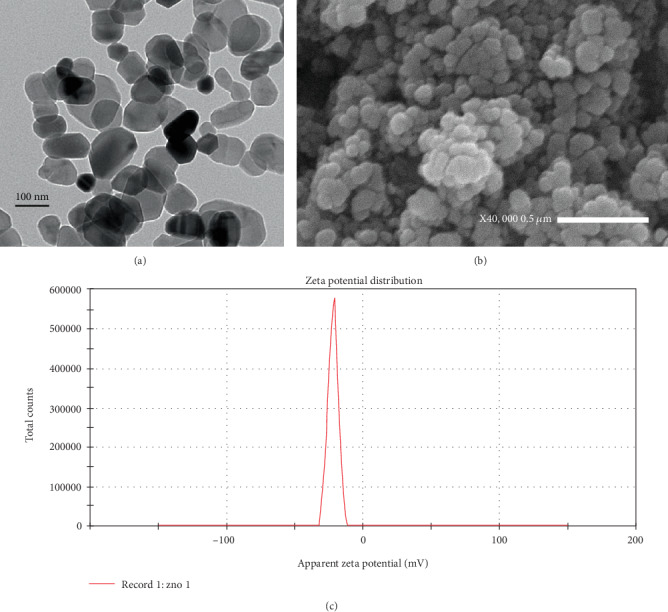
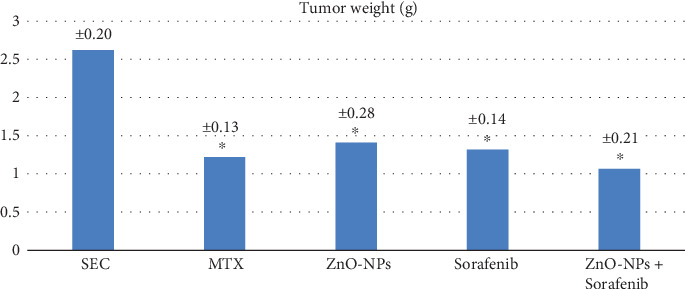
Cancer, as a group, represents the most important cause of death worldwide. Unfortunately, the available therapeutic approaches of cancer including surgery, chemotherapy, radiotherapy, and immunotherapy are unsatisfactory and represent a great challenge as many patients have cancer recurrence and severe side effects. Methotrexate (MTX) is a well-established (antineoplastic or cytotoxic) chemotherapy and immunosuppressant drug used to treat different types of cancer, but its usage requires high doses causing severe side effects. Therefore, we need a novel drug with high antitumor efficacy in addition to safety. The aim of this study was the evaluation of the antitumor efficacy of zinc oxide nanoparticle (ZnO-NPs) and sorafenib alone or in combination on solid Ehrlich carcinoma (SEC) in mice. Sixty adult female Swiss-albino mice were divided equally into 6 groups as follows: control, SEC, MTX, ZnO-NPs, sorafenib, and ZnO-NPs+sorafenib; all treatments continued for 4 weeks. ZnO-NPs were characterized by TEM, zeta potential, and SEM mapping. Data showed that ZnO-NPs synergized with sorafenib as a combination therapy to execute more effective and safer anticancer activity compared to monotherapy as showed by a significant reduction (P < 0.001) in tumor weight, tumor cell viability, and cancer tissue glutathione amount as well as by significant increase (P < 0.001) in tumor growth inhibition rate, DNA fragmentation, reactive oxygen species generation, the release of cytochrome c, and expression of the apoptotic gene caspase-3 in the tumor tissues with minimal changes in the liver, renal, and hematological parameters. Therefore, we suggest that ZnO-NPs might be a safe candidate in combination with sorafenib as a more potent anticancer. The safety of this combined treatment may allow its use in clinical trials.
Copyright © 2020 Ahmed Nabil et al.
Conflict of interest statement
The authors declare that they have no conflict of interest.
Figures
References
-
- Ozaslan M., Karagoz I. D., Kilic I. H., Guldur M. E. Ehrlich ascites carcinoma. African Journal of Biotechnology. 2011;10:2375–2378.
MeSH terms
Substances
LinkOut - more resources
Full Text Sources
Research Materials
