


Effectiveness of mandatory peer review to reduce antipsychotic prescriptions for Medicaid-insured children
- PMID: 32567089
- PMCID: PMC7375997
- DOI: 10.1111/1475-6773.13297
Effectiveness of mandatory peer review to reduce antipsychotic prescriptions for Medicaid-insured children
Abstract
Background: Prior authorization of prescription medications is a policy tool that can potentially impact care quality and patient safety.
Objective: To examine the effectiveness of a mandatory peer-review program in reducing antipsychotic prescriptions among Medicaid-insured children, accounting for secular trends that affected antipsychotic prescribing nationally.
Data source: Medicaid Analytical eXtracts (MAX) with administrative claims for health services provided between January 2006 and December 2011.
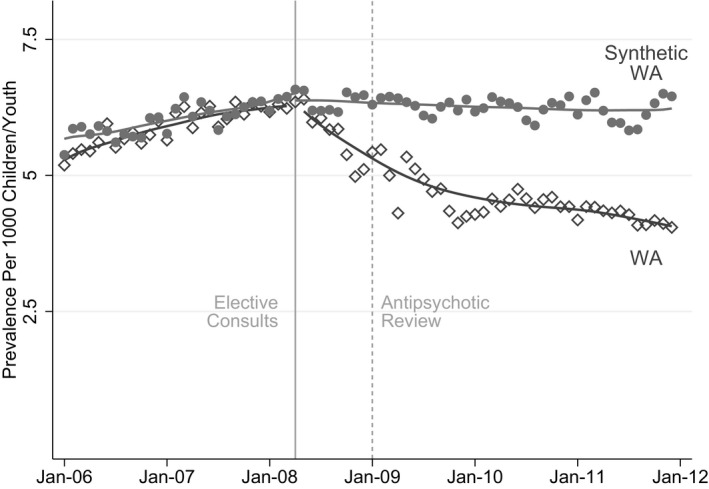
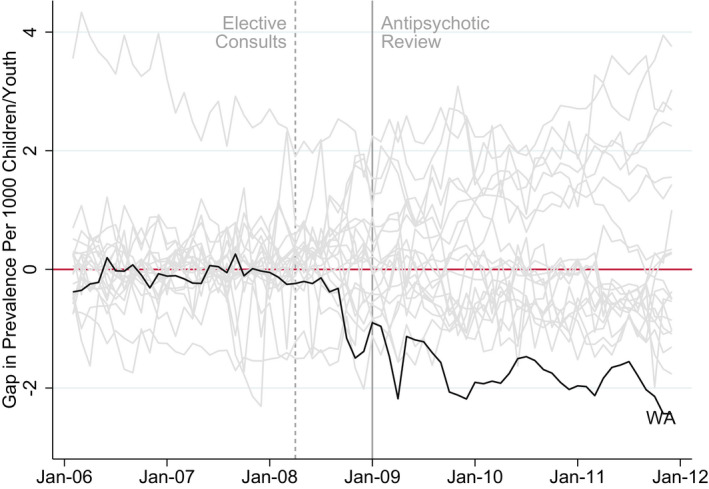
Study design: This retrospective, observational study examined prescription claims records from Washington State (Washington) and compared them to a synthetic control drawing from 20 potential donor states that had not implemented any antipsychotic prior authorization program or mandatory peer review for Medicaid-insured children during the study period. This method provided a means to control for secular trends by simulating the antipsychotic use trajectory that the program state would have been expected to experience in the absence of the policy implementation.
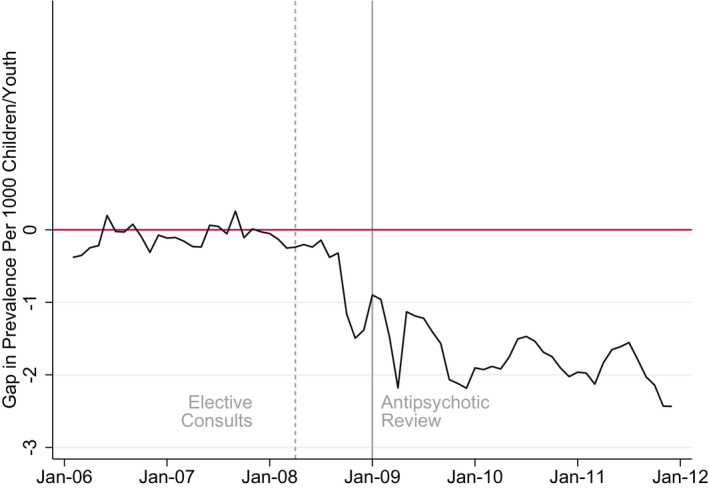
Principal findings: Before the policy implementation, antipsychotic use prevalence closely tracked those of the synthetic control (6.17 per 1000 in Washington vs. 6.21 in the synthetic control group). Within two years after the policy was implemented, prevalence decreased to 4.04 in Washington and remained stable in the synthetic control group (6.47), corresponding to an approximately 38% decline.
Conclusion: Prior authorization program designs and implementations vary widely. This mandatory peer-review program, with an authorization window and two-stage rollout, was effective in moving population level statistics toward safe and judicious use of antipsychotic medications in children.
Keywords: Medicaid; antipsychotic medications; children and adolescents; mandatory peer review; prior authorization; synthetic control method.
© Health Research and Educational Trust.
Figures
References
-
- Rani F, Murray ML, Byrne PJ, Wong ICK. Epidemiologic features of antipsychotic prescribing to children and adolescents in primary care in the United Kingdom. Pediatrics. 2008;121(5):1002‐1009. - PubMed
-
- Olfson M, Blanco C, Liu S‐M, Wang S, Correll CU. National trends in the office‐based treatment of children, adolescents, and adults with antipsychotics. Arch Gen Psychiatry. 2012;69(12):1247‐1256. - PubMed
Publication types
MeSH terms
Substances
Grants and funding
LinkOut - more resources
Full Text Sources
Medical
