


Serum Detection of Nonadherence to Adjuvant Tamoxifen and Breast Cancer Recurrence Risk
- PMID: 32568632
- PMCID: PMC7430219
- DOI: 10.1200/JCO.19.01758
Serum Detection of Nonadherence to Adjuvant Tamoxifen and Breast Cancer Recurrence Risk
Abstract
Purpose: Nonadherence to long-term treatments is often under-recognized by physicians and there is no gold standard for its assessment. In breast cancer, nonadherence to tamoxifen therapy after surgery constitutes a major obstacle to optimal outcomes. We sought to evaluate the rate of biochemical nonadherence to adjuvant tamoxifen using serum assessment and to examine its effects on short-term, distant disease-free survival (DDFS).
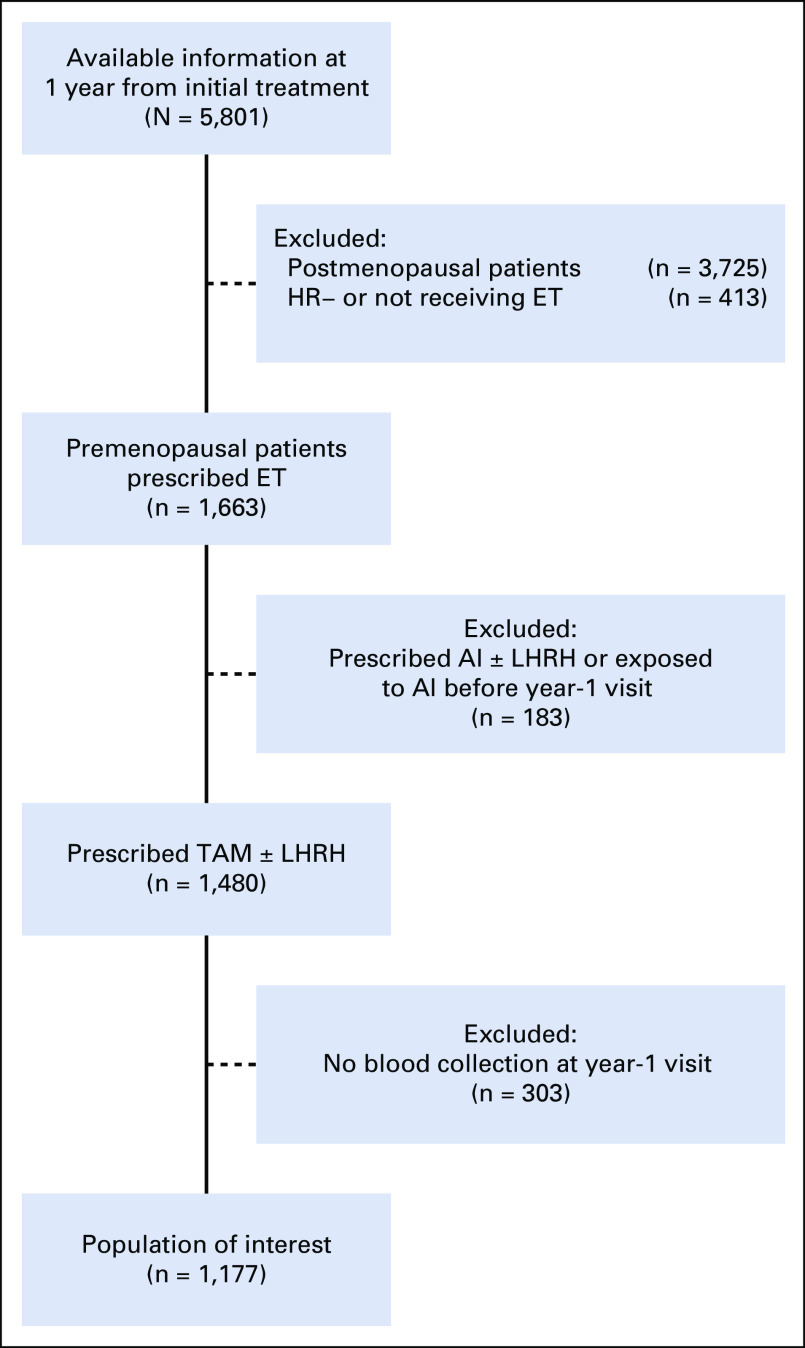
Patients and methods: We studied 1,177 premenopausal women enrolled in a large prospective study (CANTO/NCT01993498). Definition of biochemical nonadherence was based on a tamoxifen serum level < 60 ng/mL, assessed 1 year after prescription. Self-reported nonadherence to tamoxifen therapy was collected at the same time through semistructured interviews. Survival analyses were conducted using an inverse probability weighted Cox proportional hazards model, using a propensity score based on age, staging, surgery, chemotherapy, and center size.
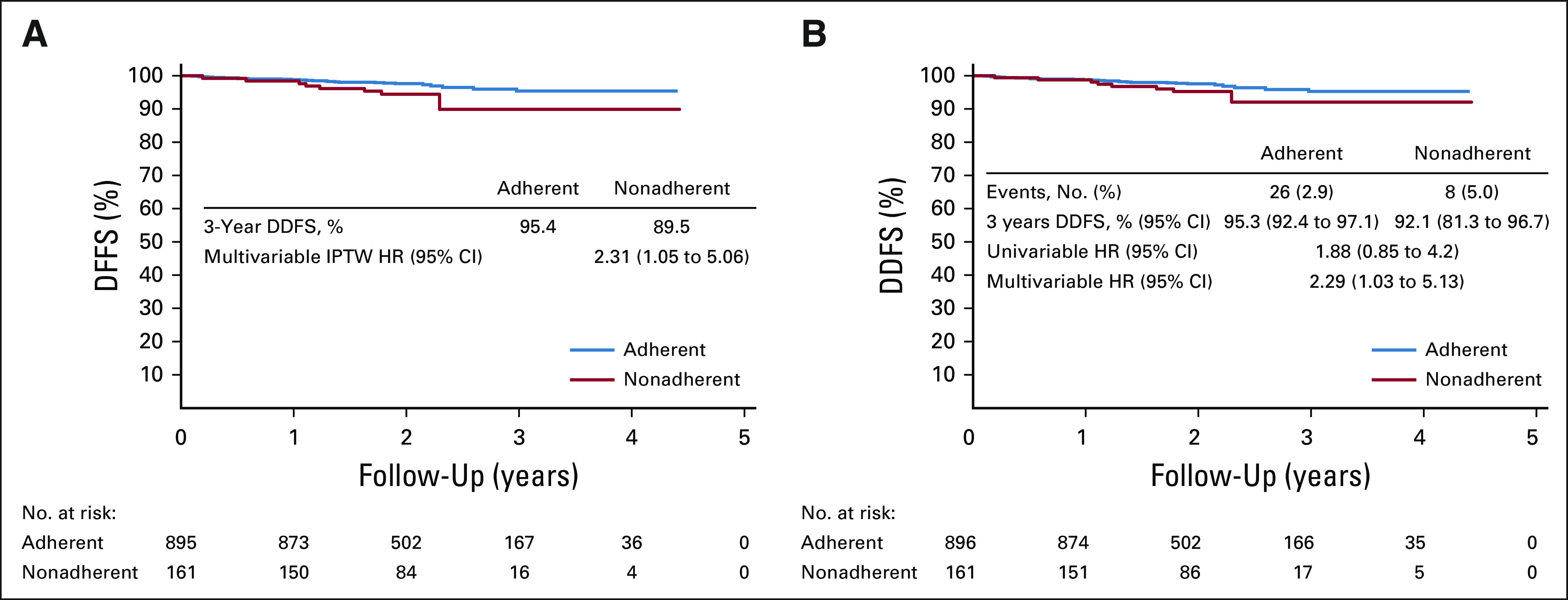
Results: Serum assessment of tamoxifen identified 16.0% of patients (n = 188) below the set adherence threshold. Patient-reported rate of nonadherence was lower (12.3%). Of 188 patients who did not adhere to the tamoxifen prescription, 55% self-reported adherence to tamoxifen. After a median follow-up of 24.2 months since tamoxifen serum assessment, patients who were biochemically nonadherent had significantly shorter DDFS (for distant recurrence or death, adjusted hazard ratio, 2.31; 95% CI, 1.05 to 5.06; P = .036), with 89.5% of patients alive without distant recurrence at 3 years in the nonadherent cohort versus 95.4% in the adherent cohort.
Conclusion: Therapeutic drug monitoring may be a useful method to promptly identify patients who do not take adjuvant tamoxifen as prescribed and are at risk for poorer outcomes. Targeted interventions facilitating patient adherence are needed and have the potential to improve short-term breast cancer outcomes.
Figures
References
-
- Osterberg L, Blaschke T. Adherence to medication. N Engl J Med. 2005;353:487–497. - PubMed
-
- Sabaté E (ed): Adherence to Long-Term Therapies: Evidence for Action. Geneva, Switzerland, World Health Organization, 2003.
-
- Kini V, Ho PM. Interventions to improve medication adherence: A review. JAMA. 2018;320:2461–2473. - PubMed
-
- Waterhouse DM, Calzone KA, Mele C, et al. Adherence to oral tamoxifen: A comparison of patient self-report, pill counts, and microelectronic monitoring. J Clin Oncol. 1993;11:1189–1197. - PubMed
-
- Rosenbaum L, Shrank WH. Taking our medicine--Improving adherence in the accountability era. N Engl J Med. 2013;369:694–695. - PubMed
Publication types
MeSH terms
Substances
Associated data
LinkOut - more resources
Full Text Sources
Medical
