


Acute oxytocin effects in inferring others' beliefs and social emotions in people at clinical high risk for psychosis
- PMID: 32572020
- PMCID: PMC7308367
- DOI: 10.1038/s41398-020-00885-4
Acute oxytocin effects in inferring others' beliefs and social emotions in people at clinical high risk for psychosis
Abstract
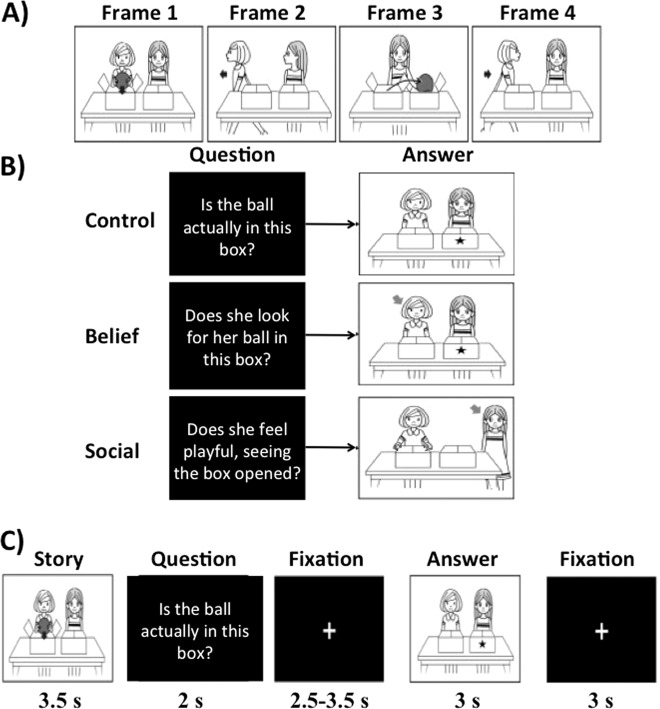
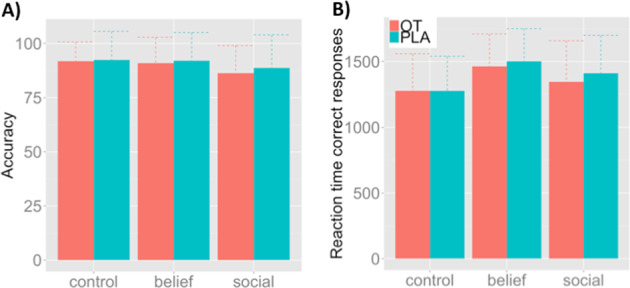
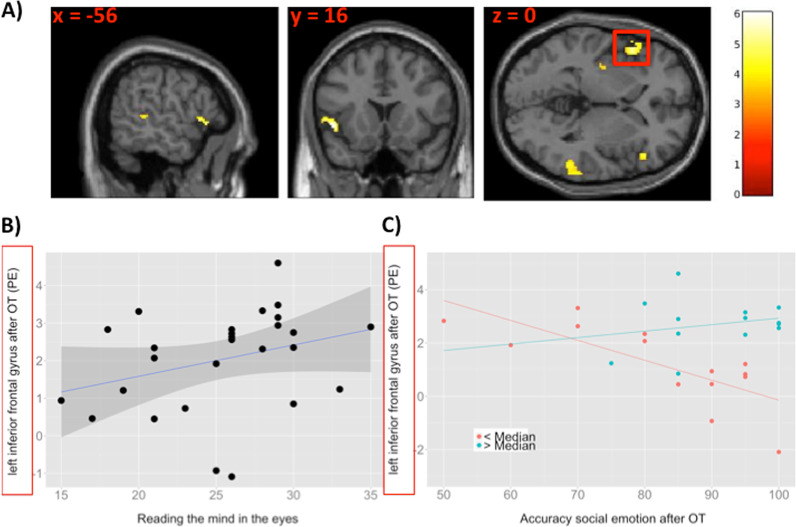
Social deficits are key hallmarks of the Clinical High Risk for Psychosis (CHR-P) state and of established psychotic disorders, and contribute to impaired social functioning, indicating a potential target for interventions. However, current treatments do not significantly ameliorate social impairments in CHR-P individuals. Given its critical role in social behaviour and cognition, the oxytocinergic (OT) system is a promising target for novel interventions in CHR-P subjects. In a double-blind, placebo-controlled, crossover design, 30 CHR-P males were studied using functional magnetic resonance imaging (fMRI) on two occasions, once after 40IU self-administered intranasal OT and once after placebo. A modified version of the Sally-Anne task was used to assess brain activation during inferring others' beliefs and social emotions. The Reading the Mind in the Eyes Test was acquired prior to the first scan to test whether OT effects were moderated by baseline social-emotional abilities. OT did not modulate behavioural performances but reduced activation in the bilateral inferior frontal gyrus compared with placebo while inferring others' social emotions. Furthermore, the relationship between brain activation and task performance after OT administration was moderated by baseline social-emotional abilities. While task accuracy during inferring others' social emotion increased with decreasing activation in the left inferior frontal gyrus in CHR-P individuals with low social-emotional abilities, there was no such relationship in CHR-P individuals with high social-emotional abilities. Our findings may suggest that acute OT administration enhances neural efficiency in the inferior frontal gyrus during inferring others' social emotions in those CHR-P subjects with low baseline social-emotional abilities.
Conflict of interest statement
The authors declare that they have no conflict of interest.
Figures
References
-
- Fusar-Poli P, et al. Social dysfunction predicts two years clinical outcome in people at ultra high risk for psychosis. J. Psychiatr. Res. 2010;44:294–301. - PubMed
-
- Fusar-Poli P, et al. Cognitive functioning in prodromal psychosis: a meta-analysiscognitive functioning in prodromal psychosis. Arch. Gen. Psychiatry. 2012;69:562–571. - PubMed
-
- Lincoln SH, Norkett EM, Frost KH, Gonzalez-Heydrich J, D’Angelo EJ. A developmental perspective on social-cognition difficulties in youth at clinical high risk for psychosis. Harv. Rev. Psychiatry. 2017;25:4–14. - PubMed
Publication types
MeSH terms
Substances
Grants and funding
LinkOut - more resources
Full Text Sources
Medical
