


A snapping shrimp has the fastest vision of any aquatic animal
- PMID: 32574534
- PMCID: PMC7336845
- DOI: 10.1098/rsbl.2020.0298
A snapping shrimp has the fastest vision of any aquatic animal
Abstract
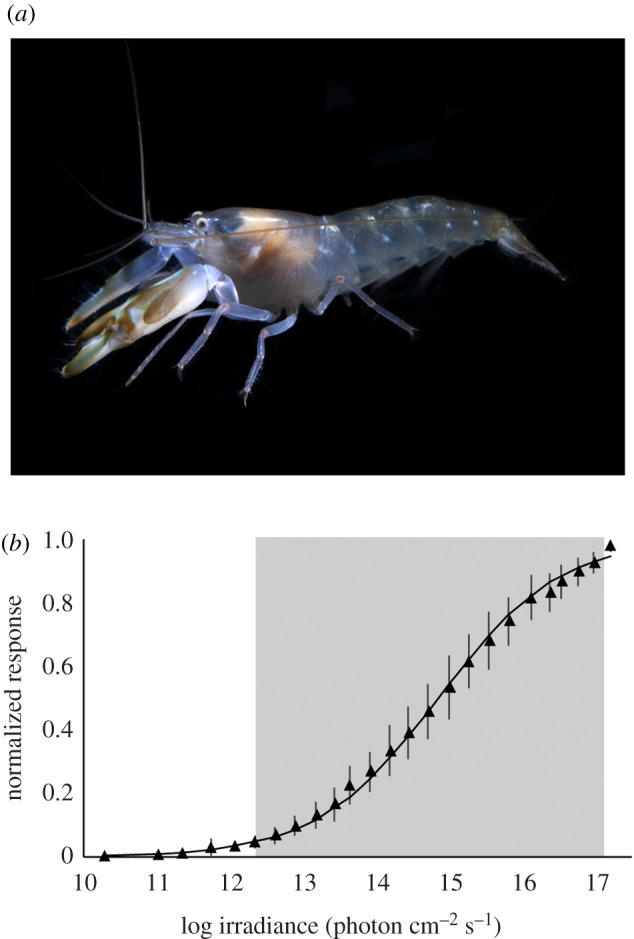
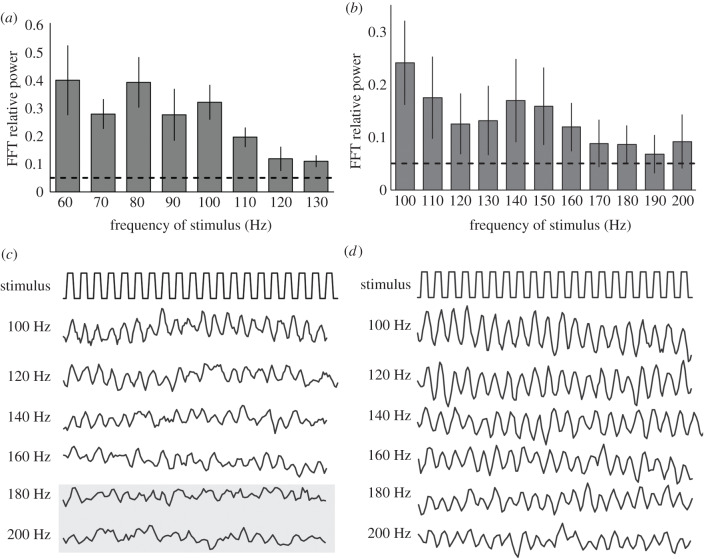
Animals use their sensory systems to sample information from their environments. The physiological properties of sensory systems differ, leading animals to perceive their environments in different ways. For example, eyes have different temporal sampling rates, with faster-sampling eyes able to resolve faster-moving scenes. Eyes can also have different dynamic ranges. For every eye, there is a light level below which vision is unreliable because of an insufficient signal-to-noise ratio and a light level above which the photoreceptors are saturated. Here, we report that the eyes of the snapping shrimp Alpheus heterochaelis have a temporal sampling rate of at least 160 Hz, making them the fastest-sampling eyes ever described in an aquatic animal. Fast-sampling eyes help flying animals detect objects moving across their retinas at high angular velocities. A. heterochaelis are fast-moving animals that live in turbid, structurally complex oyster reefs and their fast-sampling eyes, like those of flying animals, may help them detect objects moving rapidly across their retinas. We also report that the eyes of A. heterochaelis have a broad dynamic range that spans conditions from late twilight (approx. 1 lux) to direct sunlight (approx. 100 000 lux), a finding consistent with the circatidal activity patterns of this shallow-dwelling species.
Keywords: crustacean; dynamic range; temporal resolution; visual ecology.
Conflict of interest statement
We declare we have no competing interests.
Figures
References
-
- Land MF, Nilsson D-E. 2012. Animal eyes, 2nd edn Oxford, UK: Oxford University Press.
-
- Cronin TW, Johnsen S, Marshall NJ, Warrant EJ. 2014. Visual ecology. Princeton, NJ: Princeton University Press.
-
- Petie R, Hall MR, Hyldahl M, Garm A. 2016. Visual orientation by the crown-of-thorns starfish (Acanthaster planci). Coral Reefs 35, 1139–1150. (10.1007/s00338-016-1478-0) - DOI
Publication types
MeSH terms
Associated data
LinkOut - more resources
Full Text Sources
