


Evaluation of a Dog Population Management Intervention: Measuring Indicators of Impact
- PMID: 32575546
- PMCID: PMC7341204
- DOI: 10.3390/ani10061061
Evaluation of a Dog Population Management Intervention: Measuring Indicators of Impact
Abstract
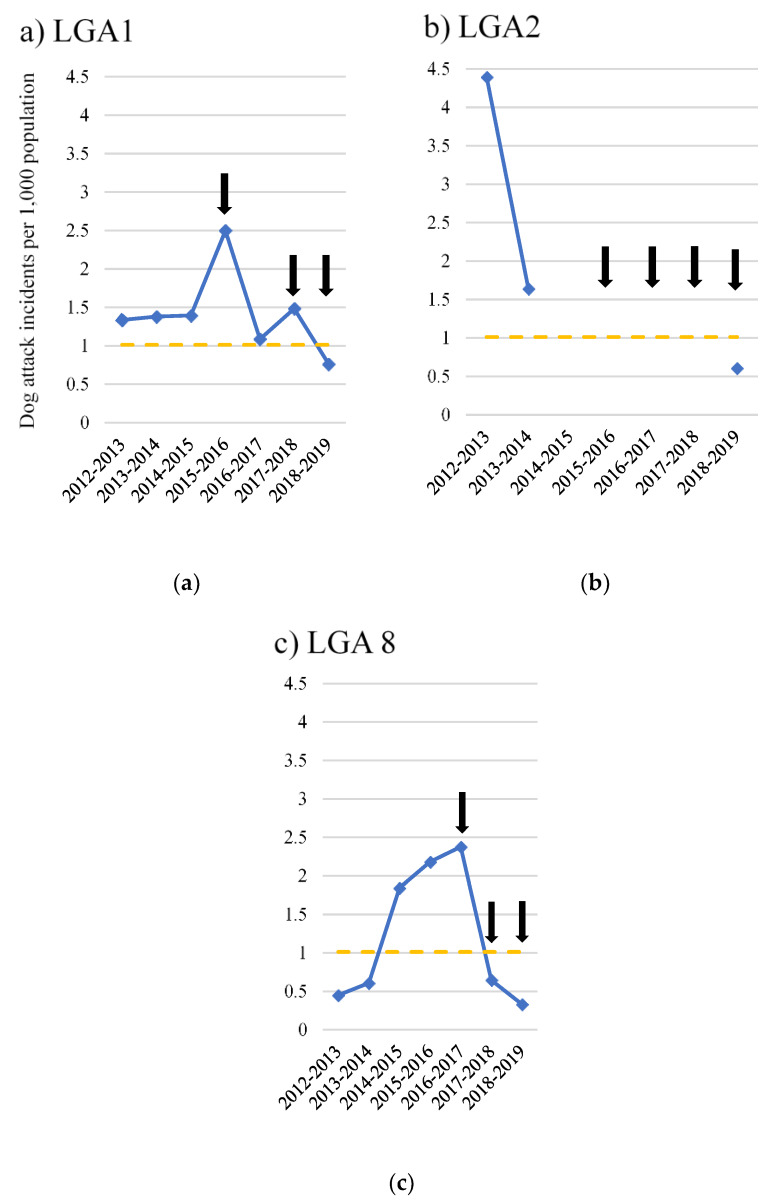
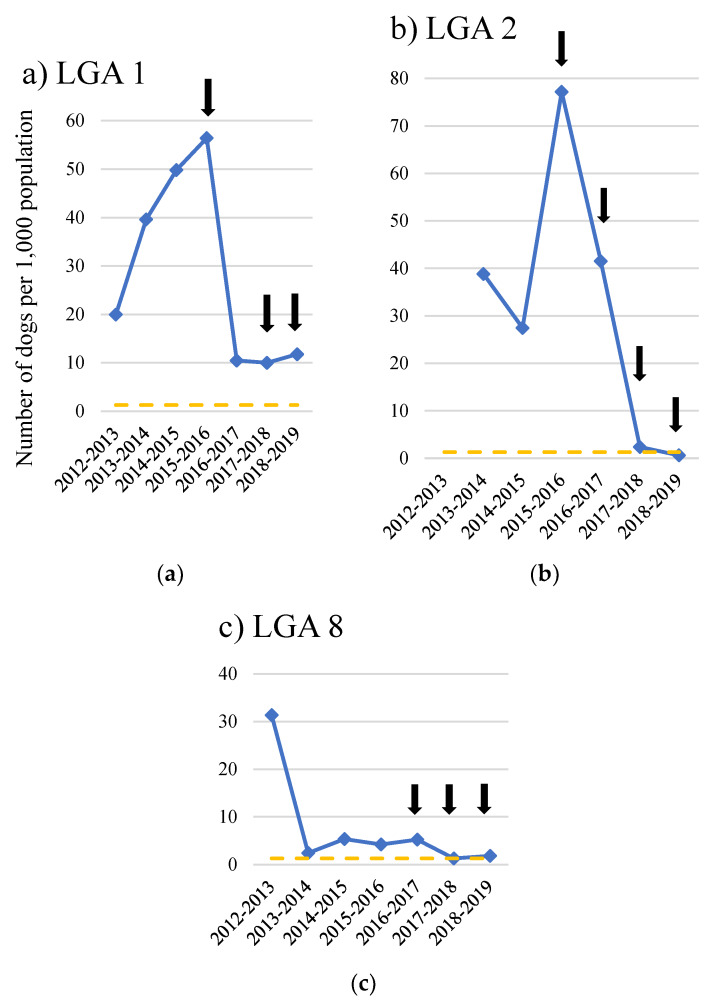
Dogs are important companions to people but can also present challenges to health and safety of communities if their populations are not effectively managed. Dog population management (DPM) is often undertaken by individual dog owners; however, some communities require additional DPM interventions, especially when veterinary services are unavailable or underutilised. This study evaluated the effectiveness of a DPM intervention conducted in 13 communities between September 2016 and November 2019 and assessed the utility of routinely collected data-program metrics and secondary data collected by local governments-to measure indicators of impacts. The intervention resulted in significant increases in the proportion of dogs presenting that were microchipped and surgically sterilised in participating communities. The intervention also resulted in significant reductions in dog attack incidents and euthanasia of dogs in council pounds in communities that participated for three or more years. Ongoing monitoring and evaluation of DPM interventions is critical to determine if impacts are being achieved. This study demonstrates the potential benefits of a DPM intervention for community safety and dog welfare and highlights the utility of routinely collected data. We also suggest benchmarks for indicators of community engagement to guide planning and monitoring of similar interventions.
Keywords: dog; dog bite; dog population management; euthanasia; evaluation; impact; monitoring.
Conflict of interest statement
G.C.M. and A.M.W. are employed as veterinarians by RSPCA NSW. The funders had no role in the design of the study; in the collection, analyses or interpretation of data; in the writing of the manuscript, or in the decision to publish the results.
Figures
References
-
- Smout F., Schrieber L., Speare R., Skerratt L.F. More bark than bite: Comparative studies are needed to determine the importance of canine zoonoses in Aboriginal communities. A critical review of published research. Zoonoses Public Health. 2017;64:495–504. doi: 10.1111/zph.12354. - DOI - PMC - PubMed
-
- World Health Organization WHO Expert Consultation on Rabies: Second Report. [(accessed on 18 May 2020)];2013 Available online: https://apps.who.int/iris/bitstream/handle/10665/85346/9789240690943_eng.... - PubMed
LinkOut - more resources
Full Text Sources
