


Prevalence and determinants of virological failure, genetic diversity and drug resistance among people living with HIV in a minority area in China: a population-based study
- PMID: 32576136
- PMCID: PMC7310496
- DOI: 10.1186/s12879-020-05124-1
Prevalence and determinants of virological failure, genetic diversity and drug resistance among people living with HIV in a minority area in China: a population-based study
Abstract
Background: Liangshan Yi Autonomous Prefecture is one of the areas that most severely affected by human immunodeficiency virus (HIV) in China, and virological failure on antiretroviral therapy (ART) is serious in this area. Analyses of prevalence and determinants of ART failure, the genetic diversity and drug resistance among people living with HIV (PLWH) helps improve HIV treatment efficiency and prevent HIV transmission.
Methods: A total of 5157 PLWH were recruited from 2016 to 2017. The venous blood samples were subjected to RT-PCR, followed by sequencing of the HIV-1 pol gene, targeting the protease and reverse transcriptase fragments. HIV-1 diversity was analyzed using the DNAStar software and drug resistance mutations were analyzed using the Stanford University HIV Drug Resistance Database.
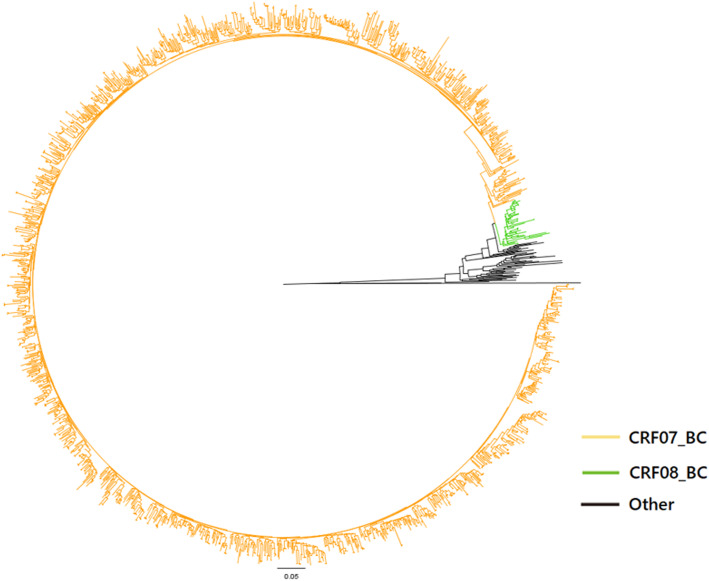
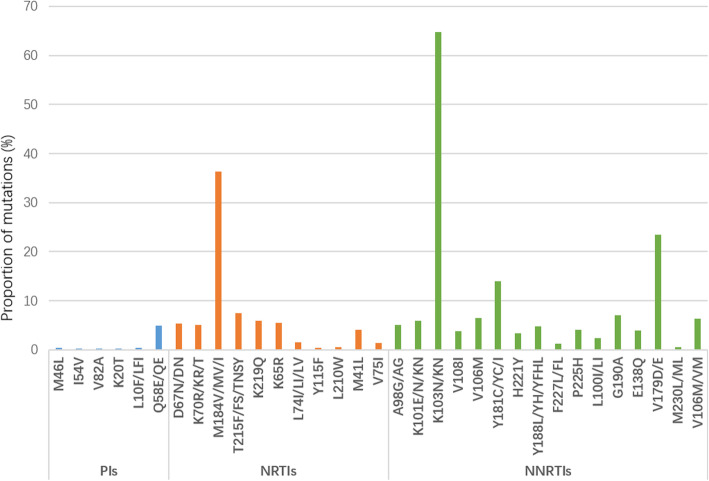
Results: A total of 2156 (41.81%) PLWH showed virological failure on ART. Males (ORm = 1.25), heterosexual behaviors and drug injection (ORm = 1.44) and mother to child transmission routes (ORm = 1.58), the clinical stage of AIDS (ORm = 1.35), having used illicit drugs and shared the needles (1-4 times: ORm = 1.34; more than 5 times: ORm = 1.52), having ever replaced ART regimen (ORm = 1.48) increased the risk of virological failure among PLWH, while higher education lever (ORm = 0.77) and ≥ 12 months on ART (12 ~ 36 months: ORm = 0.72; ≥36 months: ORm = 0.66) was associated with lower likelihood of virological failure. The data revealed that CRF07_BC (1508, 95.62%) were the most common strains, and the drug-resistant rate was 32.10% among PLWH with virological failure in this area. The high frequencies of drug resistance were found in EFV and NVP of NNRTIs, ABC, FTC and 3TC of NRTIs, and TPV/r in PIs. The most common mutations in NNRTIs, NRTIs and PIs were K103N/KN (64.69%), M184V/MV/I (36.29%) and Q58E/QE (4.93%), respectively.
Conclusion: We concluded that surveillance of virological failure, HIV-1 subtypes, and drug resistance to understand HIV-1 epidemiology and guide modification of ART guidelines, and target prevention and control strategies should be formatted to reduce the virological failure and drug resistance to promote viral suppression and prevent HIV-1 transmission.
Keywords: Antiretroviral therapy; Drug resistance; HIV; HIV-1 subtypes; Virological failure.
Conflict of interest statement
The authors declare that they have no competing interests.
Figures
References
-
- UNAIDS . Global AIDS monitoring 2018, country progress report - China. 2018.
-
- Yang S, Luo M, Zhang S, Yao Y, Wang Q, Liao Q. Overview on culture and customs related to AIDS epidemic and prevention among Yi people in Liangshan. Chin J AIDS STD. 2017;23(3):101–105.
-
- Zhao QG, Gong YH, Liao Q, Yu G, Wang K, Wang J, et al. Estimation on the HIV-1 incidence in Liangshan Yi autonomous prefecture, under BED-capture enzyme immunoassay, from 2011 to 2013. Zhonghua Liu Xing Bing Xue Za Zhi. 2016;37(8):1105–1107. - PubMed
-
- Günthard HF, Aberg JA, Eron JJ, Hoy JF, Telenti A, Benson CA, et al. Antiretroviral treatment of adult HIV infection: 2014 recommendations of the international antiviral society-USA panel. JAMA. 2014;312(4):410–425. - PubMed
MeSH terms
Substances
Grants and funding
LinkOut - more resources
Full Text Sources
Medical
Miscellaneous
