Review
. 2020 Jun 22;12(6):1651.
doi: 10.3390/cancers12061651.

Emerging Concepts and Novel Strategies in Radiation Therapy for Laryngeal Cancer Management

Affiliations
Review

Emerging Concepts and Novel Strategies in Radiation Therapy for Laryngeal Cancer Management

Mauricio E Gamez et al. Cancers (Basel). .

Abstract

Laryngeal squamous cell carcinoma is the second most common head and neck cancer. Its pathogenesis is strongly associated with smoking. The management of this disease is challenging and mandates multidisciplinary care. Currently, accepted treatment modalities include surgery, radiation therapy, and chemotherapy-all focused on improving survival while preserving organ function. Despite changes in smoking patterns resulting in a declining incidence of laryngeal cancer, the overall outcomes for this disease have not improved in the recent past, likely due to changes in treatment patterns and treatment-related toxicities. Here, we review emerging concepts and novel strategies in the use of radiation therapy in the management of laryngeal squamous cell carcinoma that could improve the relationship between tumor control and normal tissue damage (therapeutic ratio).

Keywords: IGRT; IMRT; SABR; de-escalation therapy; laryngeal cancer; radiotherapy.


Conflict of interest statement

The authors declare no conflicts of interest.

Figures
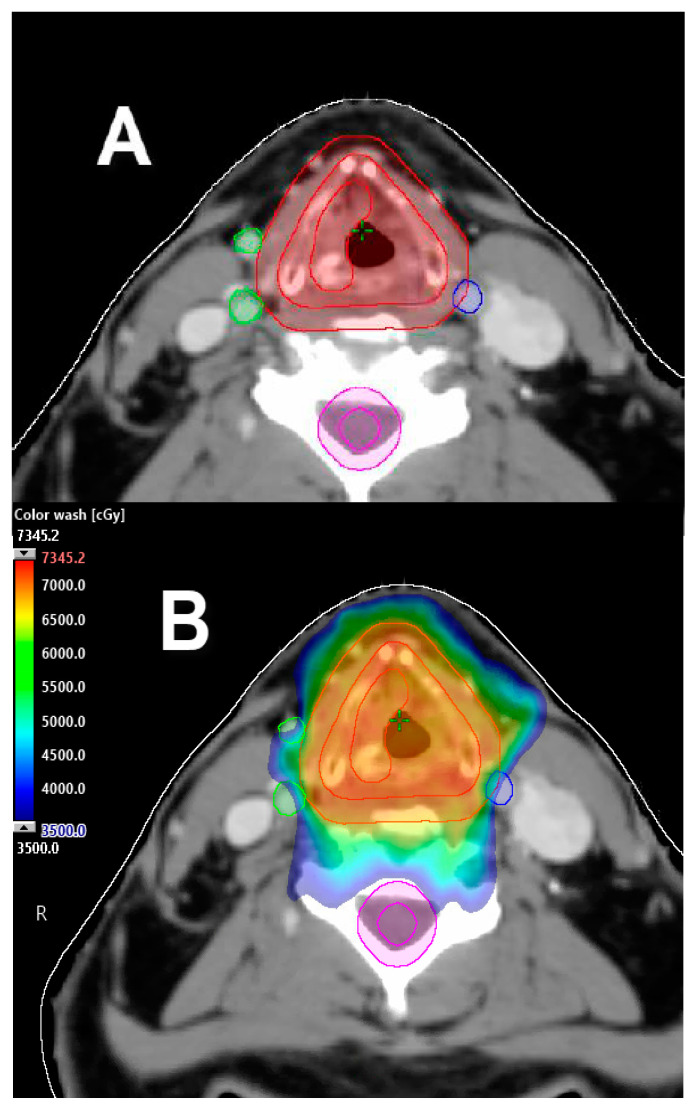
Figure 1
Figure 1
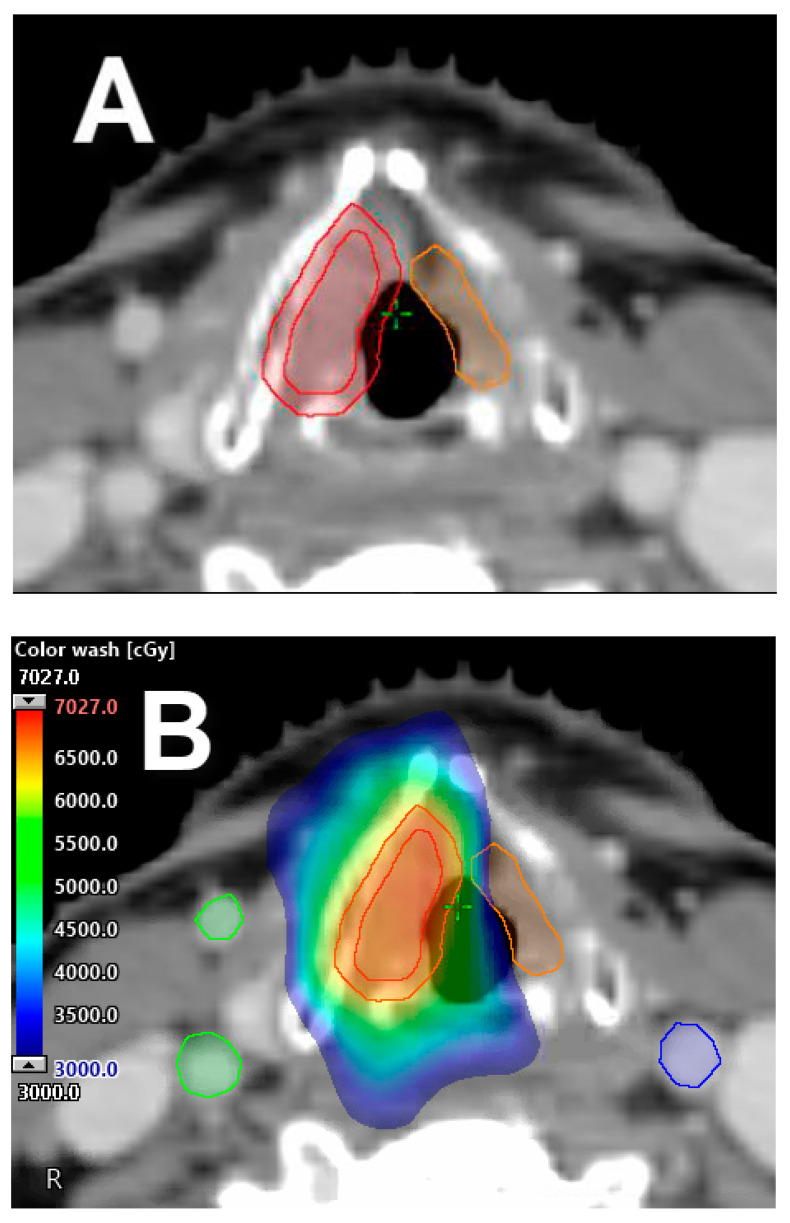
Exemplification of carotid-sparing intensity-modulated radiation therapy (IMRT) plan. (A) Carotid arteries delineated using contrast-enhanced computed tomography (CT) simulation to be avoided during planning. (B) Carotid-sparing volumetric modulated arc therapy (VMAT) approach for T1a right-sided true vocal cord carcinoma; 63 Gy prescription delivered in 28 fractions. Dose color wash distribution.
Figure 2
Figure 2
Single vocal cord irradiation. (A) The affected cord is delineated as the clinical target volume (CTV), with 5 mm expansion in all directions to generate the planning target volume (PTV) (red). (B) Single cord irradiation planned with IMRT treatment technique for T1a, right-sided, true vocal cord carcinoma; a 63 Gy prescription was delivered in 28 fractions, with contralateral vocal cord mean dose kept under 30 Gy. Dose color wash distribution.
Figure 3
Figure 3
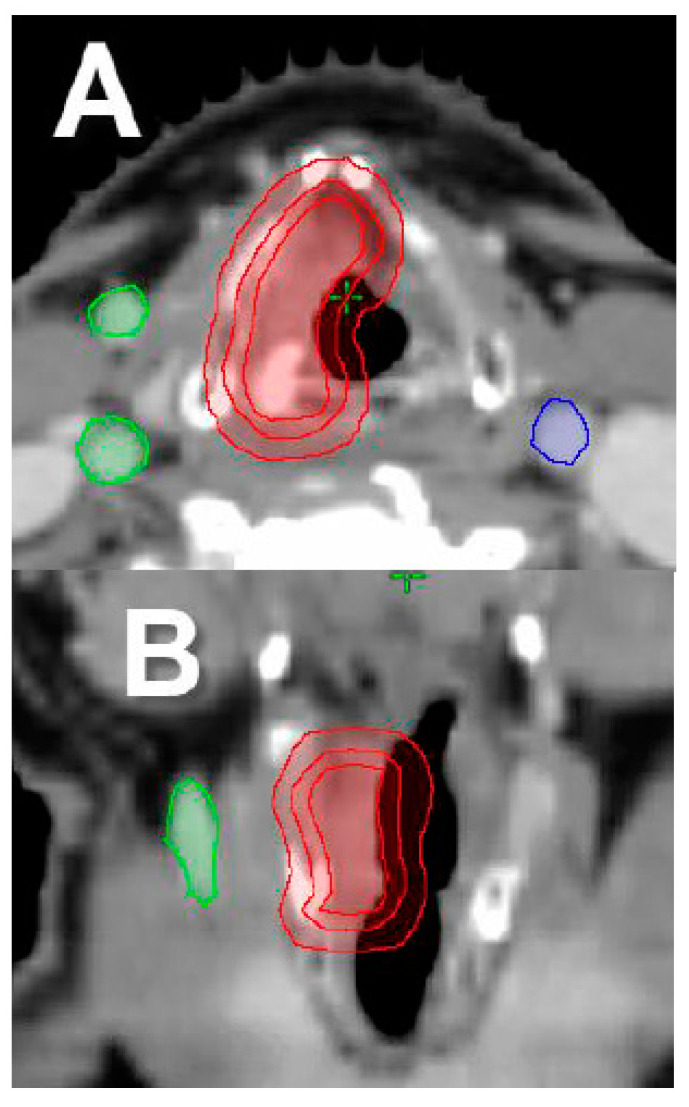
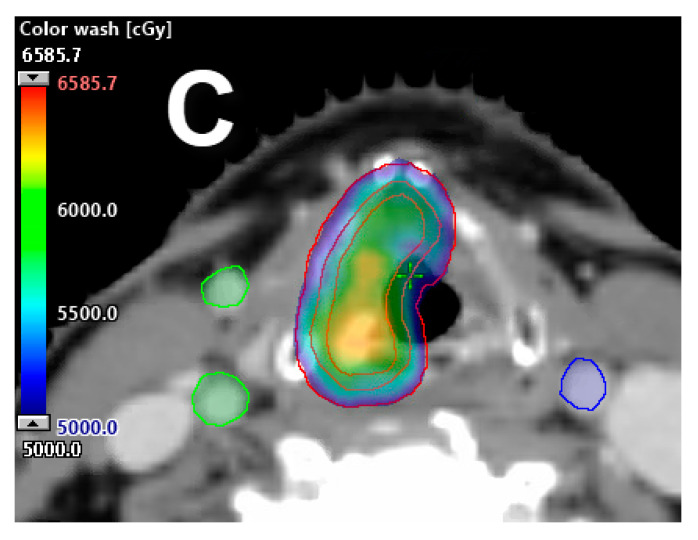
Exemplification of Stereotactic ablative radiation therapy (SABR) treatment plan. (A) Axial cross-section, target delineated by expanding the gross tumor volume (GTV) 3 mm uniformly to establish CTV, with uniform 5 mm expansion from the CTV to generate PTV. (B) Coronal-view of GTV, CTV, and PTV (red). (C) SABR VMAT approach to a single cord, with a prescription dose of 50 Gy in 15 daily fractions. Dose color wash distribution.
Figure 3
Figure 3
Exemplification of Stereotactic ablative radiation therapy (SABR) treatment plan. (A) Axial cross-section, target delineated by expanding the gross tumor volume (GTV) 3 mm uniformly to establish CTV, with uniform 5 mm expansion from the CTV to generate PTV. (B) Coronal-view of GTV, CTV, and PTV (red). (C) SABR VMAT approach to a single cord, with a prescription dose of 50 Gy in 15 daily fractions. Dose color wash distribution.
Figure 4
Figure 4
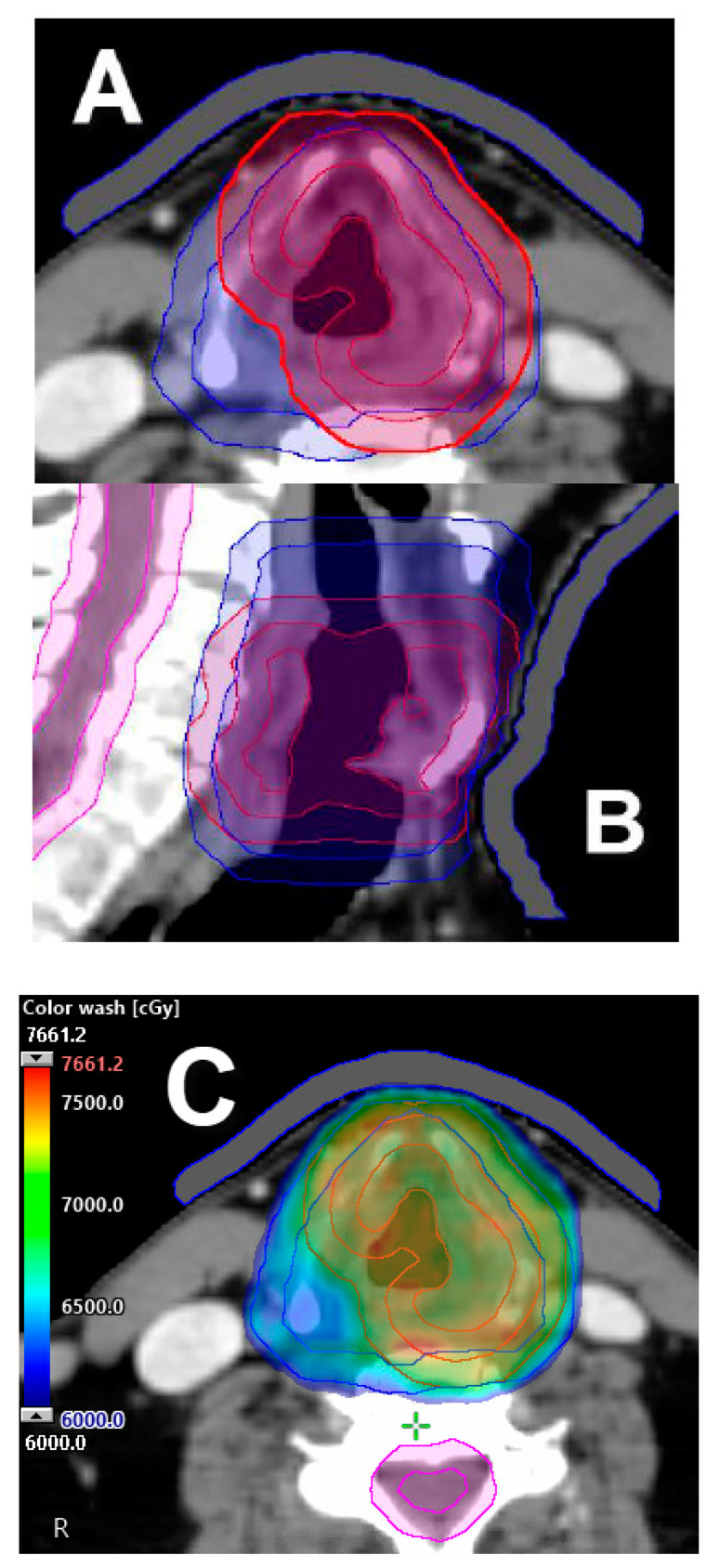
Partial laryngeal IMRT. (A) Axial view of target volume delineation for T2N0 glottic larynx (impaired cord mobility) squamous cell carcinoma: primary GTV (red), 5 mm uniform expansion to CTV (red), and 5 mm uniform expansion from CTV to render primary PTV (red). Intermediate CTV (blue) consists of the larynx (CTV) superior to the hyoid, with uniform 5 mm expansion to render intermediate PTV. (B) Sagittal view of both high and intermediate target volumes. (C) Partial IMRT approach with 5 mm bolus utilizing a simultaneous integrated boost method: 70 Gy in 35 fractions to primary PTV (red), with 56 Gy to intermediate risk PTV (blue). Dose color wash distribution.
Figure 5
Figure 5
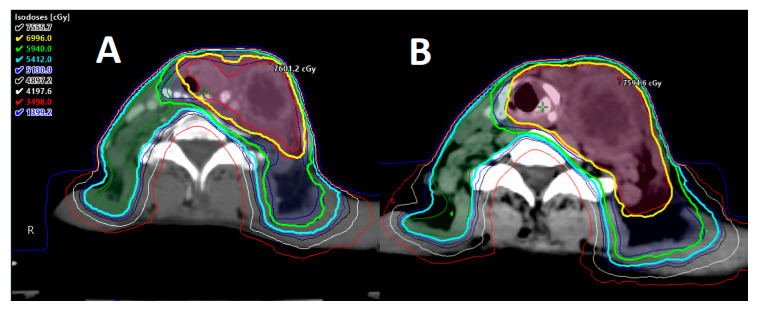
Adaptive radiotherapy. Adaptive planning necessitated by tumor volume changed during the course of radiation. (A) Original VMAT treatment plan adapted to accommodate for tumor growth, as depicted by plan in (B). Isodoses distribution.
Figure 6
Figure 6
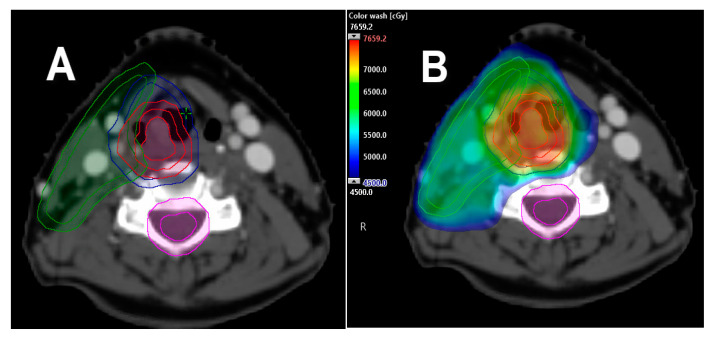
Exemplification of Unilateral neck irradiation case. Unilateral neck irradiation treatment plan for T1N0 squamous cell carcinoma of the right supraglottic larynx, after SPECT/CT with peritumoral 99mTc-nanocolloid injection for lymph drainage mapping. Prescription dose 70 Gy in 35 fractions to high risk PTV. (A) Delineation of GTV, high risk CTV/PTV (red), intermediate (blue), and low (green) utilizing 5 mm uniform expansion to render PTV’s. (B) VMAT treatment planning technique with partial arcs delivered via simultaneously integrated boost method. Dose color wash distribution.
Figure 7
Figure 7
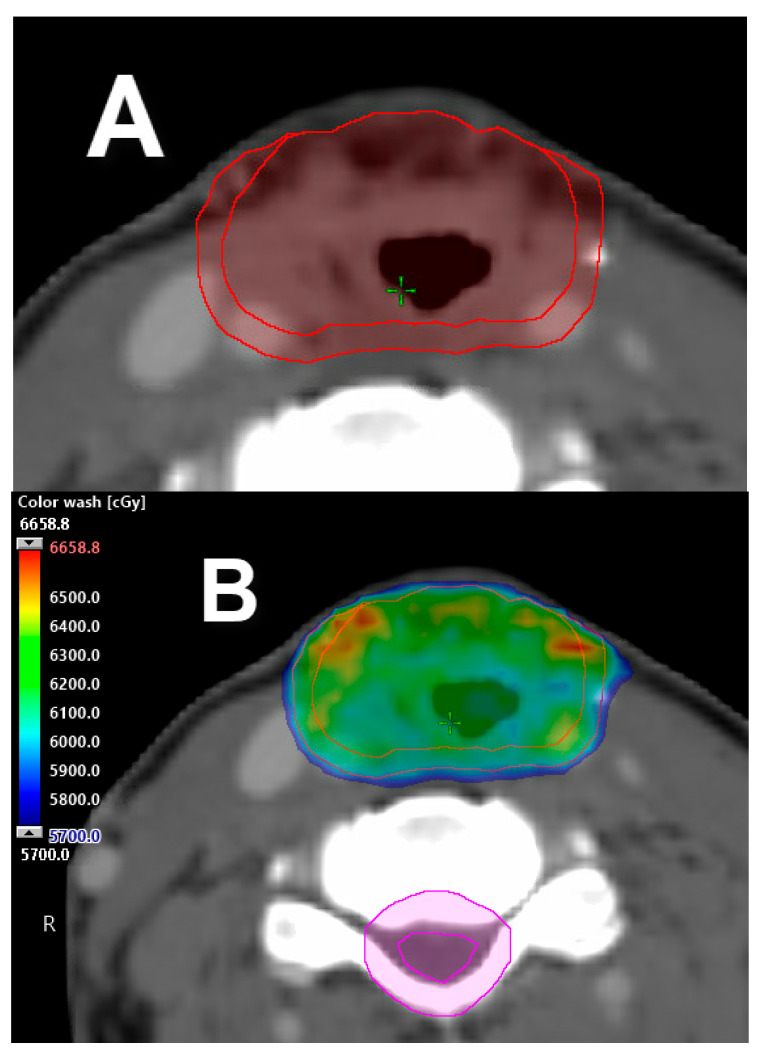
Exemplification treatment plan of omission of resected neck – radiation to the primary surgical bed only. (A) CTV (red) contents include the primary post-operative bed for pT3 N0 squamous cell carcinoma of glottic larynx with close margins, positive lymphovascular and perineural invasion, with >90 lymph nodes negative in the bilateral cervical neck(s). PTV is rendered using uniform 5 mm expansion from the CTV (red), cropped back 3 mm from the skin’s surface for build-up. (B) VMAT treatment planning technique for the primary, post-operative surgical bed only, depicted with a total prescription of 60 Gy delivered in 30 fractions to PTV. Dose color wash distribution.
Figure 8
Figure 8
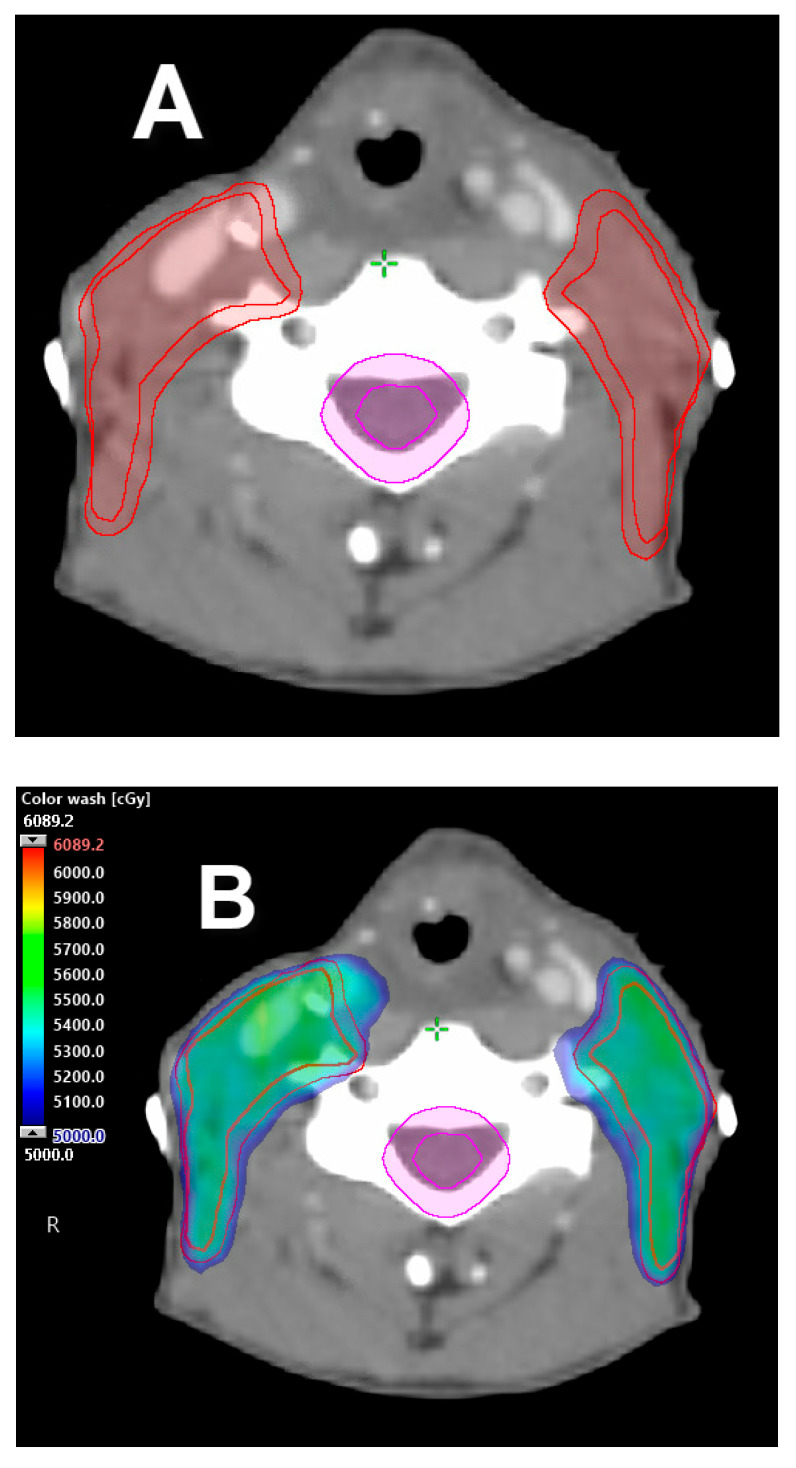
Exemplification treatment plan of radiation to neck(s) only. (A) Bilateral neck CTV (red) shown with 5 mm uniform expansion to render PTV. PTV is cropped 3 mm from skin surface for build-up. (B) VMAT treatment plan to the bilateral neck(s) avoids the primary surgical bed in a resected pT3 N2 SCC of the glottic larynx showing no adverse pathologic risk features in the primary tumor specimen/surgical bed, with indications for adjuvant radiation as a result of multiple positive lymph nodes. Prescription dose 54 Gy in 27 fractions. Dose color wash distribution.

References

    1. Cramer J.D., Burtness B., Le Q.T., Ferris R.L. The changing therapeutic landscape of head and neck cancer. Nat. Rev. Clin. Oncol. 2019;16:669–683. doi: 10.1038/s41571-019-0227-z. - DOI - PubMed
    1. Shin J.Y., Truong M.T. Racial disparities in laryngeal cancer treatment and outcome: A population-based analysis of 24.069 patients. Laryngoscope. 2015;125:1667–1674. doi: 10.1002/lary.25212. - DOI - PubMed
    1. DeSantis C.E., Miller K.D., Sauer A.G., Jemal A., Siegel R.L. Cancer Statistics for African Americans, 2019. CA Cancer J. Clin. 2019;69:211–233. doi: 10.3322/caac.21555. - DOI - PubMed
    1. Bray F., Ferlay J., Soerjomataram I., Siegel R.L., Torre L.A., Jemal A. Global Cancer Statistics 2018: GLOBOCAN estimates of incidence and mortality worldwide for 36 cancers in 185 countries. CA Cancer J. Clin. 2018;68:394–424. doi: 10.3322/caac.21492. - DOI - PubMed
    1. Siegel R.L., Miller K.D., Jemal A. Cancer statistics, 2020. CA Cancer J. Clin. 2020;70:7–30. doi: 10.3322/caac.21590. - DOI - PubMed

LinkOut - more resources