


Testing Pediatric Emergency Telemedicine Implementation Strategies Using Quality Improvement Methods
- PMID: 32580661
- PMCID: PMC8060713
- DOI: 10.1089/tmj.2020.0067
Testing Pediatric Emergency Telemedicine Implementation Strategies Using Quality Improvement Methods
Abstract
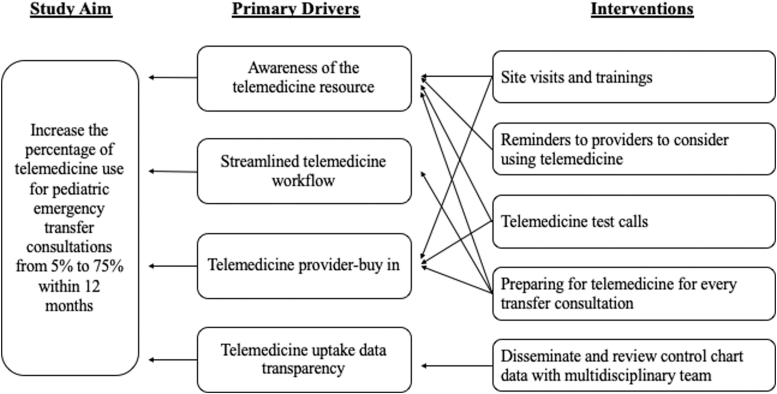
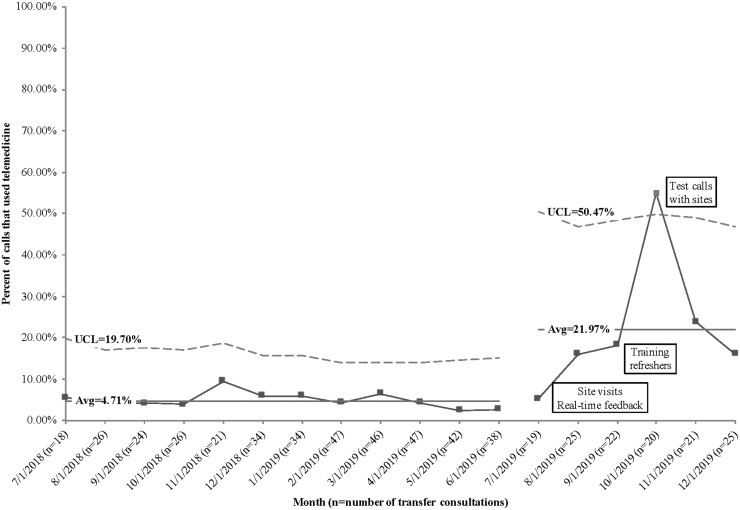
Background: Despite the recognized benefits of telemedicine use for pediatric emergency consultations, there are barriers to the widespread uptake of this technology. Quality improvement methods can be used to rapidly test implementation strategies. Our objective was to test telemedicine implementation strategies in real-world application using quality improvement methods. Our quality improvement aim was to achieve high rates of telemedicine use for pediatric transfer consultations. Methods: A multidisciplinary multisite improvement team identified that key drivers of increasing telemedicine use included telemedicine resource awareness, streamlined telemedicine workflow, provider buy-in, and data transparency. Interventions focused on telemedicine trainings, disseminating telemedicine uptake data, telemedicine reminders, telemedicine test calls, and preparing for telemedicine use for every transfer consultation. The outcome measure was percentage of pediatric emergency transfer consultations that used telemedicine. The balancing measure was time (minutes) from the initial transfer center call to completion of the consultation. Results: Multiple plan-do-study-act cycles were associated with special cause variation, with an upward shift in mean percentage of telemedicine use from 5% to 22%. Time from initial call to consultation completion remained unchanged. Conclusion: Our study supports the use of quality improvement methods to test telemedicine implementation strategies for pediatric telemedicine emergency consultations.
Keywords: child; communication; emergency service; health care transitions; hospital; hospitals; patient transfers; pediatric; quality improvement; referral and consultation; telemedicine.
Conflict of interest statement
No competing financial interests exist.
Figures
References
-
- Mohr NM, Harland KK, Shane DM, Miller SL, Torner JC. Potentially avoidable pediatric interfacility transfer is a costly burden for rural families: A cohort study. Acad Emerg Med 2016;23:885–894 - PubMed
-
- Li J, Monuteaux MC, Bachur RG. Interfacility transfers of noncritically III children to academic pediatric emergency departments. Pediatrics 2012;130:83–92 - PubMed
-
- Gattu RK, Teshome G, Cai L, Wright C, Lichenstein R. Interhospital pediatric patient transfers—Factors influencing rapid disposition after transfer. Pediatr Emerg Care 2014;30:26–30 - PubMed
-
- Peebles ER, Miller MR, Lynch TP, Tijssen JA. Factors associated with discharge home after transfer to a pediatric emergency department. Pediatr Emerg Care 2018;34:650–655 - PubMed
-
- Ray KN, Marin JR, Li J, Davis BS, Kahn JM. Referring hospital characteristics associated with potentially avoidable emergency department transfers. Acad Emerg Med 2019;26:205–216 - PubMed
Publication types
MeSH terms
Grants and funding
LinkOut - more resources
Full Text Sources
Medical
Miscellaneous
