


Delays in emergency obstetric referrals in Addis Ababa hospitals in Ethiopia: a facility-based, cross-sectional study
- PMID: 32580981
- PMCID: PMC7312330
- DOI: 10.1136/bmjopen-2019-033771
Delays in emergency obstetric referrals in Addis Ababa hospitals in Ethiopia: a facility-based, cross-sectional study
Abstract
Objective: To assess where the delays occur in the referral chain of most maternal health outcomes in Addis Ababa, Ethiopia, based on the three-delay model.
Design: The study was a facility-based, cross-sectional study.
Setting: Two public and tertiary hospitals in Addis Ababa.
Participants: All pregnant women who were referred only for labour and delivery services after 28 weeks of gestation between December 2018 and February 2019 in Zewditu and Gandhi Memorial Hospitals.
Primary and secondary outcome measures: The primary outcome was the type of delays, from the three-delay model, which met operationally defined time. The secondary outcome was maternal health outcomes based on the three-delay model.
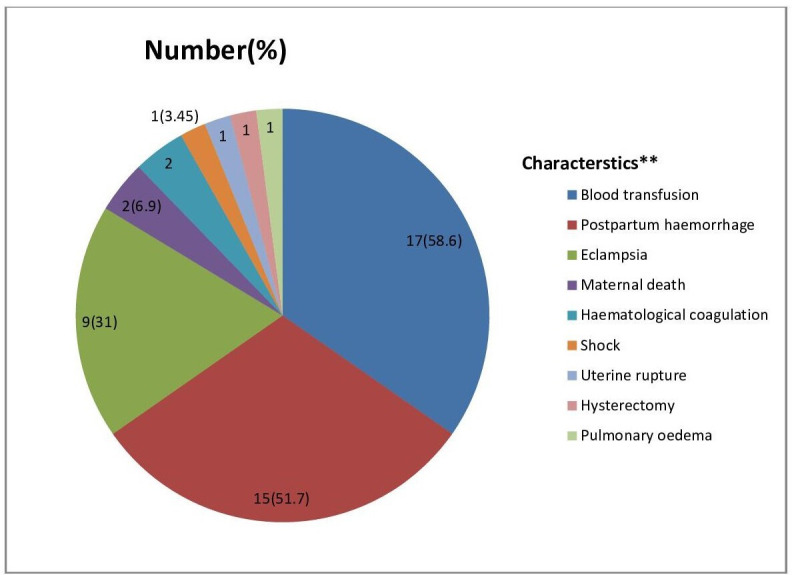
Results: A total of 403 pregnant women referred for delivery to the study hospitals were included in the study. Three-fourths (301, 74.7%) of the referred pregnant women experienced the third delay (delay in receiving appropriate care); 211 (52.4%) experienced the first delay (delay in making a decision to seek care). Overall 366 (90.8%) pregnant women had experienced at least one of the three delays and 71 (17.6%) experienced all three delays. Twenty-nine (7.2%) referred women had severe maternal outcomes. The leading causes/diagnoses of severe maternal outcomes were blood transfusion (17, 58.6%), followed by postpartum haemorrhage (15, 52%) and eclampsia (9, 31%). In addition, women who experienced severe maternal outcomes were 2.9 times more likely to have experienced at least one of the three delays.
Conclusion and recommendation: This study highlights the persistence of delays at all levels, and especially the third delay and its contribution to severe maternal outcomes. We recommend strengthening the health referral systems and addressing specific health system bottlenecks during labour and birth in order to ensure no mother is endangered. We also recommend conducting a qualitative method of study (focus group discussion and indepth interview) and observing tertiary hospitals' set-up and readiness to manage obstetric emergencies.
Keywords: health policy; human resource management; quality in health care.
© Author(s) (or their employer(s)) 2020. Re-use permitted under CC BY-NC. No commercial re-use. See rights and permissions. Published by BMJ.
Conflict of interest statement
Competing interests: None declared.
Figures
References
-
- WHO Trends in maternal mortality: 2000 to 2017. Geneva: WHO, 2019. https://www.who.int/reproductivehealth/publications/maternal-mortality-2...
-
- WHO Maternal mortality; fact sheets, 2019. Available: https://www.who.int/news-room/fact-sheets/detail/maternal-mortality
-
- World Health Organization (WHO) Maternal mortality. fact sheet. Media Centre., 2016.
-
- World Health Organization (WHO) True magnitude of stillbirths and maternal and neonatal deaths underreported. Media Center, 2016.
MeSH terms
LinkOut - more resources
Full Text Sources
Medical
Miscellaneous
