


Interferon-Dependent and Respiratory Virus-Specific Interference in Dual Infections of Airway Epithelia
- PMID: 32581261
- PMCID: PMC7314816
- DOI: 10.1038/s41598-020-66748-6
Interferon-Dependent and Respiratory Virus-Specific Interference in Dual Infections of Airway Epithelia
Erratum in
-
Author Correction: Interferon-Dependent and Respiratory Virus-Specific Interference in Dual Infections of Airway Epithelia.Sci Rep. 2020 Jul 22;10(1):12523. doi: 10.1038/s41598-020-69600-z. Sci Rep. 2020. PMID: 32694540 Free PMC article.
Abstract
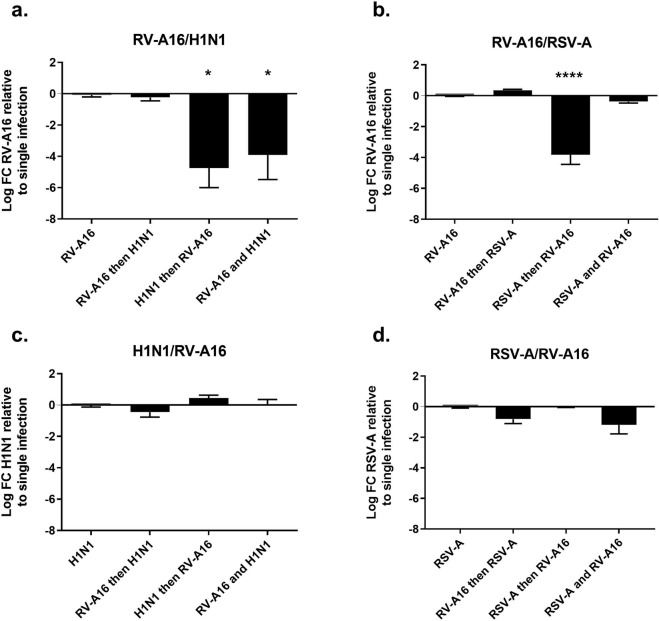
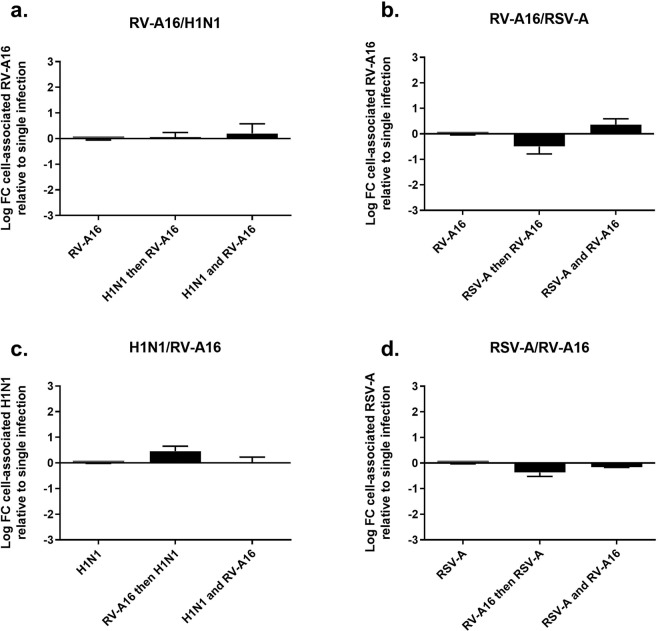
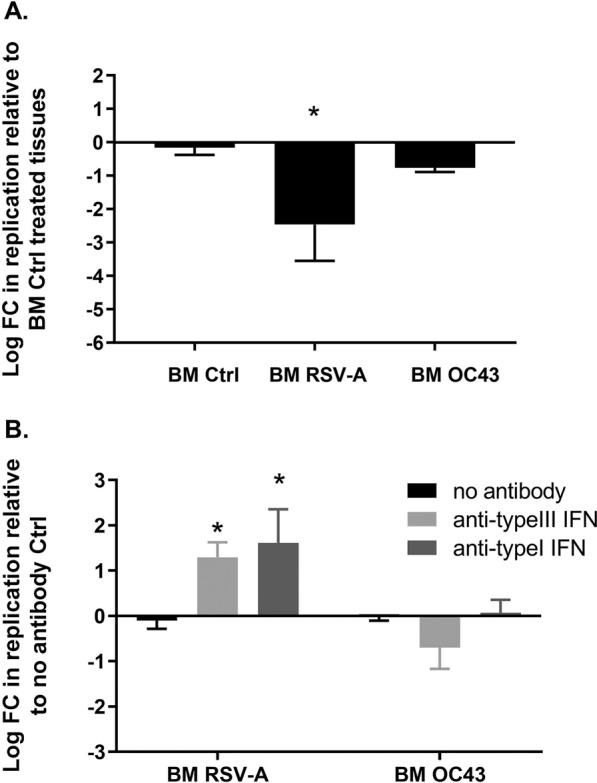
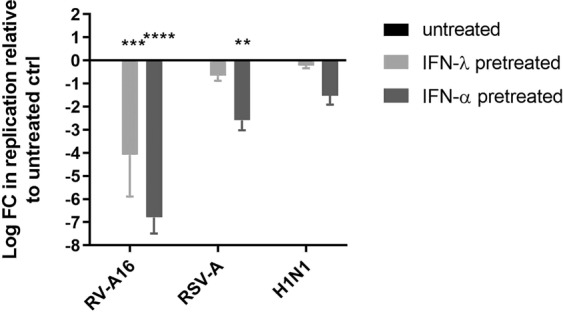
Many respiratory viruses cocirculate in the population and multiple infections are commonly reported. The clinical impact of coinfection is unclear and may vary depending on the viral couples involved. Using three-dimensional reconstituted human airway epithelia and clinical viral strains, we investigated the interaction between influenza virus (Flu), respiratory syncytial virus (RSV) and rhinovirus (RV). We showed that Flu and RSV interfere with RV replication, whereas RV does not interfere with either of these viruses. We then experimentally demonstrated that, when present, the interference is not related to a block of viral entry but rather to type I and type III interferon (IFN), the front-line antiviral defense of the respiratory mucosa. Consistent with this observation, we highlighted the differential sensitivity of each virus to IFNs, with RV being the only virus significantly inhibited by IFN-λ and the most sensitive to IFN-α. Finally, as type III IFN is of therapeutic interest due to its low proinflammatory profile, we also assessed and confirmed an inhibitory effect of IFN-λ in the context of persistent RV infections. The present work provides mechanistic clues concerning innate immunity involvement during respiratory virus interactions and confirms that IFN-λ is a promising candidate in the treatment of RV infections.
Conflict of interest statement
The authors declare no competing interests.
Figures

References
Publication types
MeSH terms
Substances
LinkOut - more resources
Full Text Sources
