


Microscopic Authentication of Commercial Herbal Products in the Globalized Market: Potential and Limitations
- PMID: 32581819
- PMCID: PMC7295937
- DOI: 10.3389/fphar.2020.00876
Microscopic Authentication of Commercial Herbal Products in the Globalized Market: Potential and Limitations
Abstract
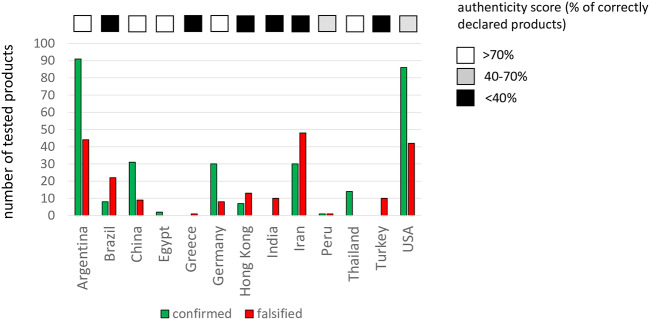
Herbal products are marketed and used around the globe for their claimed or expected health benefits, but their increasing demand has resulted in a proportionally increase of their accidental contamination or intentional adulteration, as already confirmed with DNA-based methods. Microscopy is a traditional pharmacopoeial method used for plant identification and we systematically searched for peer-reviewed publications to document its potential and limitations to authenticate herbal medicines and food supplements commercially available on the global market. The overall authenticity of 508 microscopically authenticated herbal products, sold in 13 countries, was 59%, while the rest of 41% were found to be adulterated. This problem was extending over all continents. At the national level, there were conspicuous differences, even between neighboring countries. These microscopically authenticated commercial herbal products confirm that different magnifying instruments can be used to authenticate crude or processed herbal products traded in the global marketplace. The reviewed publications report the successful use of different magnifying instruments, single or in combinations with a second one, with or without a chemical or DNA-based technique. Microscopy is therefore a rapid and cost-efficient method, and can cope with mixtures and impurities. However, it has limited applicability for highly processed samples. Microscopic authentication of commercial herbal products will therefore contribute to raise public awareness for the extent of adulteration and the need to safeguard consumer safety against the challenges of globalization.
Keywords: authentication; consumer safety; electron microscopy; food supplement; herbal product; light microscopy; plant identification; traditional medicine.
Copyright © 2020 Ichim, Häser and Nick.
Figures
References
-
- Abdel Kawy M. A., Haggag E. G., Abdel Motaal A. A., Eissa N. A. (2012). Quality control of certain slimming herbal products present in the Egyptian market. Life Sci. J. 9, 2273–2285.
Publication types
LinkOut - more resources
Full Text Sources
