


doi: 10.3389/fgene.2020.00528.
eCollection 2020.
Prime Editing: Genome Editing for Rare Genetic Diseases Without Double-Strand Breaks or Donor DNA
Affiliations
- PMID: 32582281
- PMCID: PMC7296174
- DOI: 10.3389/fgene.2020.00528
Item in Clipboard
Prime Editing: Genome Editing for Rare Genetic Diseases Without Double-Strand Breaks or Donor DNA
Front Genet.
.
No abstract available
Keywords: CRISPR; genome editing; human therapeutics; prime editing; rare disease.
Figures
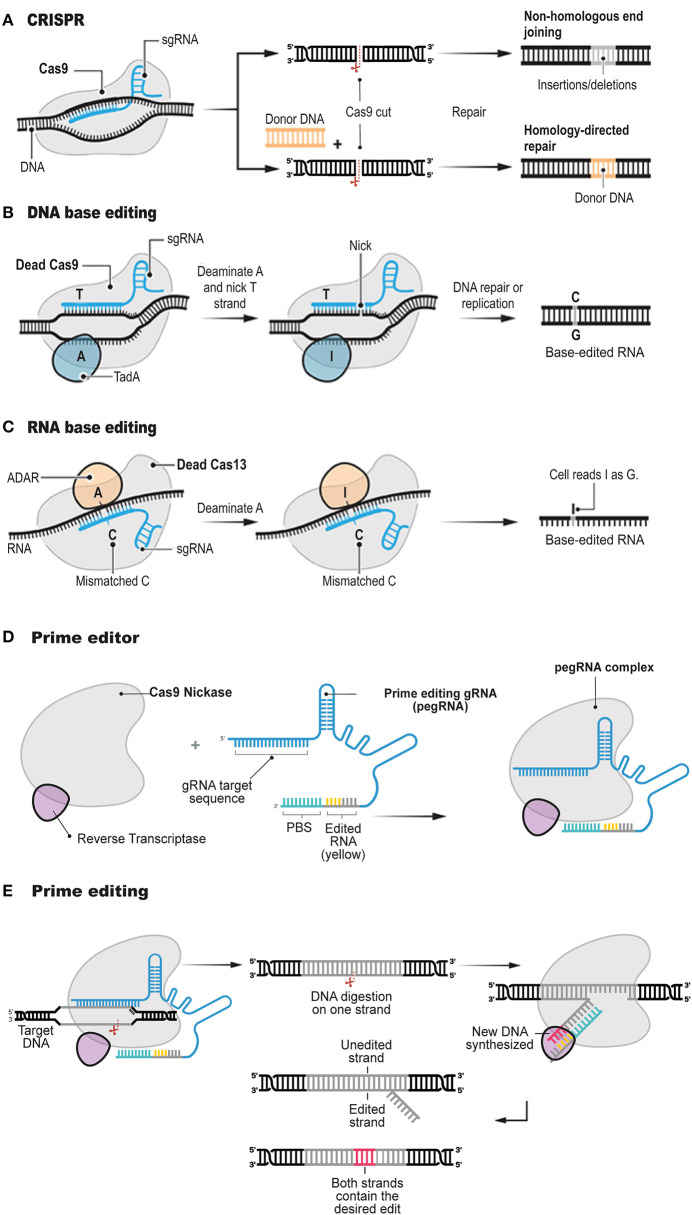
Structure and function of prime editor. The conventional CRISPR DNA editor (A). CRISPR relies on the ability of CRISPR gRNAs to target the Cas9 endonuclease to precise genomic locations, where Cas9 introduces DSBs. Base editors do not digest the double strand, but instead they chemically alter single bases with deaminase enzymes such as TadA (B, DNA base editor) and ADAR (C, RNA base editor). Prime editor (D) involves a longer-than-usual gRNA, known as pegRNA, and a fusion protein consisting of Cas9 H840A nickase fused to a modified RT enzyme. The Cas9 element of the prime editor digest the genomic DNA and the RT element polymerises DNA onto the nicked strand based on the pegRNA sequence (E). Adapted from Anzalone et al. (2019) and Matsoukas (2018a).
References
LinkOut - more resources
Full Text Sources
Other Literature Sources
