


Recent Updates on Outbreaks of Shiga Toxin-Producing Escherichia coli and Its Potential Reservoirs
- PMID: 32582571
- PMCID: PMC7287036
- DOI: 10.3389/fcimb.2020.00273
Recent Updates on Outbreaks of Shiga Toxin-Producing Escherichia coli and Its Potential Reservoirs
Abstract
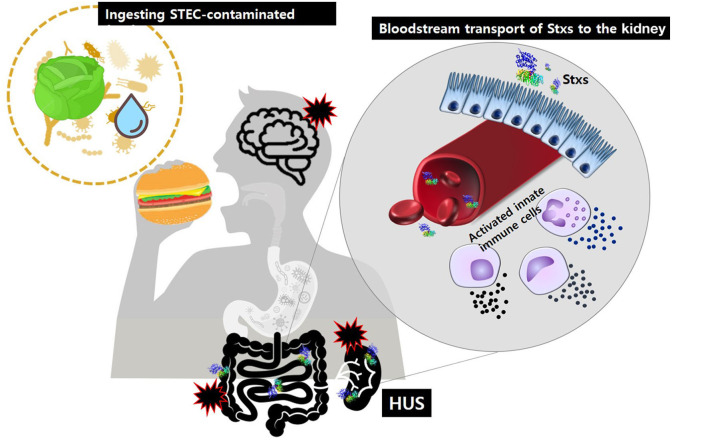
Following infection with certain strains of Shiga toxin-producing Escherichia coli (STEC), particularly enterohemorrhagic ones, patients are at elevated risk for developing life-threatening extraintestinal complications, such as acute renal failure. Hence, these bacteria represent a public health concern in both developed and developing countries. Shiga toxins (Stxs) expressed by STEC are highly cytotoxic class II ribosome-inactivating proteins and primary virulence factors responsible for major clinical signs of Stx-mediated pathogenesis, including bloody diarrhea, hemolytic uremic syndrome (HUS), and neurological complications. Ruminant animals are thought to serve as critical environmental reservoirs of Stx-producing Escherichia coli (STEC), but other emerging or arising reservoirs of the toxin-producing bacteria have been overlooked. In particular, a number of new animal species from wildlife and aquaculture industries have recently been identified as unexpected reservoir or spillover hosts of STEC. Here, we summarize recent findings about reservoirs of STEC and review outbreaks of these bacteria both within and outside the United States. A better understanding of environmental transmission to humans will facilitate the development of novel strategies for preventing zoonotic STEC infection.
Keywords: HUS; STEC reservoir; Shiga toxin; Shiga toxin-producing Escherichia coli; environmental transmission.
Copyright © 2020 Kim, Lee and Kim.
Figures
References
-
- Beutin L. (1999). Escherichia coli as a pathogen in dogs and cats. Vet. Res. 30, 285–298. - PubMed
-
- Beutin L., Geier D., Steinruck H., Zimmermann S., Scheutz F. (1993). Prevalence and some properties of verotoxin (Shiga-like toxin)-producing Escherichia coli in seven different species of healthy domestic animals. J. Clin. Microbiol. 31, 2483–2488. 10.1128/JCM.31.9.2483-2488.1993 - DOI - PMC - PubMed
Publication types
MeSH terms
Substances
LinkOut - more resources
Full Text Sources
Medical
