


Cerebrovascular Disease and Cognition in Chronic Kidney Disease Patients
- PMID: 32582768
- PMCID: PMC7283453
- DOI: 10.3389/fcvm.2020.00096
Cerebrovascular Disease and Cognition in Chronic Kidney Disease Patients
Abstract
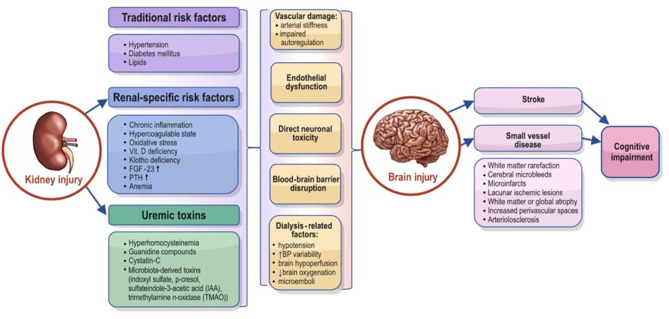
Chronic kidney disease (CKD) affects both brain structure and function. Patients with CKD have a higher risk of both ischemic and hemorrhagic strokes. Age, prior disease history, hypertension, diabetes, atrial fibrillation, smoking, diet, obesity, and sedimentary lifestyle are most common risk factors. Renal-specific pathophysiologic derangements, such as oxidative stress, chronic inflammation, endothelial dysfunction, vascular calcification, anemia, gut dysbiosis, and uremic toxins are important mediators. Dialysis initiation constitutes the highest stroke risk period. CKD significantly worsens stroke outcomes. It is essential to understand the risks and benefits of established stroke therapeutics in patients with CKD, especially in those on dialysis. Subclinical cerebrovascular disease, such as of silent brain infarction, white matter lesions, cerebral microbleeds, and cerebral atrophy are more prevalent with declining renal function. This may lead to functional brain damage manifesting as cognitive impairment. Cognitive dysfunction has been linked to poor compliance with medications, and is associated with greater morbidity and mortality. Thus, understanding the interaction between renal impairment and brain is important in to minimize the risk of neurologic injury in patients with CKD. This article reviews the link between chronic kidney disease and brain abnormalities associated with CKD in detail.
Keywords: CKD; atrophy; cognitive impairment; leukoaraiosis; microbleed; silent infarction; stroke.
Copyright © 2020 Miglinas, Cesniene, Janusaite and Vinikovas.
Figures
References
Publication types
LinkOut - more resources
Full Text Sources
