


Analysis of patients undergoing urological intervention amid the COVID-19: experience from the pandemic hospital
- PMID: 32583371
- PMCID: PMC7312099
- DOI: 10.1007/s11255-020-02553-4
Analysis of patients undergoing urological intervention amid the COVID-19: experience from the pandemic hospital
Abstract
Purpose: It is reported that surgical procedures performed during the COVID-19 pandemic are accompanied by high complications and risks. In this study, the urological interventions applied with appropriate infrastructure and protocols during the pandemic in the pandemic hospital that is carrying out the COVID-19 struggle are analyzed.
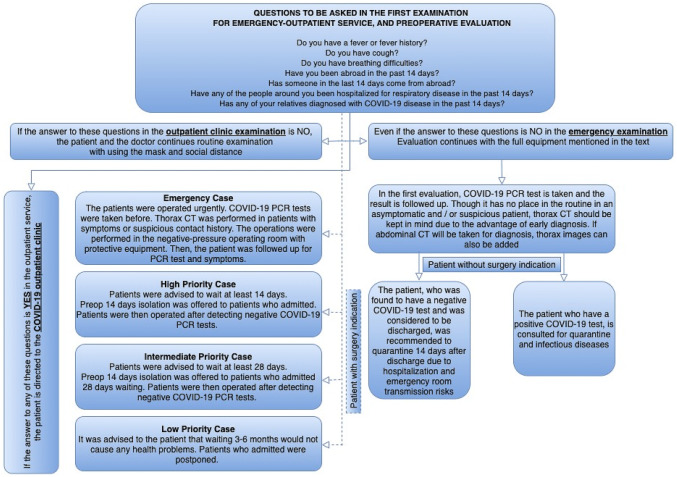
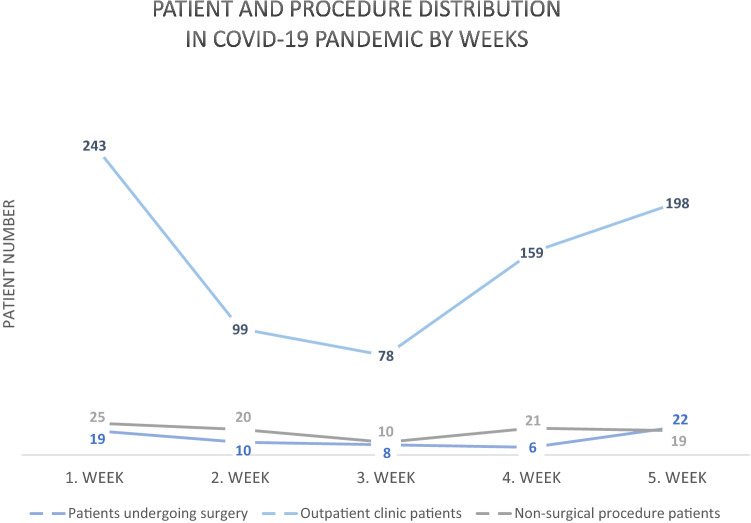
Methods: Urological interventions were reviewed in the 5-week period between March 11 and April 16. The distribution of outpatient and interventional procedures was determined by weeks concurrently along with the COVID-19 patient workload, and data in the country, subgroups were further analyzed. Patients intervened were divided into four groups as Emergency, High, Intermediate, and Low Priority cases according to the EAU recommendations. The COVID-19-related findings were recorded; staff and patient effects were reported.
Results: Of the 160 interventions, 65 were minimally invasive or open surgical intervention, 95 were non-surgical outpatient intervention, and the outpatient admission was 777. According to the priority level, 33 cases had emergency and high priority, 32 intermediate and low priority. COVID-19 quarantine and follow-up were performed at least 1 week in 22 (33.8%) operated patients at the last week, 43 (66.2%) patients who were operated in the previous 4 weeks followed up at least 2 weeks. No postoperative complications were encountered in any patient due to COVID-19 during the postoperative period.
Conclusion: In the COVID-19 pandemic, precautions, isolation, and algorithms are required to avoid disruption in the intervention and follow-up of urology patients; priority urological interventions should not be disrupted in the presence of necessary experience and infrastructure.
Keywords: COVID-19; Coronavirus; Elective case; Emergency case; Priority case; SARS-CoV-2; Urology.
Conflict of interest statement
The authors declare that they have no conflict of interest.
Figures
References
-
- WHO (2020) WHO Timeline—COVID-19. Publishing whoweb. https://www.who.int/news-room/detail/08-04-2020-who-timeline—covid-19. Accessed 16 June 2020
-
- Bakanligi S (2020) New COVID-19. Publishing saglikweb. https://covid19bilgi.saglik.gov.tr/depo/rehberler/COVID-19_Rehberi.pdf. Accessed 16 June 2020
MeSH terms
LinkOut - more resources
Full Text Sources
Medical
Miscellaneous
