


A Core Outcome Set for Nonpharmacological Community-Based Interventions for People Living With Dementia at Home: A Systematic Review of Outcome Measurement Instruments
- PMID: 32583858
- PMCID: PMC8599310
- DOI: 10.1093/geront/gnaa071
A Core Outcome Set for Nonpharmacological Community-Based Interventions for People Living With Dementia at Home: A Systematic Review of Outcome Measurement Instruments
Abstract
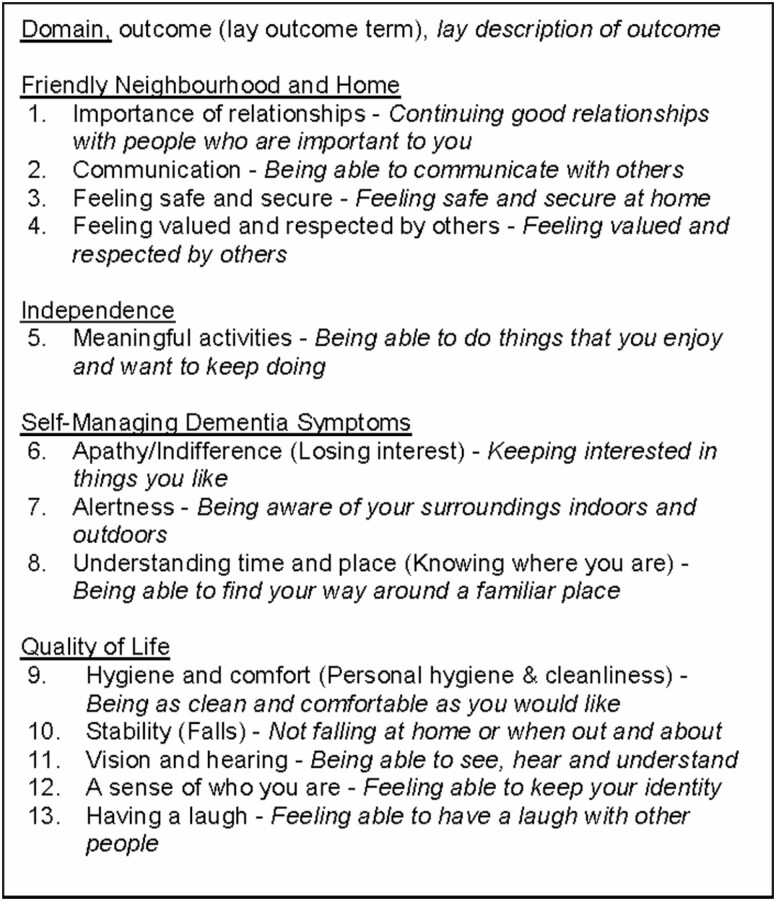
Background and objectives: It is questionable whether existing outcome measurement instruments (OMIs) in dementia research reflect what key stakeholders' value. We attained consensus from more than 300 key stakeholders, including people living with dementia, and identified 13 core outcome items for use in nonpharmacological and community-based interventions for people with dementia living at home. In this systematic review, we review OMIs that have previously been used in dementia care research to determine how, or even if, the 13 core outcome items can be measured.
Research design and methods: We extracted self-reported OMIs from trials, reviews, and reports of instrument development. Searches were undertaken in the ALOIS database, MEDLINE, PsycINFO, CINAHL, SocINDEX, and COSMIN databases. We aimed to assess the psychometric properties of OMI items for face validity with the core outcome items, content validity, internal consistency, and responsiveness. We held a coresearch workshop involving people living with dementia and care partners in order to ratify the findings.
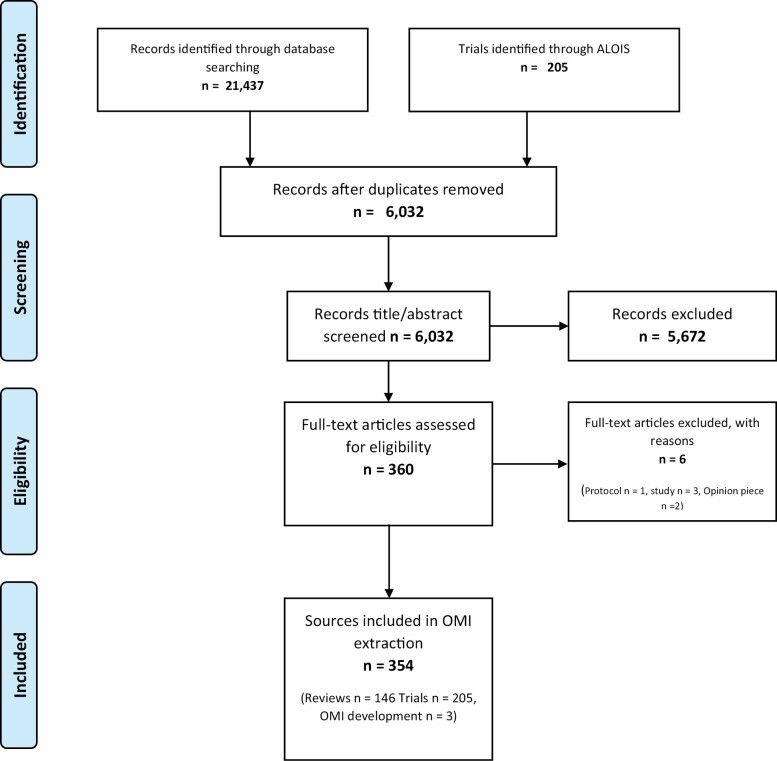
Results: In total 347 OMIs were located from 354 sources. Of these, 76 OMIs met the inclusion criteria. No OMIs were deemed to have sufficient face validity for the core outcome set (COS) items, and no OMIs proceeded to further assessment. The "best" available OMI is the Engagement and Independence in Dementia Questionnaire.
Discussion and implications: This study provides a practical resource for those designing dementia research trials. Being able to measure the COS items would herald a paradigm shift for dementia research, be responsive to what key stakeholders value and enhance the ability to make comparisons.
Keywords: Alzheimer’s disease; Core outcome set; Dementia; Measurement; Outcome.
© The Author(s) 2020. Published by Oxford University Press on behalf of The Gerontological Society of America.
Figures
References
-
- Bowling, A. (2005). Techniques of questionnaire design. In Bowling A. & Ebrahim S. (Eds.), Handbook of health research methods: Investigation, measurement and analysis (pp. 394–427). Open University Press.
Publication types
MeSH terms
Grants and funding
LinkOut - more resources
Full Text Sources
Medical
Miscellaneous
