


The impact of climate change on mosquito-borne diseases in Africa
- PMID: 32584659
- PMCID: PMC7480509
- DOI: 10.1080/20477724.2020.1783865
The impact of climate change on mosquito-borne diseases in Africa
Abstract
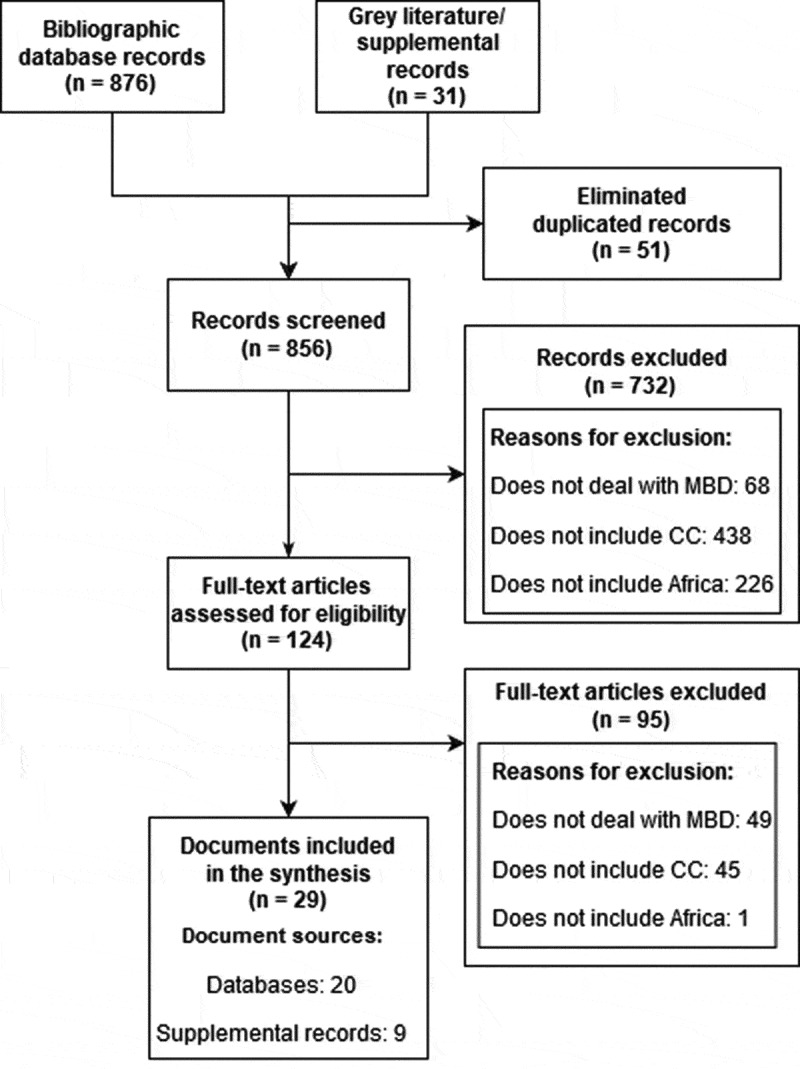
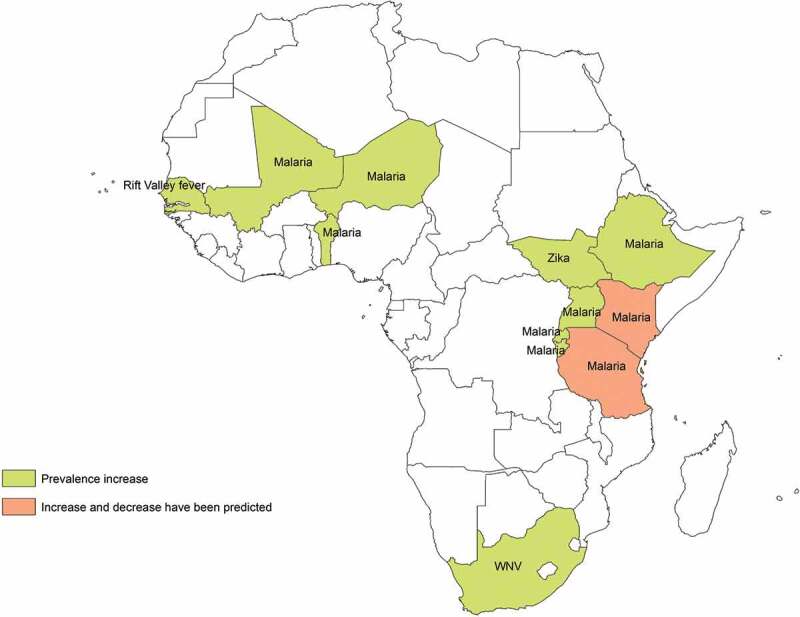
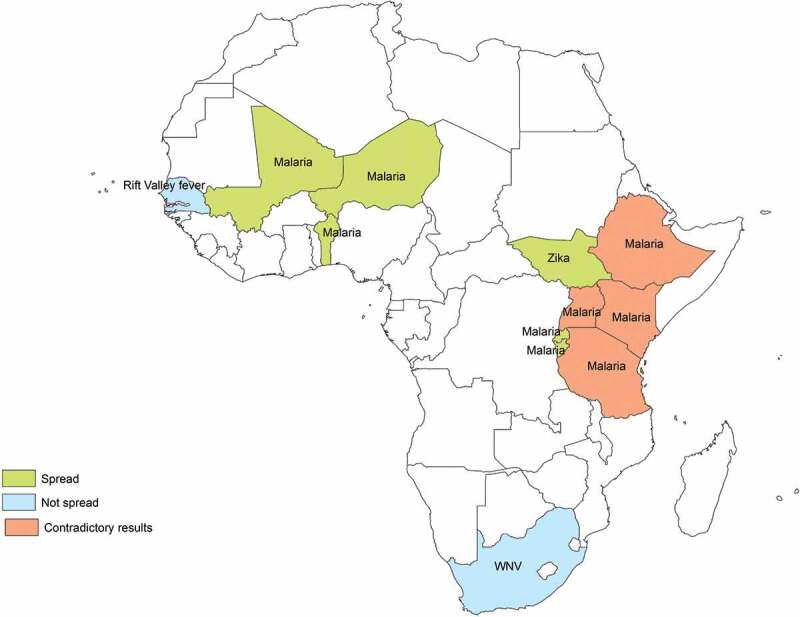
Despite being one of the continents with the least greenhouse gas emissions, no continent is being struck as severely by climate change (CC) as Africa. Mosquito-borne diseases (MBD) cause major human diseases in this continent. Current knowledge suggests that MBD range could expand dramatically in response to CC. This study aimed at assessing the relationship between CC and MBD in Africa. Methods For this purpose, a systematic peer review was carried out, considering all articles indexed in PubMed, Scopus, Embase and CENTRAL. Search terms referring to MBD, CC and environmental factors were screened in title, abstract and keywords.Results A total of twenty-nine studies were included, most of them on malaria (61%), being Anopheles spp. (61%) the most commonly analyzed vector, mainly in Eastern Africa (48%). Seventy-nine percent of these studies were based on predictive models. Seventy-two percent of the reviewed studies considered that CC impacts on MBD epidemiology. MBD prevalence will increase according to 69% of the studies while 17% predicted a decrease. MBD expansion throughout the continent was also predicted. Most studies showed a positive relationship between observed or predicted results and CC. However, there was a great heterogeneity in methodologies and a tendency to reductionism, not integrating other variables that interact with both the environment and MBD. In addition, most results have not yet been tested. A global health approach is desirable in this kind of research. Nevertheless, we cannot wait for science to approve something that needs to be addressed now to avoid greater effects in the future.
Keywords: Africa; Mosquito-borne diseases; climate change; dengue; environmental factors; malaria.
Conflict of interest statement
The authors declare they have no actual or potential competing financial interests.
Figures
References
-
- IPCC (Intergovernmental Panel on Climate Change) . 2001. The scientific basis. [cited 2019 December26]. Available from: https://www.ipcc.ch/report/ar3/wg1/
-
- WMO (World Meteorological Organization) . 2016. FAQs—climate. [cited 2019 December26]. Available from: https://public.wmo.int/en/about-us/FAQs/faqs-climate
-
- Ingeoexpert . Causas del cambio climático y el calentamiento global; 2017. [cited 2019 December26]. Available from: https://ingeoexpert.com/blog/2017/12/07/causas-cambio-climatico/
-
- IPCC (Intergovernmental Panel on Climate Change) . Climate Change 2014, Working Group II: Impacts, Adaptation and Vulnerability, 22.2.1; 2014.
-
- UNO (United Nations Organization) . Climate change. United nations sustainable development; 2019. [cited 2019 December26]. Available from: https://www.un.org/sustainabledevelopment/climate-change/
MeSH terms
LinkOut - more resources
Full Text Sources
Medical
Miscellaneous
