


A novel method to assess intraarticular screw penetration into the joint space
- PMID: 32584717
- PMCID: PMC7489154
- DOI: 10.5606/ehc.2020.71764
A novel method to assess intraarticular screw penetration into the joint space
Abstract
Objectives: This study aims to propose a novel method to detect articular penetration of screws by relying on their electrical conductivity properties and control the validity of this method.
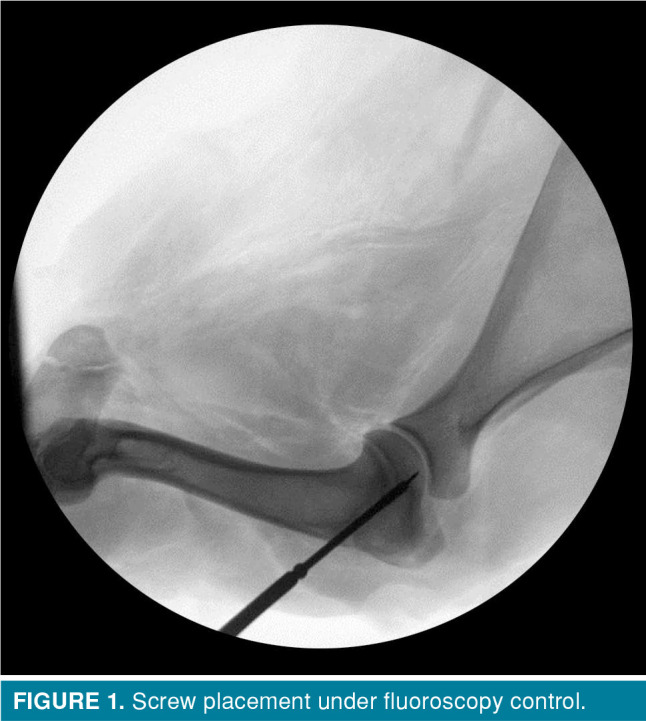
Materials and methods: In this ex vivo study, conducted between June 2017 and August 2017, we used five fresh sheep shoulder joints. First, the shoulder joint space was filled with saline solution. An insulated cannula was placed in the joint capsule, and a conductive wire was introduced into the joint via this cannula. A single titanium screw was inserted from the tuberculum majus into the posteroinferior quadrant of the humeral head under fluoroscopic observation. Conductivity was continuously measured using a digital multimeter. When a sudden decrease in conduction resistance was detected, fluoroscopic images were obtained in the anteroposterior (AP) and lateral directions. These images were assessed for penetration by a blinded surgeon. Penetration was confirmed by dissection of the joint.
Results: There was a significant decrease in electrical resistance when screw penetration occurred (p<0.001). All penetration events were confirmed using our novel method. For all five of the specimens, either AP or lateral images could not be used to confirm penetration. For two of these specimens, penetration was undetectable in both AP and lateral fluoroscopic images, but a decrease in resistance was recorded.
Conclusion: The described method exhibits greater sensitivity and accuracy for metal penetration to joint, and it is effective in detecting screws in the joints. The novel method described in this paper was applied in a prototype setting, and we believe that this concept can continue to be developed.
Conflict of interest statement
Figures


References
-
- Aksu N, Göğüş A, Kara AN, Işiklar ZU. Complications encountered in proximal humerus fractures treated with locking plate fixation. Acta Orthop Traumatol Turc. 2010;44:89–96. - PubMed
-
- Egol KA, Sugi MT, Ong CC, Montero N, Davidovitch R, Zuckerman JD. Fracture site augmentation with calcium phosphate cement reduces screw penetration after open reduction-internal fixation of proximal humeral fractures. J Shoulder Elbow Surg. 2012;21:741–748. - PubMed
-
- Hepp P, Theopold J, Voigt C, Engel T, Josten C, Lill H. The surgical approach for locking plate osteosynthesis of displaced proximal humeral fractures influences the functional outcome. J Shoulder Elbow Surg. 2008;17:21–28. - PubMed
-
- Owsley KC, Gorczyca JT. Fracture displacement and screw cutout after open reduction and locked plate fixation of proximal humeral fractures [corrected] J Bone Joint Surg [Am] 2008;90:233–240. - PubMed
MeSH terms
LinkOut - more resources
Full Text Sources
