Meta-Analysis
. 2020 Jun 1;3(6):e208221.
doi: 10.1001/jamanetworkopen.2020.8221.

Association of the Placement of a Perirectal Hydrogel Spacer With the Clinical Outcomes of Men Receiving Radiotherapy for Prostate Cancer: A Systematic Review and Meta-analysis

Affiliations
Meta-Analysis

Association of the Placement of a Perirectal Hydrogel Spacer With the Clinical Outcomes of Men Receiving Radiotherapy for Prostate Cancer: A Systematic Review and Meta-analysis

Larry E Miller et al. JAMA Netw Open. .

Abstract

Importance: Perirectal spacers are intended to lower the risk of rectal toxic effects associated with prostate radiotherapy. A quantitative synthesis of typical clinical results with specific perirectal spacers is limited.

Objective: To evaluate the association between perirectal hydrogel spacer placement and clinical outcomes of men receiving radiotherapy for prostate cancer.

Data sources: A systematic search was performed of the Cochrane Central Register of Controlled Trials, MEDLINE, and Embase for articles published through September 2019.

Study selection: Studies comparing men who received a hydrogel spacer vs men who did not receive a spacer (controls) prior to prostate radiotherapy.

Data extraction and synthesis: Via random-effects meta-analysis, group comparisons were reported using the weighted mean difference for continuous measures and the risk ratio for binary measures.

Main outcomes and measures: Procedural results, the percentage volume of rectum receiving at least 70 Gy radiation (v70), early (≤3 months) and late (>3 months) rectal toxic effects, and early and late changes in bowel-related quality of life on the Expanded Prostate Cancer Index Composite (minimal clinically important difference, 4 points).

Results: The review included 7 studies (1 randomized clinical trial and 6 cohort studies) involving 1011 men (486 who received a hydrogel spacer and 525 controls), with a median duration of patient follow-up of 26 months (range, 3-63 months). The success rate of hydrogel spacer placement was 97.0% (95% CI, 94.4%-98.8% [5 studies]), and the weighted mean perirectal separation distance was 11.2 mm (95% CI, 10.1-12.3 mm [5 studies]). Procedural complications were mild and transient, occurring in 0% to 10% of patients within the studies. The hydrogel spacer group received 66% less v70 rectal irradiation compared with controls (3.5% vs 10.4%; mean difference, -6.5%; 95% CI, -10.5% to -2.5%; P = .001 [6 studies]). The risk of grade 2 or higher rectal toxic effects was comparable between groups in early follow-up (4.5% in hydrogel spacer group vs 4.1% in control group; risk ratio, 0.82; 95% CI, 0.52-1.28; P = .38 [6 studies]) but was 77% lower in the hydrogel spacer group in late follow-up (1.5% vs 5.7%; risk ratio, 0.23; 95% CI, 0.06-0.99; P = .05 [4 studies]). Changes in bowel-related quality of life were comparable between groups in early follow-up (mean difference, 0.2; 95% CI, -3.1 to 3.4; P = .92 [2 studies]) but were greater in the hydrogel spacer group in late follow-up (mean difference, 5.4; 95% CI, 2.8-8.0; P < .001 [2 studies]).

Conclusions and relevance: For men receiving prostate radiotherapy, injection of a hydrogel spacer was safe, provided prostate-rectum separation sufficient to reduce v70 rectal irradiation, and was associated with fewer rectal toxic effects and higher bowel-related quality of life in late follow-up.


Conflict of interest statement

Conflict of Interest Disclosures: Dr Miller reported serving as a consultant for and receiving personal fees from Boston Scientific during the conduct of the study. Dr Efstathiou reported conducting this work as a paid consultant for Boston Scientific; serving as a consultant for and receiving personal fees from Blue Earth Diagnostics, AstraZeneca, and Taris Biomedical; and serving on an advisory board for and receiving personal fees from Janssen and Bayer Healthcare outside the submitted work. Dr Payne reported receiving nonfinancial support from Boston Scientific during the conduct of the study and honoraria for advisory board attendance, travel expenses to medical meetings, and serving as a consultant for AstraZeneca, Astellas, Janssen, Sanofi Aventis, Bayer, Ipsen, Ferring, Augmenix, and Novartis. Dr Pinkawa reported receiving grants from Augmenix Inc Studies, nonfinancial support from Augmenix Inc Material, and personal fees from Augmenix Inc Presentations during the conduct of the study. No other disclosures were reported.

Figures

Figure 1.
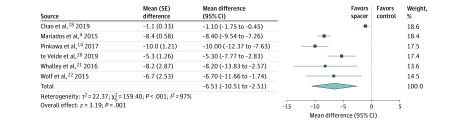
Figure 1.. Rectal Irradiation With vs Without Perirectal Hydrogel Spacer
The mean difference and 95% CI between hydrogel spacer and control groups in the percentage of rectal volume receiving at least 70 Gy irradiation are plotted for each study (with inverse-variance weighting method and random-effect model). The size of the square is proportional to the sample size of the study. The pooled mean difference denoted by the diamond apex, and the 95% CI is denoted by the diamond width. A pooled mean difference of less than 0 indicates less rectal irradiation with hydrogel spacer; a value greater than 0 indicates more rectal irradiation with hydrogel spacer. The pooled percentage of rectal volume receiving at least 70 Gy irradiation was 3.5% with hydrogel spacer and 10.4% with controls (mean difference, −6.5%; P < .001). Significant heterogeneity among studies was identified (I2 = 97%; P < .001).
Figure 2.
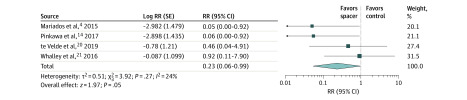
Figure 2.. Late Grade 2 or Higher Rectal Toxic Effects With vs Without Perirectal Hydrogel Spacer
The risk ratio (RR) and 95% CI between hydrogel spacer and control groups are plotted for each study (with inverse-variance weighting method and random-effect model). The size of the square is proportional to the sample size of the study. The pooled RR is denoted by the diamond apex, and the 95% CI is denoted by the diamond width. A pooled RR of greater than 1 indicates higher risk with controls. A pooled RR of less than 1 indicates lower risk with hydrogel spacer. Late grade 2 or higher rectal toxic effects were significantly lower in the hydrogel spacer group (1.5% vs 5.7%; RR, 0.23; P = .05). Significant heterogeneity among studies was not identified (I2 = 24%; P = .27).
Figure 3.
Figure 3.. Change in Late Bowel-Related Quality of Life (QoL) With vs Without Perirectal Hydrogel Spacer
The mean difference and 95% CI between hydrogel spacer and control groups are plotted for each study (with inverse-variance weighting method and random-effect model). The size of the square is proportional to the sample size of the study. The pooled mean difference denoted by the diamond apex, and the 95% CI is denoted by the diamond width. A pooled mean difference of less than 0 indicates lower bowel-related QoL with hydrogel spacer; a value greater than 0 indicates higher bowel-related QoL with hydrogel spacer. Bowel-related QoL reported on a 0 to 100 scale, where higher values indicate better QoL. Late bowel-related QoL was significantly higher in the hydrogel spacer group (mean difference, 5.4; P < .001). Significant heterogeneity among studies was not identified (I2 = 0%; P = .76).

References

    1. Chen J, Oromendia C, Halpern JA, Ballman KV. National trends in management of localized prostate cancer: a population based analysis 2004-2013. Prostate. 2018;78(7):512-520. doi: 10.1002/pros.23496 - DOI - PubMed
    1. Viani GA, Stefano EJ, Afonso SL. Higher-than-conventional radiation doses in localized prostate cancer treatment: a meta-analysis of randomized, controlled trials. Int J Radiat Oncol Biol Phys. 2009;74(5):1405-1418. doi: 10.1016/j.ijrobp.2008.10.091 - DOI - PubMed
    1. Kang MH, Yu YD, Shin HS, Oh JJ, Park DS. Difference in the rate of rectal complications following prostate brachytherapy based on the prostate-rectum distance and the prostate longitudinal length among early prostate cancer patients. Korean J Urol. 2015;56(9):637-643. doi: 10.4111/kju.2015.56.9.637 - DOI - PMC - PubMed
    1. Mariados N, Sylvester J, Shah D, et al. Hydrogel spacer prospective multicenter randomized controlled pivotal trial: dosimetric and clinical effects of perirectal spacer application in men undergoing prostate image guided intensity modulated radiation therapy. Int J Radiat Oncol Biol Phys. 2015;92(5):971-977. doi: 10.1016/j.ijrobp.2015.04.030 - DOI - PubMed
    1. Mok G, Benz E, Vallee JP, Miralbell R, Zilli T. Optimization of radiation therapy techniques for prostate cancer with prostate-rectum spacers: a systematic review. Int J Radiat Oncol Biol Phys. 2014;90(2):278-288. doi: 10.1016/j.ijrobp.2014.06.044 - DOI - PubMed

Publication types