Review
. 2020 Sep:39:101044.
doi: 10.1016/j.molmet.2020.101044. Epub 2020 Jun 23.

Diabetes, infection risk and COVID-19

Affiliations
Review

Diabetes, infection risk and COVID-19

Suheda Erener. Mol Metab. 2020 Sep.

Abstract

Background: Individuals with diabetes are at a greater risk of hospitalization and mortality resulting from viral, bacterial, and fungal infections. The coronavirus disease-2019 (COVID-19), caused by severe acute respiratory syndrome coronavirus-2 (SARS-CoV-2), has spread quickly to more than 213 countries and claimed 395,779 lives as of June 7, 2020. Notably, in several studies, diabetes is one of the most reported comorbidities in patients with severe COVID-19.

Scope of review: In this review, I summarize the clinical data on the risk for infectious diseases in individuals with diabetes while highlighting the mechanisms for altered immune regulation. The focus is on coronaviruses. Based on the new clinical data obtained from COVID-19 patients, a discussion of mechanisms, such as cytokine storm, pulmonary and endothelial dysfunction, and hypercoagulation, that may render individuals with diabetes more vulnerable to COVID-19 is provided.

Major conclusions: Epidemiological studies show that poorly controlled diabetes is a risk factor for various infectious diseases. Given the global burden of diabetes and the pandemic nature of coronaviruses, understanding how diabetes affects COVID-19 severity is critical to designing tailored treatments and clinical management of individuals affected by diabetes.

Keywords: COVID-19; Coronavirus; Diabetes; Infection; SARS-CoV-2.


Figures

Figure 1
Figure 1
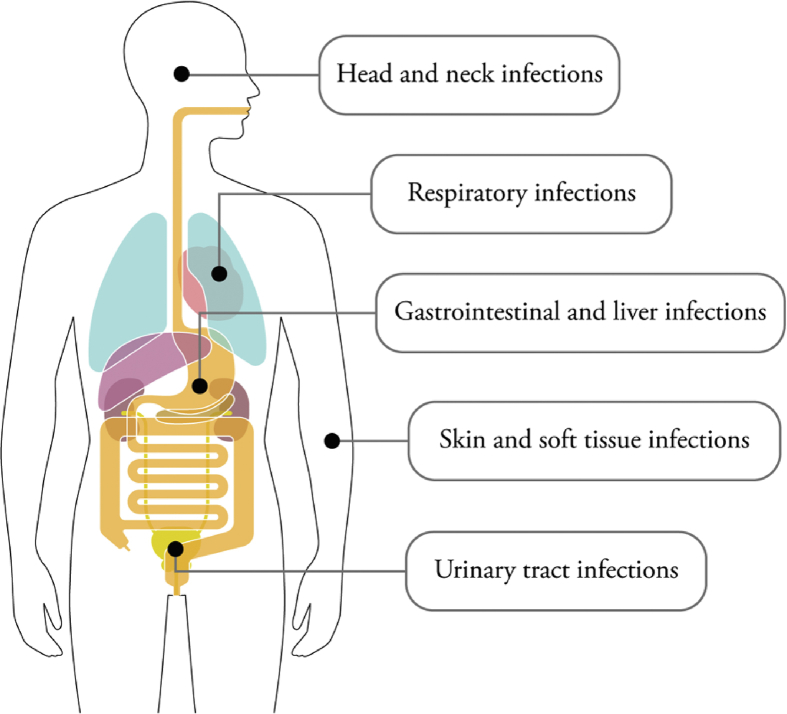
Main infectious diseases associated with diabetes. Head and neck infections (e.g., invasive external otitis), respiratory infections (e.g., Streptococcus pneumoniae, influenza, H1N1, tuberculosis), skin and soft tissue infections (e.g., foot infection, gangrene), gastrointestinal and liver infections (e.g., Helicobacter pylori, hepatitis B, hepatitis C, enteroviruses), and urinary tract infections (bacteriuria, cystitis) are more frequent in individuals with diabetes.
Figure 2
Figure 2
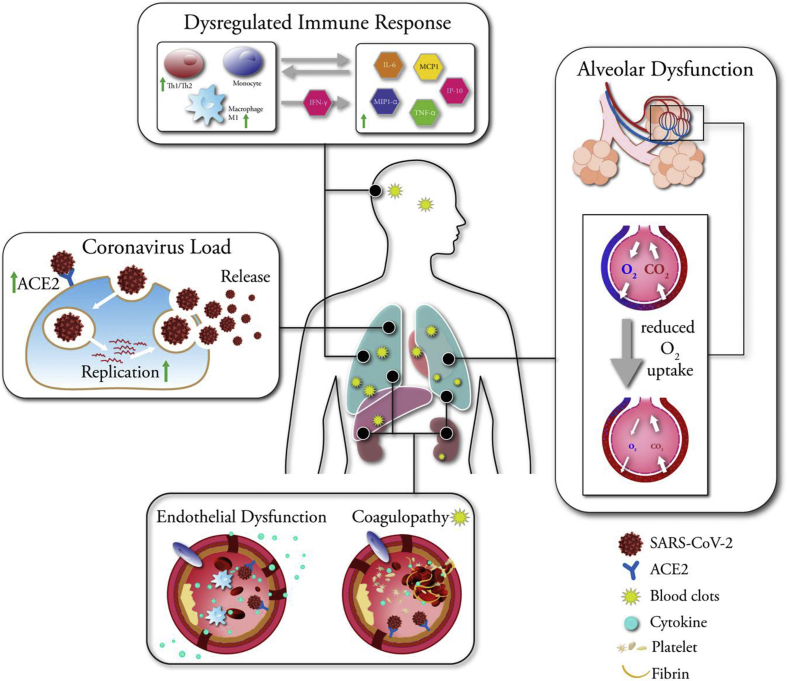
Mechanisms associated with increased COVID-19 severity in individuals with diabetes. Coronavirus Load: SARS-CoV-2 infects the lung tissue via entry through ACE2 receptor. Individuals with diabetes have increased ACE2 receptor expression. Medications such as ACE inhibitors, GLP-1 agonists, and statins may increase ACE2 levels further. Increased glucose levels may allow SARS-CoV-2 replication. Dysregulated Immune Response: Individuals with diabetes have low chronic inflammation, which can lead to exaggerated macrophage and monocyte and T cell recruitment, promoting further inflammation in a feedback loop. Overproduction of pro-inflammatory cytokines may eventually damage the lung infrastructure. The resulting cytokine storm may initiate multiple systemic coagulation. Alveolar Dysfunction: Diabetes is associated with numerous structural changes to the lung including augmented permeability of the vasculature and reduced gas exchange. Impaired respiratory function present in individuals with diabetes may aggravate pulmonary complications, causing an increased need for mechanical ventilation in diabetes patients. Endothelial Dysfunction: In diabetes, endothelium shows markers of inflammation with increased immune cells, cytokines, potentially exacerbating the cytokine storm and pulmonary lesions. SARS-CoV2 can directly infect endothelial cells via the ACE2 receptors present on the endothelial cells. Change of vascular tone toward more vasoconstriction in diabetes patients can aggravate the subsequent organ ischemia, tissue edema, and a procoagulant state during COVID-19 infection. Coagulopathy: Individuals with diabetes have significant upregulation of hypercoagulation and fibrinolysis markers, and increased platelet activity and adhesion to endothelial wall, creating a favorable environment for thromboembolic events to occur under hyperinflammatory conditions such as SARS-CoV-2 infection. Blood clots can be detected in multiple organs.

References

    1. International Diabetes Federation . 8th ed. 2017. IDF Diabetes Atlas.
    1. American Diabetes Association 2. Classification and diagnosis of diabetes. Diabetes Care. 2017;40:S11–S24. - PubMed
    1. Beckman J.A., Creager M.A. Vascular complications of diabetes. Circulation Research. 2016;118(11):1771–1785. - PubMed
    1. Iglay K., Hannachi H., Joseph Howie P., Xu J., Li X., Engel S.S. Prevalence and co-prevalence of comorbidities among patients with type 2 diabetes mellitus. Current Medical Research and Opinion. 2016;32(7):1243–1252. - PubMed
    1. Long A.N., Dagogo-Jack S. Comorbidities of diabetes and hypertension: mechanisms and approach to target organ protection. Journal of Clinical Hypertension. 2011;13(4):244–251. - PMC - PubMed

Publication types

MeSH terms