


Developing and testing a measure of COVID-19 organizational support of healthcare workers - results from Peru, Ecuador, and Bolivia
- PMID: 32585436
- PMCID: PMC7284268
- DOI: 10.1016/j.psychres.2020.113174
Developing and testing a measure of COVID-19 organizational support of healthcare workers - results from Peru, Ecuador, and Bolivia
Abstract
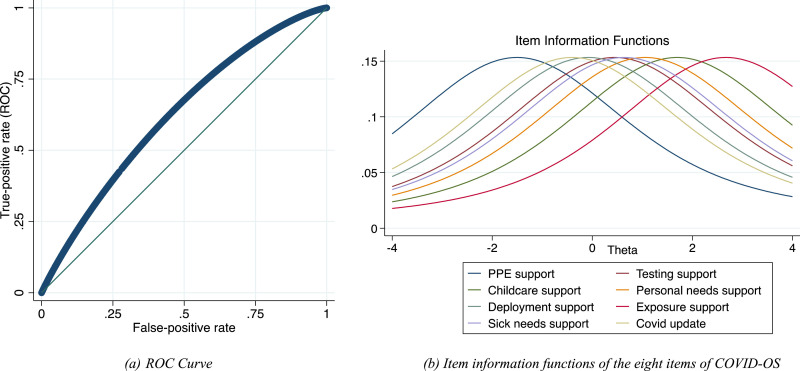
During the COVID-19 pandemic, healthcare workers are facing high workloads with resource constraints and risk of virus exposure, and healthcare organizations need to support their healthcare workers to reduce their anxiety. Based on a recent 8-point framework of COVID-19 specific organization support, we devised a measure of COVID-19 Organizational Support (COVID-OS). We tested the new measure with 712 healthcare workers in Bolivia, Ecuador, and Peru and found the new measure formed three factors to predict healthcare workers' anxiety and life satisfaction during the COVID-19 pandemic. We call for further studies to test COVID-OS in other countries and settings.
Keywords: Anxiety; Life satisfaction; Pandemic.
Copyright © 2020 Elsevier B.V. All rights reserved.
Conflict of interest statement
Declaration of Competing Interests The authors declare that there are no potential conflicts of interest with respect to the research, authorship, and/or publication of this article.
Figures
References
-
- DeVellis R. 26th ed. Sage; London: 2016. Scale development: Theory and Applications.
-
- Hurley A.E., Scandura T.A., Schriesheim C.A., Brannick M.T., Seers A., Vandenberg R.J., Williams L.J. Exploratory and confirmatory factor analysis: guidelines, issues, and alternatives. J. Organ. Behav. 1997;18:667–683. 10.1002/(SICI)1099-1379(199711)18:6<667::AID-JOB874>3.0.CO;2-T.
Publication types
MeSH terms
LinkOut - more resources
Full Text Sources
Medical
Miscellaneous
