


Use, adoption, and effectiveness of tippy-tap handwashing station in promoting hand hygiene practices in resource-limited settings: a systematic review
- PMID: 32586314
- PMCID: PMC7316639
- DOI: 10.1186/s12889-020-09101-w
Use, adoption, and effectiveness of tippy-tap handwashing station in promoting hand hygiene practices in resource-limited settings: a systematic review
Abstract
Background: Tippy-taps are locally made devices for washing hands with running water. They are simple and low-cost, enabling technology that provides adequate water sources, handwashing stations and motivation for people to prioritise handwashing. This systematic review aimed to establish the use, benefits, adoption and effectiveness of enabling technology; tippy-tap handwashing station, in resource-limited settings.
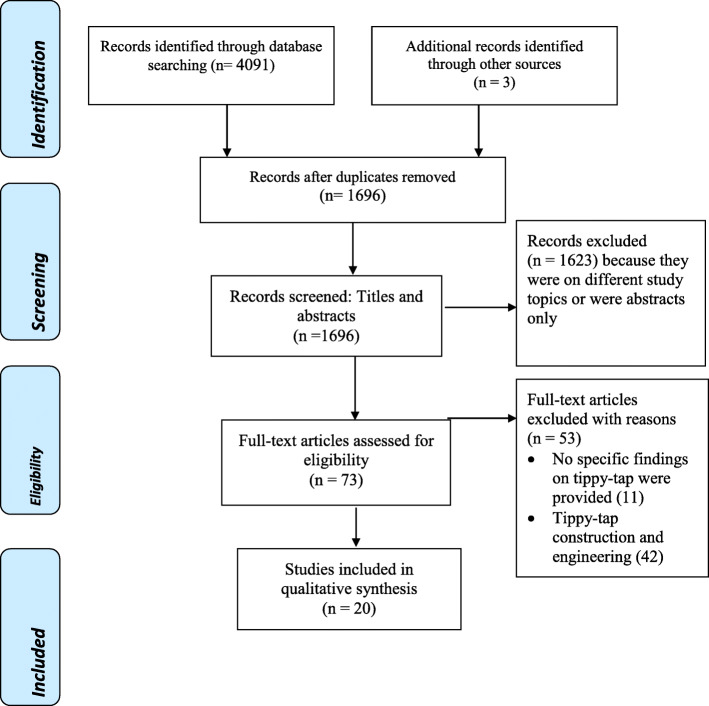
Methods: We systematically searched for articles in the PubMed, EMBASE, PsycINFO, AMED, CINAHL, DOAJ and Google Scholar databases guided by the acceptable best practice developed by the PROSPERO and COCHRANE for systematic search and selection of articles. Search terms such as tippy-taps, enabling technology, hand-washing station, hand-washing behaviour, diarrhoea, respiratory infection, increase handwashing behaviour were used. In addition, a PRISMA flow diagram was used to elaborate on the number of articles retrieved, retained, excluded and reasons for every action. Studies that used tippy-tap hand washing station as a handwashing facility regardless of the design were included in this review. A mixed method appraisal tool was used to appraise studies.
Results: Twenty articles met the eligibility criteria. The use of tippy-taps for handwashing by household members or school children was reported by authors of 16 studies, and it ranged from 2.7 to 80%. The availability of tippy-taps increased handwashing and use of soap among participants. Furthermore, the majority of people who were oriented to tippy-taps or recruited to tippy-tap studies built their tippy-tap stations even after the promotional activities or programs had ended. In one study, tippy-taps were reported by participant to be effective in preventing episodes of stomach pain among participants.
Conclusion: Tippy-tap handwashing station could help in promoting handwashing practice in resource constraint settings. Future studies are needed to evaluate the effectiveness of tippy-tap hand washing station on preventing water and hygiene-related infections.
Keywords: Adoption; Effectiveness; Hand hygiene practice; Handwashing station; Tippy-tap.
Conflict of interest statement
The authors declare no competing interests.
Figures

References
-
- UNICEF. The Human Right to Water and Sanitation. Geneva: United Nations; 2015.
-
- WHO & UNICEF . Water, sanitation and hygiene in health care facilities: status in low and middle income countries and way forward. Geneva: WHO; 2015.
-
- Center for Disease Control and Prevention: Hand Hygiene in Healthcare Settings. In. USA: Center for Disease Control and Prevention; ND.
-
- Hutton G, Haller L, WHO Evaluation of the costs and benefits of water and sanitation improvements at the global level. Geneva: WHO; 2004. - PubMed
-
- UNICEF . Fact sheet: child survival fact sheet: water and sanitation. USA: UNICEF; 2004.
Publication types
MeSH terms
LinkOut - more resources
Full Text Sources
Medical
Miscellaneous
