


Electrophysiological evidence of preserved hearing at the end of life
- PMID: 32587364
- PMCID: PMC7316981
- DOI: 10.1038/s41598-020-67234-9
Electrophysiological evidence of preserved hearing at the end of life
Abstract
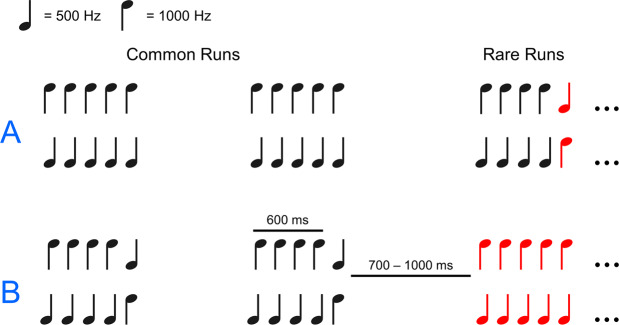
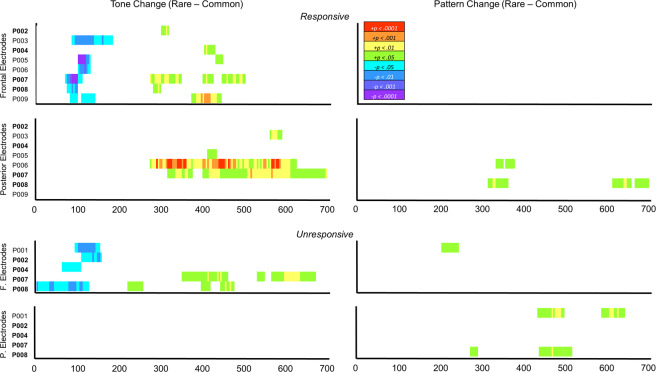
This study attempts to answer the question: "Is hearing the last to go?" We present evidence of hearing among unresponsive actively dying hospice patients. Individual ERP (MMN, P3a, and P3b) responses to deviations in auditory patterns are reported for conscious young, healthy control participants, as well as for hospice patients, both when the latter were conscious, and again when they became unresponsive to their environment. Whereas the MMN (and perhaps too the P3a) is considered an automatic response to auditory irregularities, the P3b is associated with conscious detection of oddball targets. All control participants, and most responsive hospice patients, evidenced a "local" effect (either a MMN, a P3a, or both) and some a "global" effect (P3b) to deviations in tone, or deviations in auditory pattern. Importantly, most unresponsive patients showed evidence of MMN responses to tone changes, and some showed a P3a or P3b response to either tone or pattern changes. Thus, their auditory systems were responding similarly to those of young, healthy controls just hours from end of life. Hearing may indeed be one of the last senses to lose function as humans die.
Conflict of interest statement
Dr. Gallagher was a palliative care physician at St. John’s Hospice during the study.
Figures




References
-
- Tapson K, Sierotowicz W, Marks-Maran D, Thompson TM. ‘It’s the hearing that is last to go’: a case of traumatic head injury. Br. J. Nurs. 2015;24:277–281. - PubMed
-
- French CC. Near-death experiences in cardiac arrest survivors. Prog. Brain Res. 2005;150:351–367. - PubMed
-
- Greyson B. Dissociation in people who have near-death experiences: out of their bodies or out of their minds? The Lancet. 2000;355:460–463. - PubMed
-
- Parnia S, Fenwick P. Near death experiences in cardiac arrest: visions of a dying brain or visions of a new science of consciousness. Resuscitation. 2002;52:5–11. - PubMed
-
- Parnia S, Waller DG, Yeates R, Fenwick P. A qualitative and quantitative study of the incidence, features and aetiology of near death experiences in cardiac arrest survivors. Resuscitation. 2001;48:149–156. - PubMed
Publication types
MeSH terms
LinkOut - more resources
Full Text Sources
Medical
