


Polycystic Ovary Syndrome and Psychotic Disorder
- PMID: 32587538
- PMCID: PMC7297942
- DOI: 10.3389/fpsyt.2020.00543
Polycystic Ovary Syndrome and Psychotic Disorder
Abstract
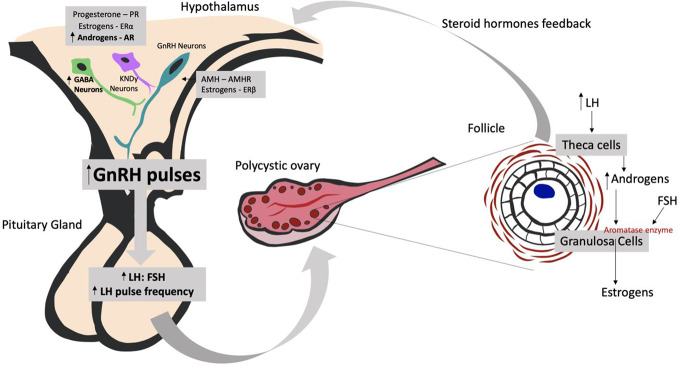
Polycystic ovary syndrome (PCOS), a disease that usually emerges during adolescence, is characterized by hormonal imbalance and ovarian dysfunction. The prevalence can vary between 5.6 to 21.3% in women and 6% in adolescent girls. This discrepancy is related to the population studied and the diagnostic criteria used. The underlying pathophysiology of PCOS is not fully understood, but it can lead to a number of co-morbidities, including hypertension, diabetes, dyslipidemia, and also, mental health disorders. Clinical and preclinical data indicate neuroendocrine involvement with dysfunction in gamma-Aminobutyric acid (GABA) signaling and neuronal androgen receptors that might reduce hypothalamic sensitivity and lead to an impairment of estradiol and progesterone feedback. Based on these assumptions, the aims of this paper are to review the association of PCOS and psychotic disorders in order to address the burden of women comorbid for both conditions.
Keywords: antipsychotic drugs; polycystic ovary syndrome; psychotic disorder; schizophrenia; women.
Copyright © 2020 Doretto, Mari and Chaves.
Figures
References
-
- Teede H, Misso M, Costello M, Dokras A, Laven J, Moran L, et al. International evidence-based guideline for the assessment and management of polycystic ovary syndrome 2018. National Health and Medical Research Council (NHMRC). (Melbourne Australia: Monash University) (2018).
Publication types
LinkOut - more resources
Full Text Sources
