


Prediction of no-reflow phenomenon in patients treated with primary percutaneous coronary intervention for ST-segment elevation myocardial infarction
- PMID: 32590726
- PMCID: PMC7329019
- DOI: 10.1097/MD.0000000000020152
Prediction of no-reflow phenomenon in patients treated with primary percutaneous coronary intervention for ST-segment elevation myocardial infarction
Abstract
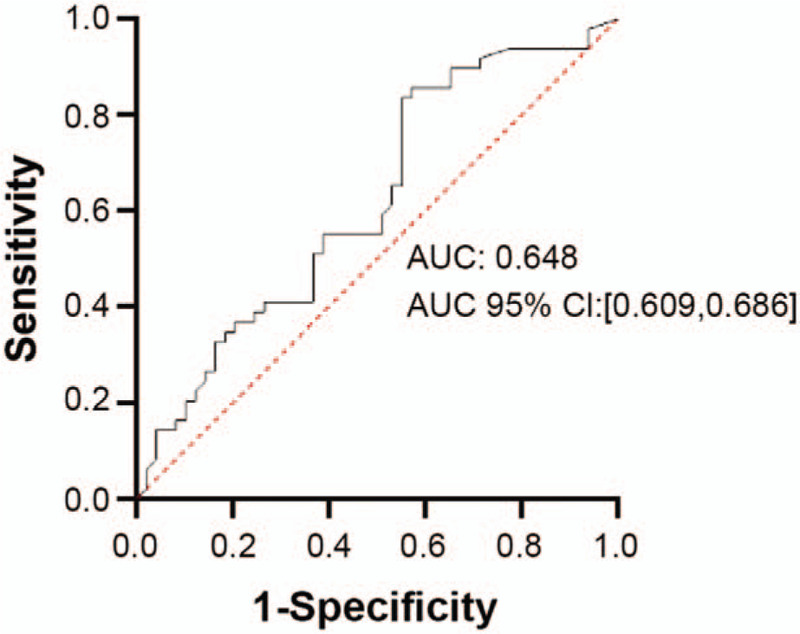
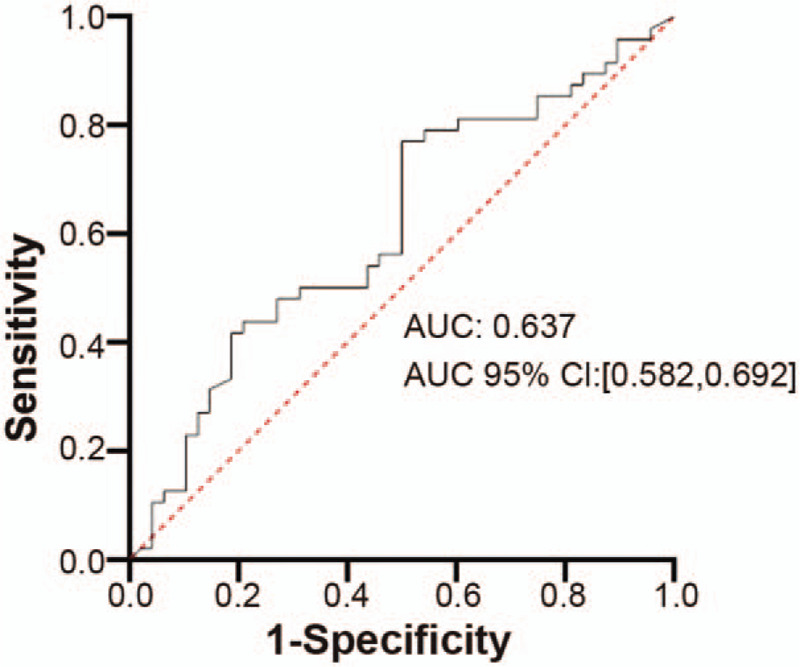
No-reflow is an important complication among patients with acute ST-segment elevation myocardial infarction (STEMI) undergoing percutaneous coronary intervention (PCI).A retrospective study of 1658 STEMI patients undergoing direct PCI was performed. Patients were randomly assigned at a 7:3 ratio into development cohort and validation cohort and into no-reflow and normal blood flow groups. Clinical data and laboratory examinations were compared to identify independent risk factors and establish a no-reflow risk scoring system.In the development cohort (n = 1122), 331 (29.5%) had no-reflow. Multivariate analysis showed age ≥ 65 years (OR = 1.766, 95% confidence interval (CI): 1.313-2.376, P < .001), not using angiotonase inhibitor/angiotensin receptor antagonists (OR = 1.454, 95%CI: 1.084-1.951, P = .013), collateral circulation <grade 2 (OR = 3.056, 95%CI: 1.566-5.961, P = .001), thrombosis burden ≥4 points (OR = 2.033, 95%CI: 1.370-3.018, P < .001), diameter of target lesion ≥3.5 mm (OR = 1.511, 95%CI: 1.087-2.100, P = .014), thrombosis aspiration (OR = 1.422, 95%CI: 1.042-1.941, P = .026), and blood glucose >8 mmol/L (OR = 1.386, 95%CI: 1.007-1.908, P = .045) were related to no-reflow. Receiver operating characteristic (ROC) area under the curve was 0.648 (95%CI: 0.609-0.86). At 0.349 cutoff sensitivity was 42.0%, specificity was 79.3%, positive predictive value (PPV) was 44.7%, negative predictive value (NPV) was 77.4%, P < .001. The resulting risk scoring system was tested in the validation cohort (n = 536), with 30.1% incidence of no-reflow. The area under the ROC curve was 0.637 (95%CI: 0.582-0.692). At a cutoff of 0.349 sensitivity was 53.2% and specificity was 66.7%, PPV was 41.2%, NPV was 76.4%, P < .001.The no-reflow risk scoring system was effective in identifying high-risk patients.
Conflict of interest statement
The authors have no funding and conflicts of interest to disclose.
Figures
References
-
- Okwuosa IS, Lewsey SC, Adesiyun T, et al. Worldwide disparities in cardiovascular disease: challenges and solutions. Int J Cardiol 2016;202:433–40. - PubMed
-
- De Luca G, Suryapranata H, Marino P. Reperfusion strategies in acute ST-elevation myocardial infarction: an overview of current status. Prog Cardiovasc Dis 2008;50:352–82. - PubMed
-
- Niccoli G, Burzotta F, Galiuto L, et al. Myocardial no-reflow in humans. J Am Coll Cardiol 2009;54:281–92. - PubMed
Publication types
MeSH terms
Substances
LinkOut - more resources
Full Text Sources
Miscellaneous
