


Skeletal muscle loss in the postoperative acute phase after esophageal cancer surgery as a new prognostic factor
- PMID: 32591002
- PMCID: PMC7320551
- DOI: 10.1186/s12957-020-01908-6
Skeletal muscle loss in the postoperative acute phase after esophageal cancer surgery as a new prognostic factor
Abstract
Background: The postoperative survival rate of patients with esophageal squamous cell carcinoma (ESCC) remains poor compared with other gastrointestinal cancers. We hypothesized that skeletal muscle loss in the postoperative acute phase might be a new predictor for long-term prognosis after highly invasive surgery such as ESCC surgery.
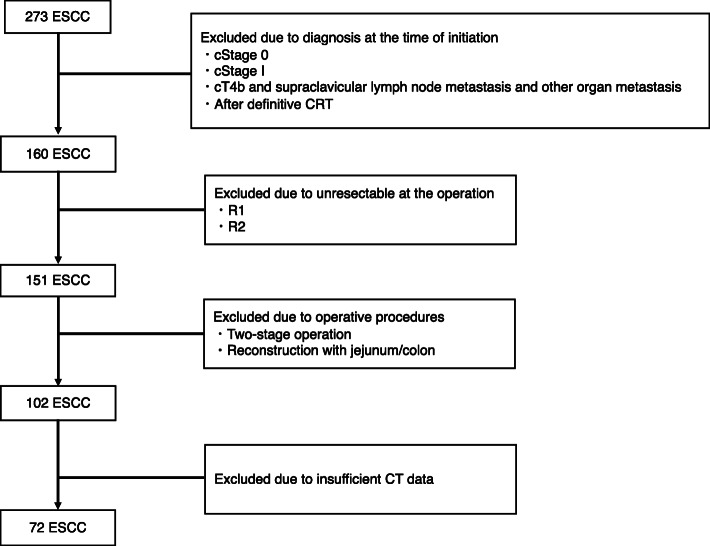
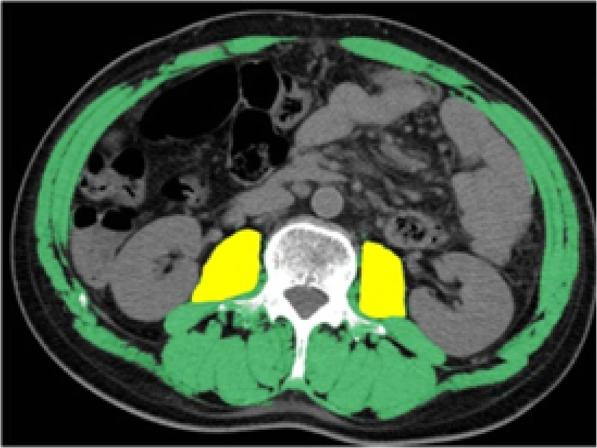
Methods: The following items were retrospectively investigated. First, whether skeletal muscle loss occurred in the postoperative acute phase of ESCC was verified. Second, the preoperative and intraoperative factors involved in skeletal muscle loss in the postoperative acute phase of ESCC were investigated. Then, whether skeletal muscle loss in the postoperative acute phase affected long-term prognosis was examined. The medical records of consecutive patients who underwent radical esophagectomy for ESCC between January 2010 and February 2015 were retrospectively reviewed; 72 cases were eligible for this study. The total psoas major muscle mass index (TPI) at the level of the third lumbar vertebra (L3) was measured using computed tomography (CT) before surgery and 3 days after surgery. The long-term prognosis was estimated by the Kaplan-Meier method and the multivariate logistic regression model.
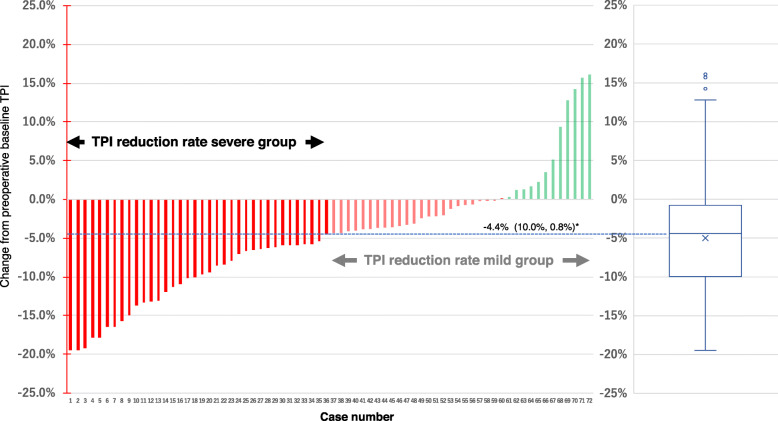
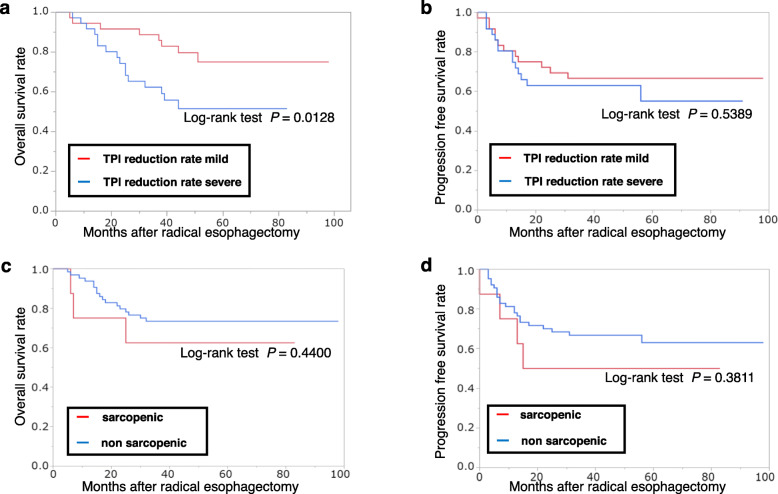
Results: There was already a significant reduction of TPI in the acute phase up to POD 3 after ESCC surgery in comparison with the preoperative baseline TPI (P < 0.001). The TPI reduction rate was significantly milder in cases with less blood loss during surgery and in cases that underwent thoracoscopic esophagectomy than in cases that underwent open esophagectomy. The 3-year overall survival rate was significantly different between the TPI reduction rate severe group and the TPI reduction rate mild group.
Conclusion: Skeletal muscle loss occurred even in the postoperative acute phase. Furthermore, it is very significant that skeletal muscle loss in the postoperative acute phase of ESCC surgery is involved in the long-term prognosis.
Conflict of interest statement
The authors declare that they have no competing interests.
Figures
References
MeSH terms
LinkOut - more resources
Full Text Sources
Medical
Miscellaneous
