


Outcomes of 3,737 COVID-19 patients treated with hydroxychloroquine/azithromycin and other regimens in Marseille, France: A retrospective analysis
- PMID: 32593867
- PMCID: PMC7315163
- DOI: 10.1016/j.tmaid.2020.101791
Outcomes of 3,737 COVID-19 patients treated with hydroxychloroquine/azithromycin and other regimens in Marseille, France: A retrospective analysis
Abstract
Background: In our institute in Marseille, France, we initiated early and massive screening for coronavirus disease 2019 (COVID-19). Hospitalization and early treatment with hydroxychloroquine and azithromycin (HCQ-AZ) was proposed for the positive cases.
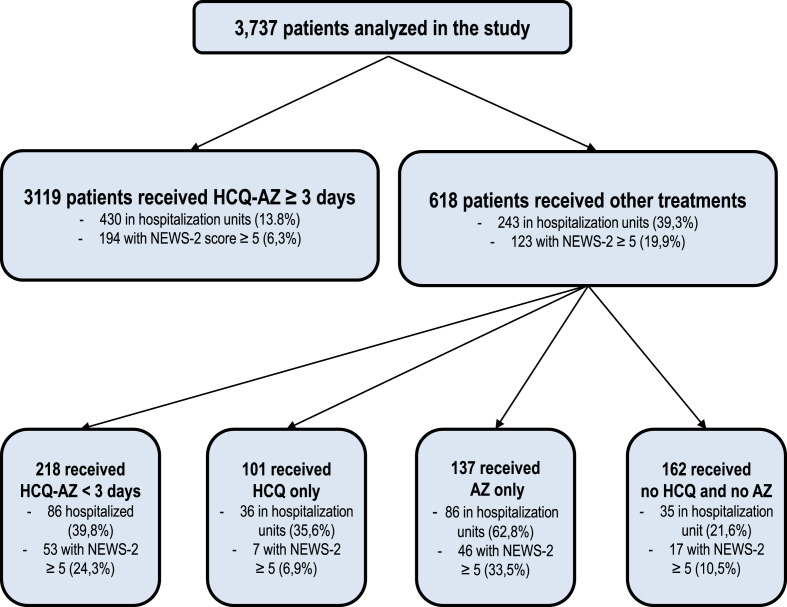
Methods: We retrospectively report the clinical management of 3,737 screened patients, including 3,119 (83.5%) treated with HCQ-AZ (200 mg of oral HCQ, three times daily for ten days and 500 mg of oral AZ on day 1 followed by 250 mg daily for the next four days, respectively) for at least three days and 618 (16.5%) patients treated with other regimen ("others"). Outcomes were death, transfer to the intensive care unit (ICU), ≥10 days of hospitalization and viral shedding.
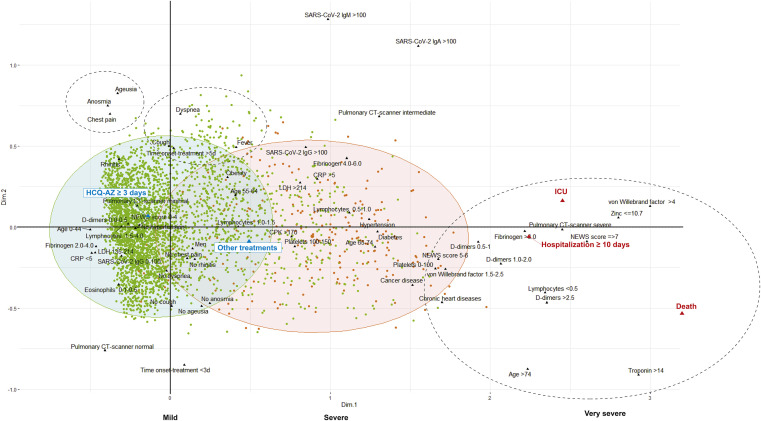
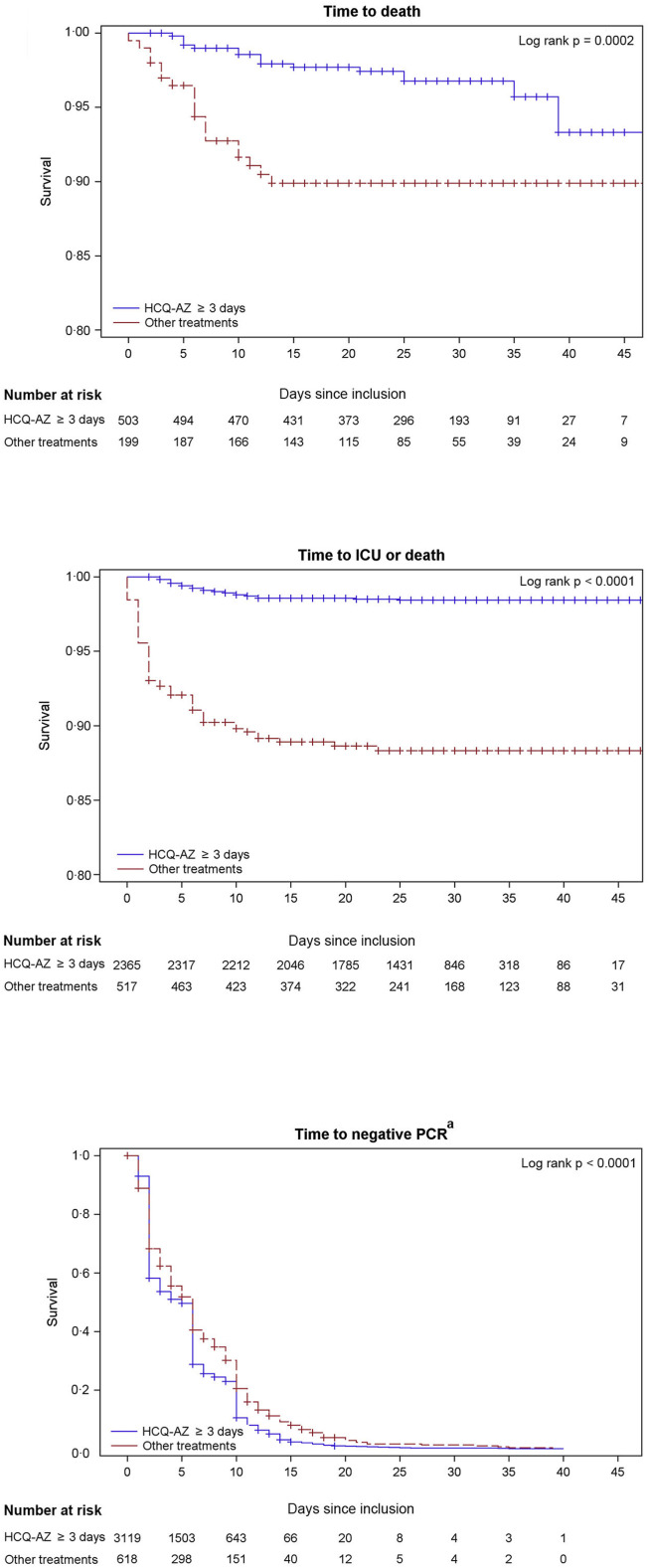
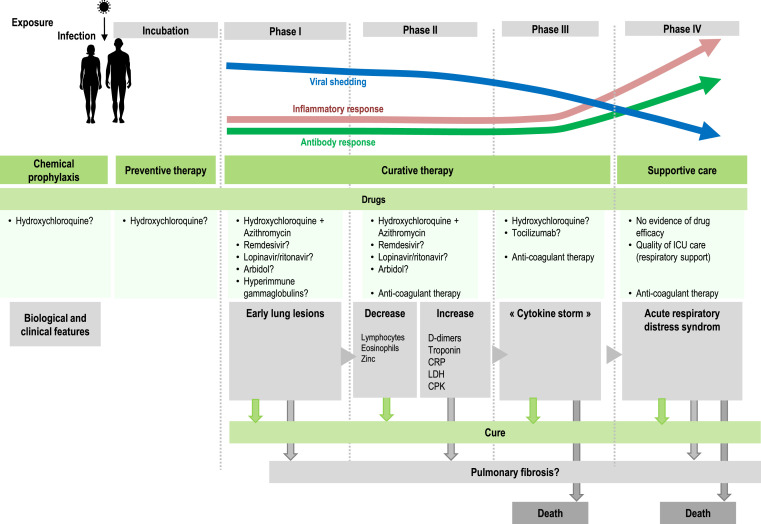
Results: The patients' mean age was 45 (sd 17) years, 45% were male, and the case fatality rate was 0.9%. We performed 2,065 low-dose computed tomography (CT) scans highlighting lung lesions in 592 of the 991 (59.7%) patients with minimal clinical symptoms (NEWS score = 0). A discrepancy between spontaneous dyspnoea, hypoxemia and lung lesions was observed. Clinical factors (age, comorbidities, NEWS-2 score), biological factors (lymphocytopenia; eosinopenia; decrease in blood zinc; and increase in D-dimers, lactate dehydrogenase, creatinine phosphokinase, troponin and C-reactive protein) and moderate and severe lesions detected in low-dose CT scans were associated with poor clinical outcome. Treatment with HCQ-AZ was associated with a decreased risk of transfer to ICU or death (Hazard ratio (HR) 0.18 0.11-0.27), decreased risk of hospitalization ≥10 days (odds ratios 95% CI 0.38 0.27-0.54) and shorter duration of viral shedding (time to negative PCR: HR 1.29 1.17-1.42). QTc prolongation (>60 ms) was observed in 25 patients (0.67%) leading to the cessation of treatment in 12 cases including 3 cases with QTc> 500 ms. No cases of torsade de pointe or sudden death were observed.
Conclusion: Although this is a retrospective analysis, results suggest that early diagnosis, early isolation and early treatment of COVID-19 patients, with at least 3 days of HCQ-AZ lead to a significantly better clinical outcome and a faster viral load reduction than other treatments.
Keywords: Azithromycin; COVID-19; Hydroxychloroquine; SARS-CoV-2.
Copyright © 2020 The Authors. Published by Elsevier Ltd.. All rights reserved.
Conflict of interest statement
The authors declare no competing interests. Funding sources had no role in the design and conduct of the study; collection, management, analysis, and interpretation of the data; and preparation, review, or approval of the manuscript. Our group used widely available generic drugs distributed by many pharmaceutical companies.
Figures
References
-
- Johns Hopkins University Coronavirus resource center. COVID-19 dashboard by the center for systems science and engineering (CSSE) at johns hopkins university (JHU) https://coronavirus.jhu.edu/map.html
-
- Gao J., Tian Z., Yang X. Breakthrough: chloroquine phosphate has shown apparent efficacy in treatment of COVID-19 associated pneumonia in clinical studies. Biosci Trends. 2020;14(1):72–73. - PubMed
Publication types
MeSH terms
Substances
LinkOut - more resources
Full Text Sources
Other Literature Sources
Research Materials
Miscellaneous
