Review
. 2020 Jul 24;23(7):101266.
doi: 10.1016/j.isci.2020.101266. Epub 2020 Jun 12.

Single Electron Activation of Aryl Carboxylic Acids

Affiliations
Review

Single Electron Activation of Aryl Carboxylic Acids

Xiao-Qiang Hu et al. iScience. .

Abstract

Aryl carboxylic acids are stable and readily available in great structural diversity both from natural and well-established synthetic procedures, which make them promising starting materials in organic synthesis. The conversion of benzoic acids into high-value molecules is of great importance and have gained much interest of synthetic chemists. The recent development of single-electron (1e-) activation strategy has been esteemed as a complementary method for the transformation of benzoic acids. In this context, carboxylate groups can be selectively transferred into reactive aryl carboxylic radical, aryl radical, and acyl radical by electrocatalysis, photocatalysis, or in the presence of some SET oxidants. Based on these radical species, remarkable advancements have been achieved for the rapid formation of various chemical bonds over the past 10 years. In this review, we summarize recent advances in single electron activation of aryl carboxylic acids, with an emphasis on reaction scope, catalytic system, limitation, and underlying reaction mechanism.

Keywords: Catalysis; Molecular Electrochemistry; Organic Chemistry; Physical Organic Chemistry.


Figures
None
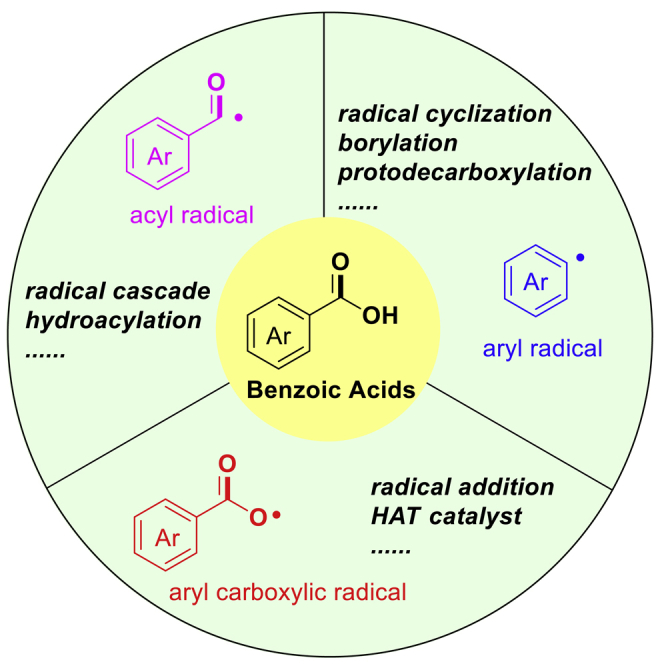
Graphical abstract
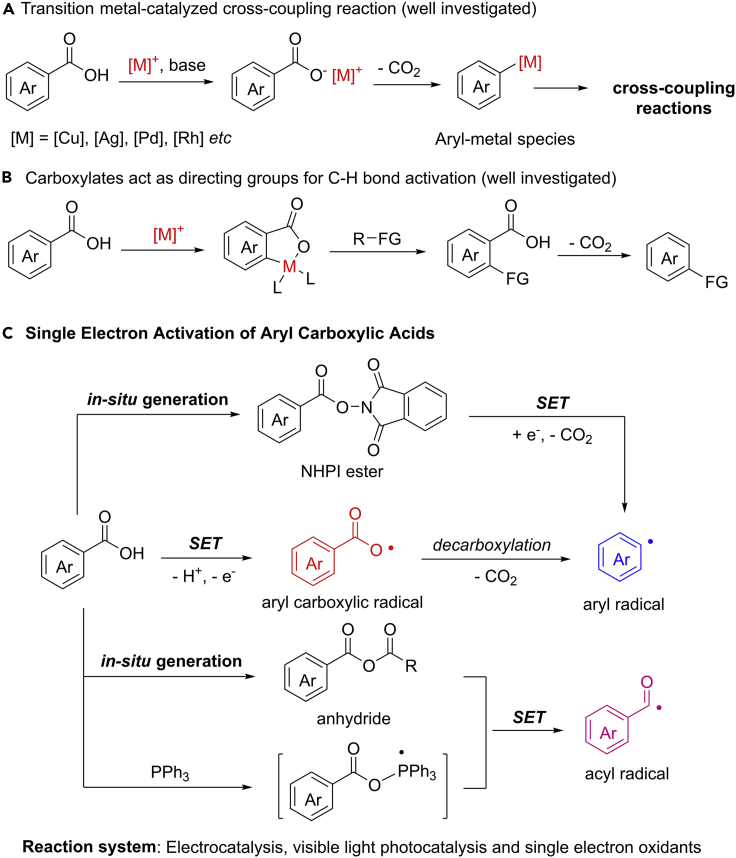
Scheme 1
Scheme 1
Summary of Classic Reactions and Single Electron Activation of Aryl Carboxylic Acids
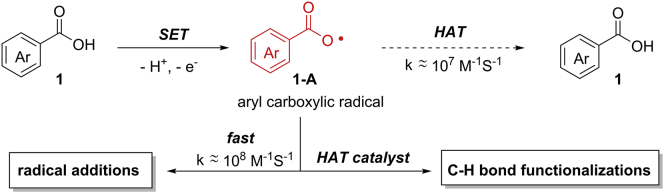
Scheme 2
Scheme 2
Aryl Carboxylic Radical-Mediated Reaction
Scheme 3
Scheme 3
C(sp2)−H Oxygenation of Benzoic Acids
Scheme 4
Scheme 4
Proposed Mechanism for C(sp2)−H Oxygenation of Benzoic Acids
Scheme 5
Scheme 5
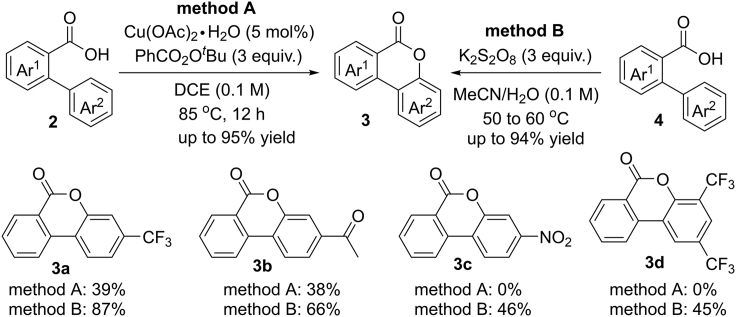
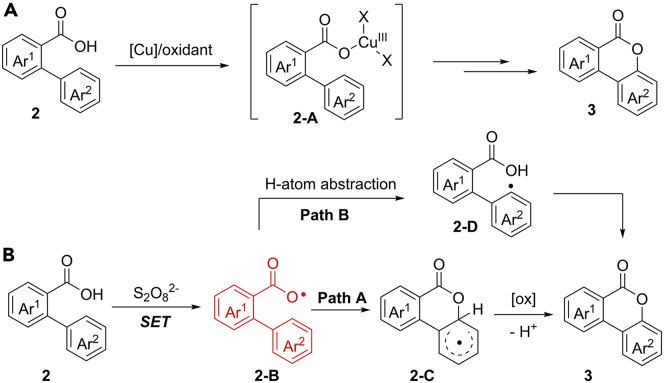
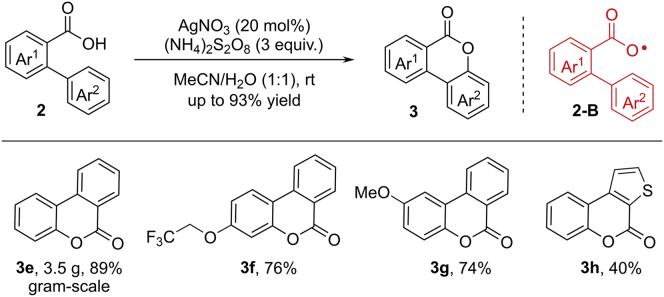
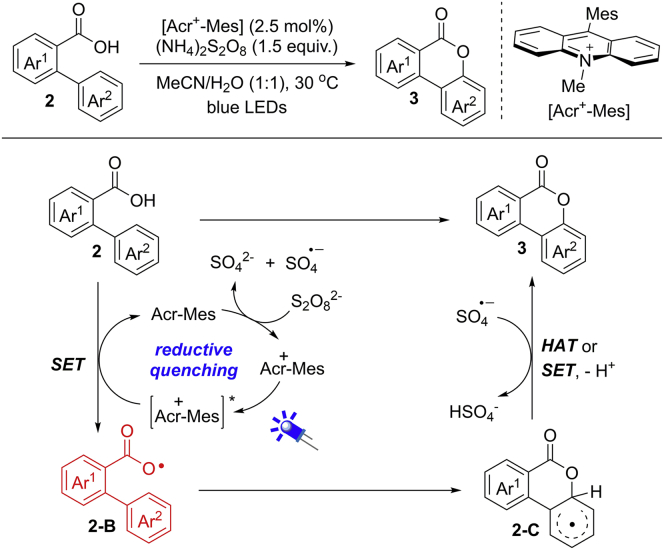
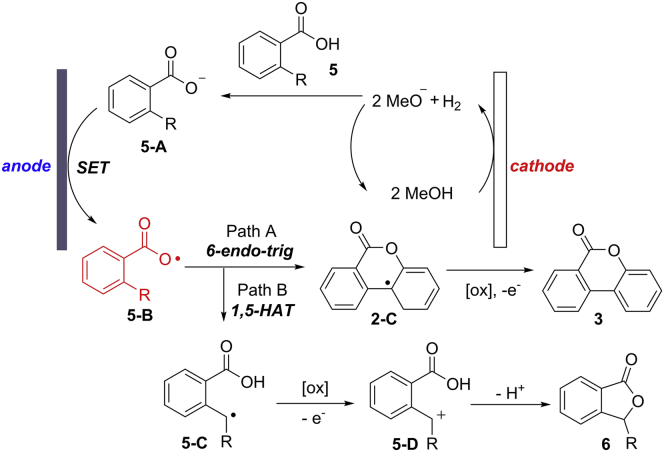
Dehydrogenative Lactonization of Benzoic Acids
Scheme 6
Scheme 6
Oxidative Lactonization of 2-Arylbenzoic Acids and Proposed Reaction Mechanism
Scheme 7
Scheme 7
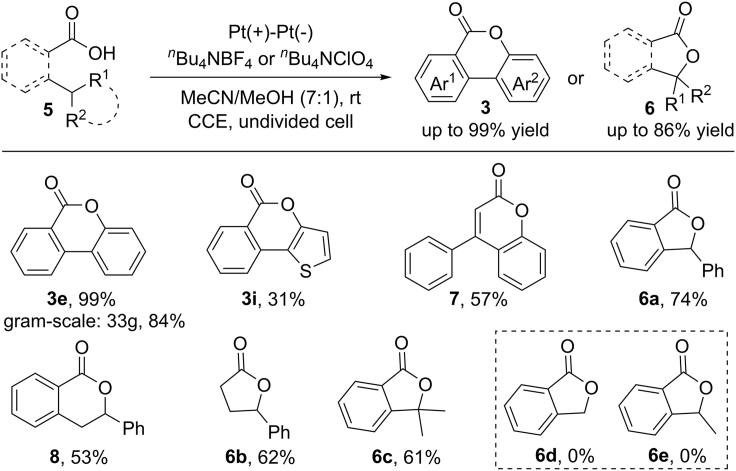
Electrochemical Dehydrogenative Lactonization of 2-Arylbenzoic and 2-Alkylbenzoic Acids
Scheme 8
Scheme 8
Electrochemical Dehydrogenative Lactonization of 2-Arylbenzoic and 2-Alkylbenzoic Acids
Scheme 9
Scheme 9
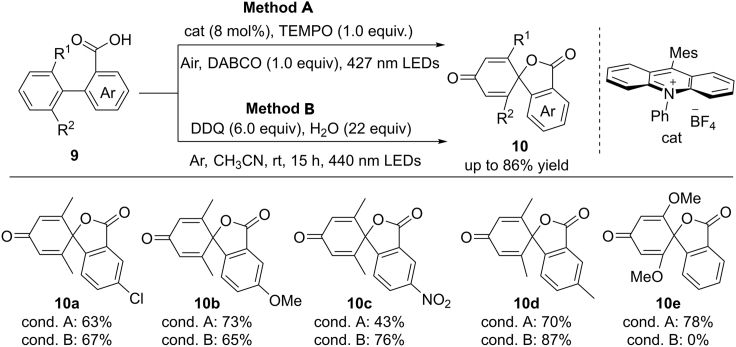
Visible Light-Induced Dearomatization of Biaryl Compounds
Scheme 10
Scheme 10
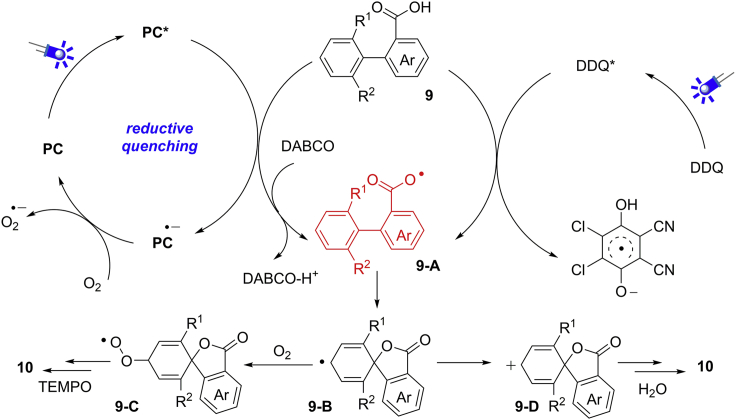
Proposed Mechanism for Radical Dearomatization of Biaryl Compounds
Scheme 11
Scheme 11
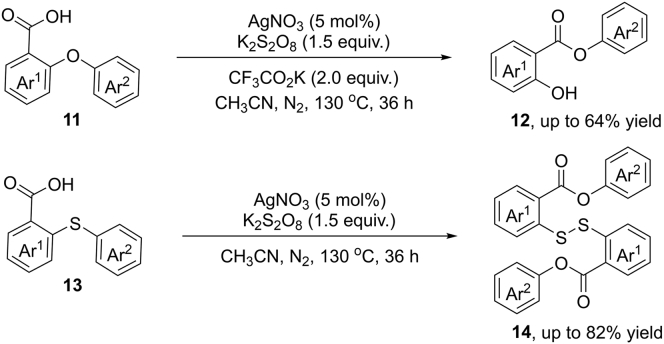
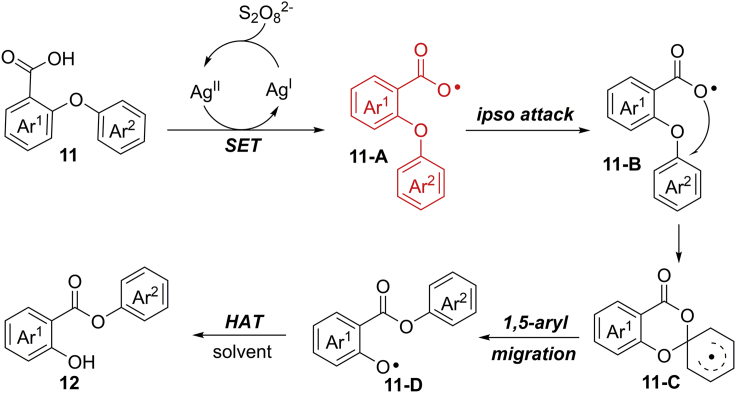
1,5-Aryl Migration of 2-Aryloxybenzoic Acids and 2-(Arylthio)benzoic Acids
Scheme 12
Scheme 12
Proposed Mechanism of Silver-Catalyzed 1,5-Aryl Migration Process
Scheme 13
Scheme 13
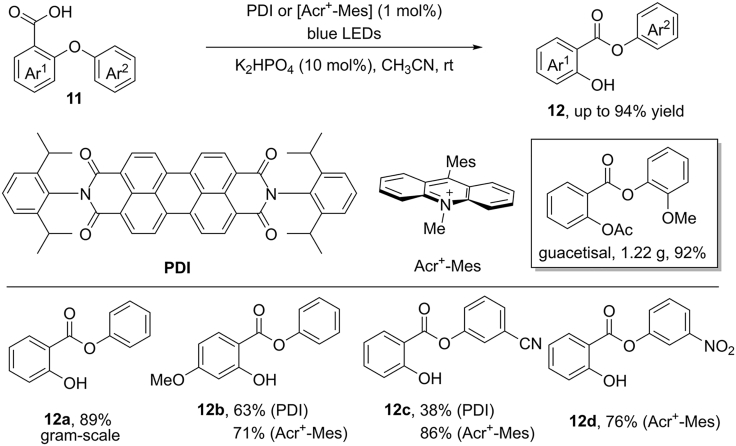
Visible-Light-Induced 1,5-Aryl Migration
Scheme 14
Scheme 14
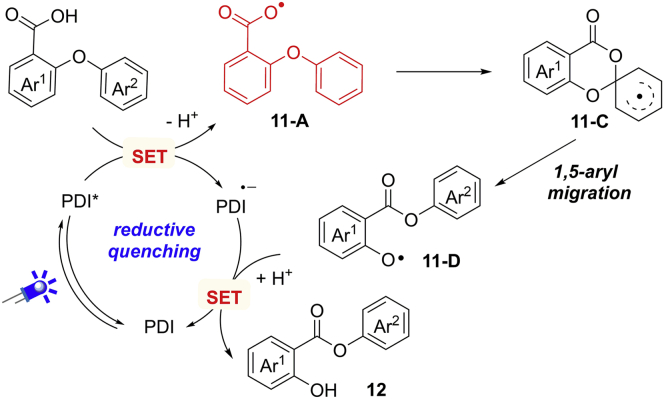
Possible Mechanism for Visible-Light-Induced 1,5-Aryl Migration
Scheme 15
Scheme 15
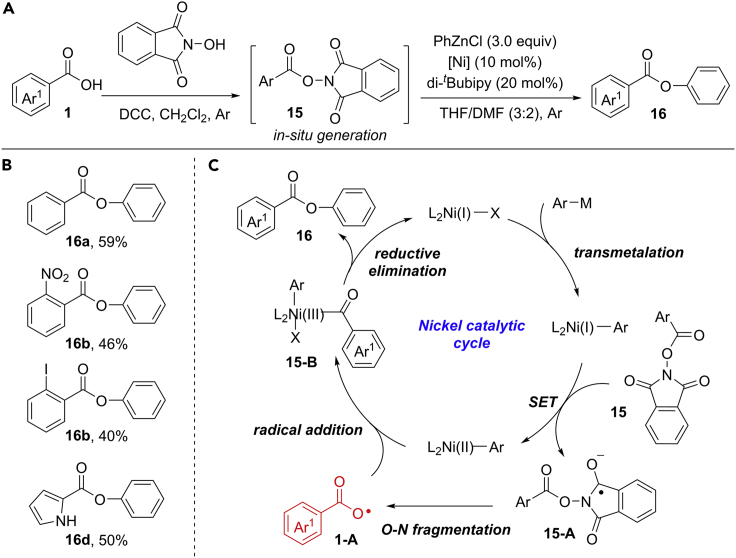
Aryl Carboxylic Radical-Mediated C−O Cross-Coupling Reaction
Scheme 16
Scheme 16
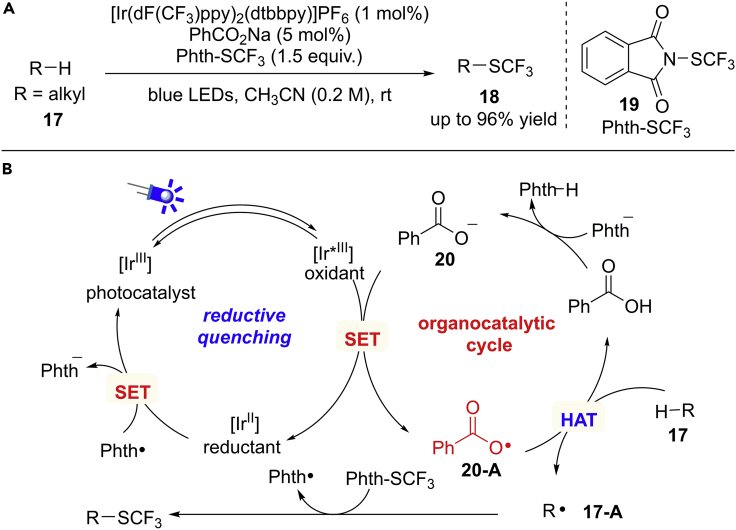
Visible-Light-Induced Trifluoromethylthiolation and Proposed Mechanism
Scheme 17
Scheme 17
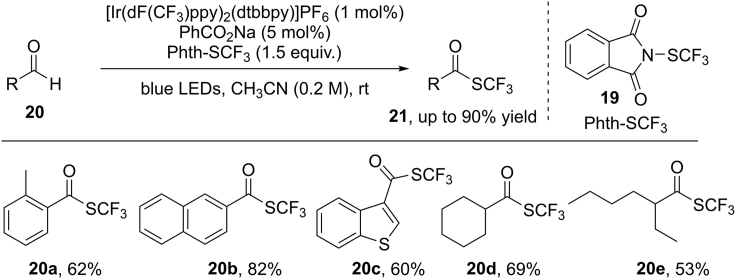
Visible-Light-Induced Trifluoromethylthiolation of Aldehydes
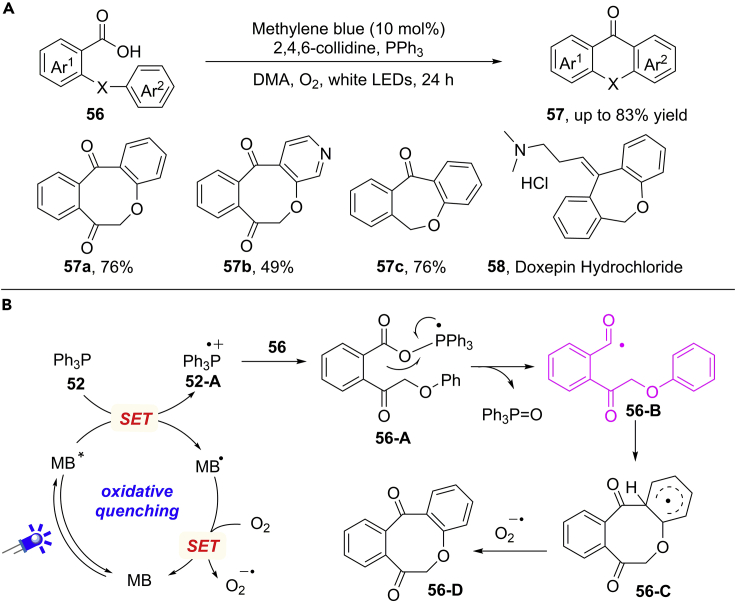
Scheme 18
Scheme 18
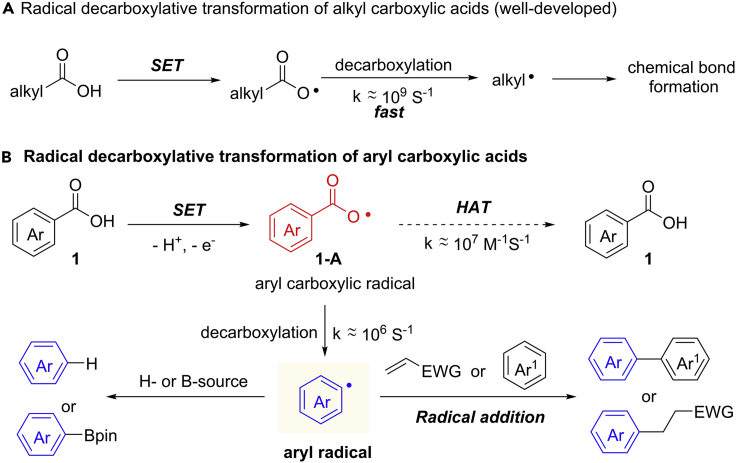
Radical Decarboxylative Transformation of Alkyl and Aryl Carboxylic Acids
Scheme 19
Scheme 19
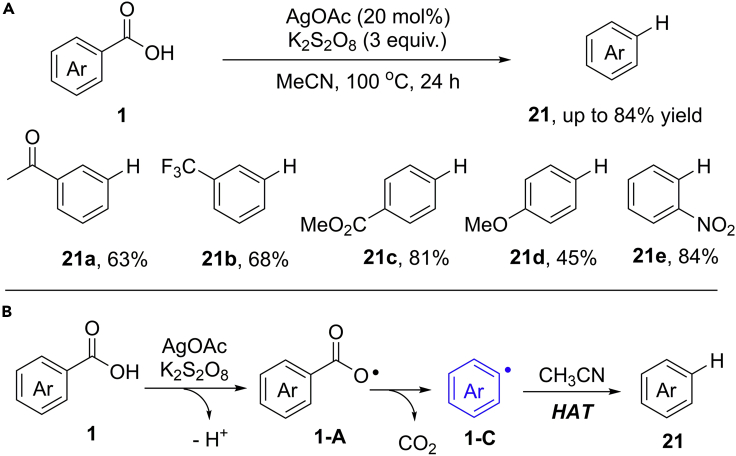
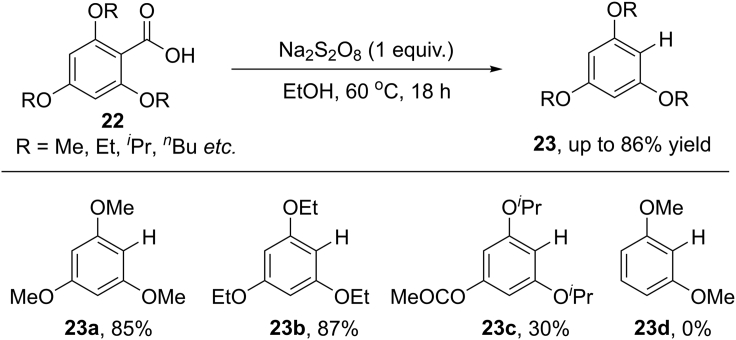
AgOAc-Catalyzed Oxidative Protodecarboxylation of Benzoic Acids
Scheme 20
Scheme 20
Transition-Metal-Free Protodecarboxylation of Benzoic Acids.
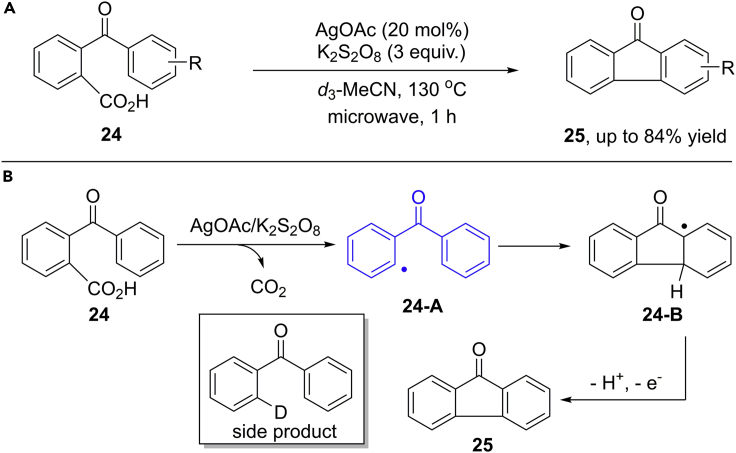
Scheme 21
Scheme 21
Silver (I)-Catalyzed Decarboxylation/Cyclization Reaction and Reaction Mechanism.
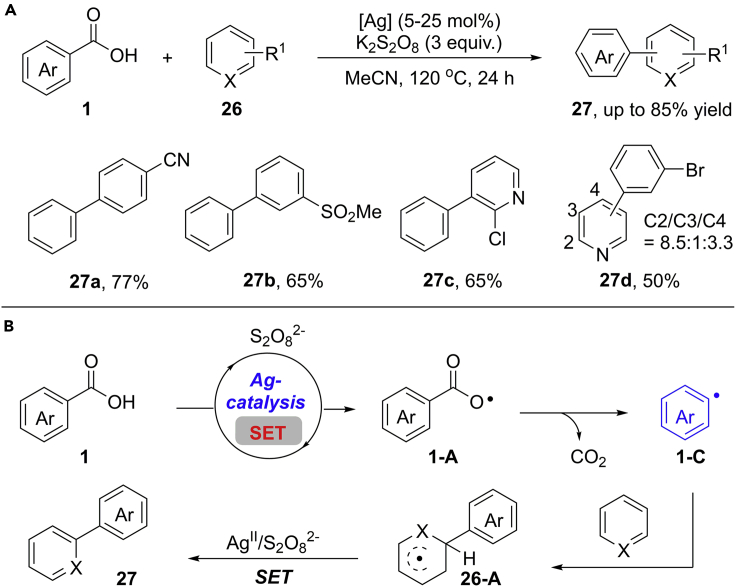
Scheme 22
Scheme 22
Decarboxylative Arylation of (Hetero)arenes and Proposed Mechanism.
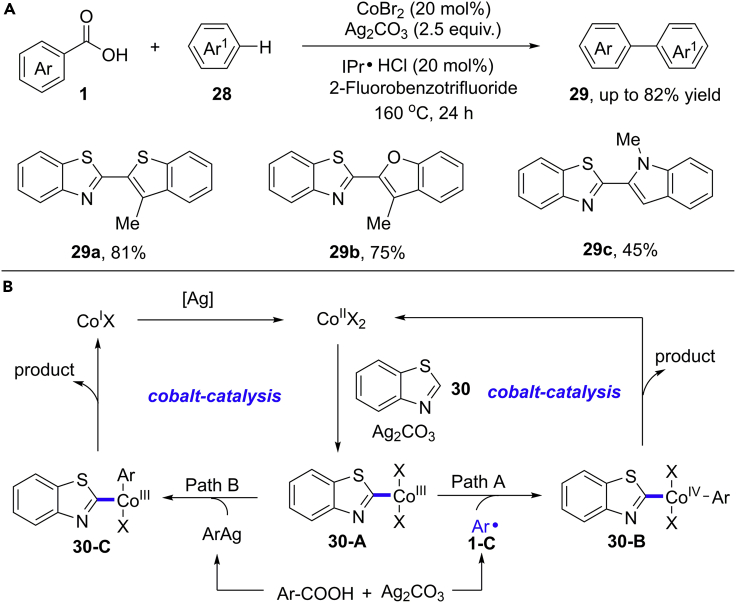
Scheme 23
Scheme 23
Decarboxylative Arylation of (Hetero)arenes and Proposed Mechanism.
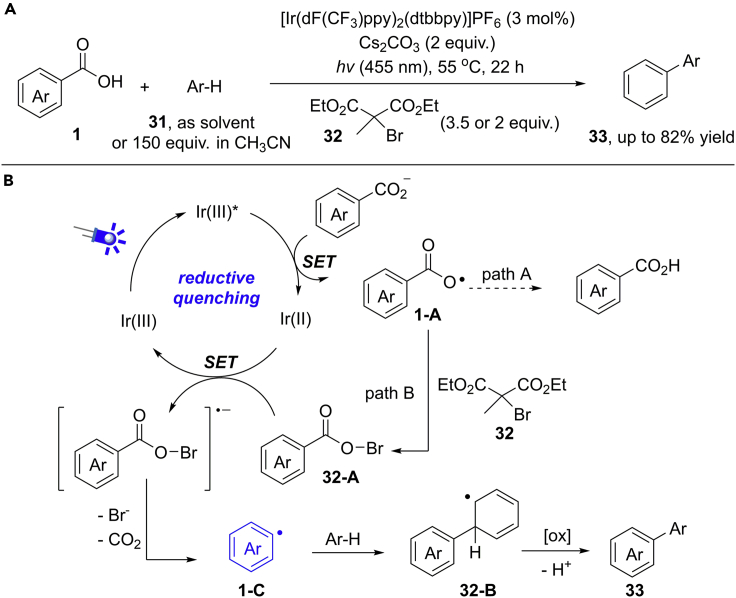
Scheme 24
Scheme 24
Visible-Light-Induced Decarboxylative Arylation of Arenes and Possible Mechanism.
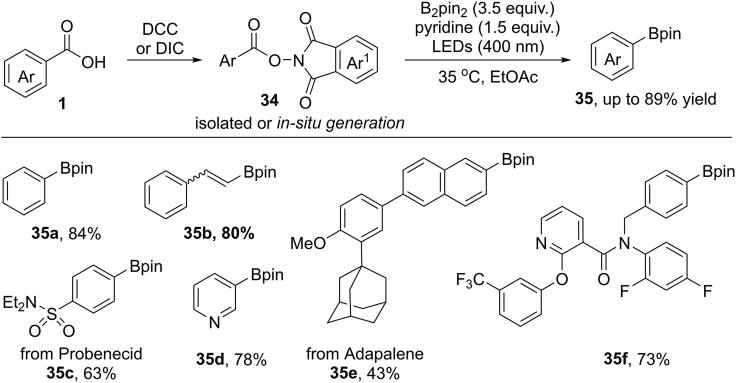
Scheme 25
Scheme 25
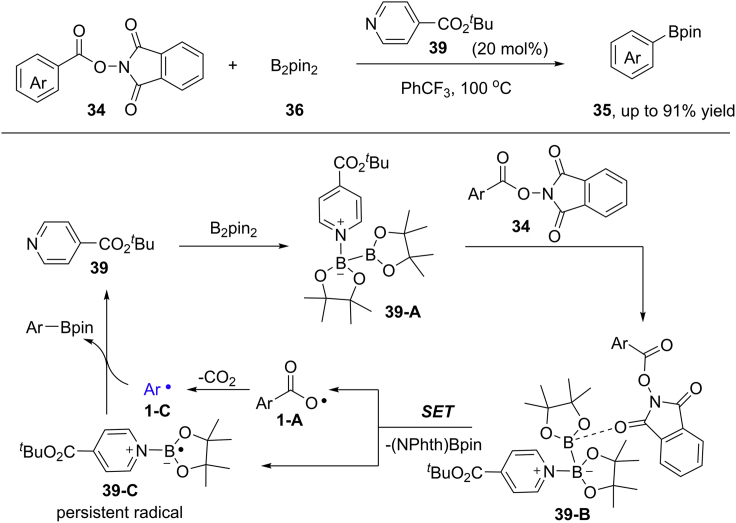
Photocatalytic Decarboxylative Borylation of N-Hydroxyphthalimide Esters.
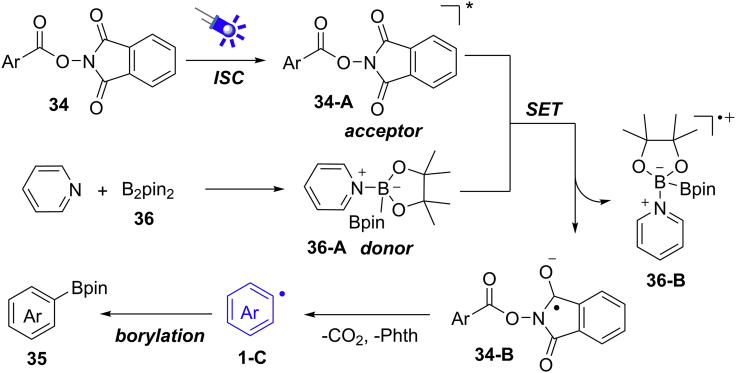
Scheme 26
Scheme 26
Possible Mechanism of Photocatalytic Decarboxylative Borylation.
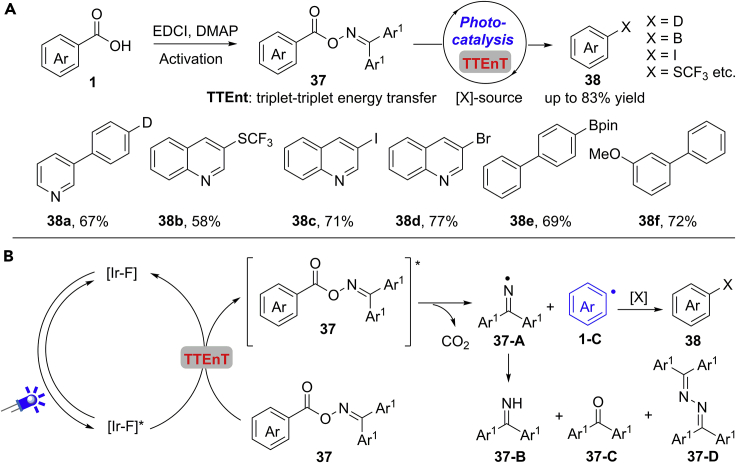
Scheme 27
Scheme 27
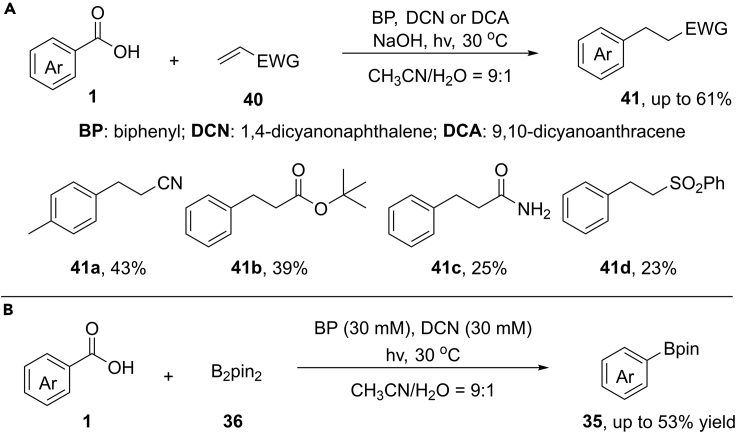
Photocatalytic Decarboxylative Functionalization Reactions.
Scheme 28
Scheme 28
Decarboxylative Borylation of N-Hydroxyphthalimide Esters.
Scheme 29
Scheme 29
Decarboxylative Radical Addition, Borylation, and Reduction.
Scheme 30
Scheme 30
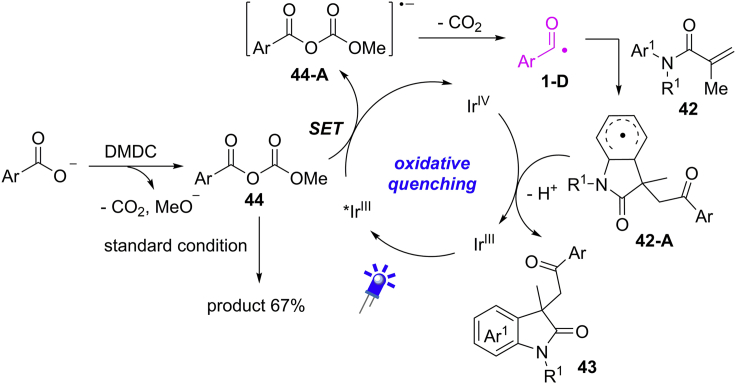
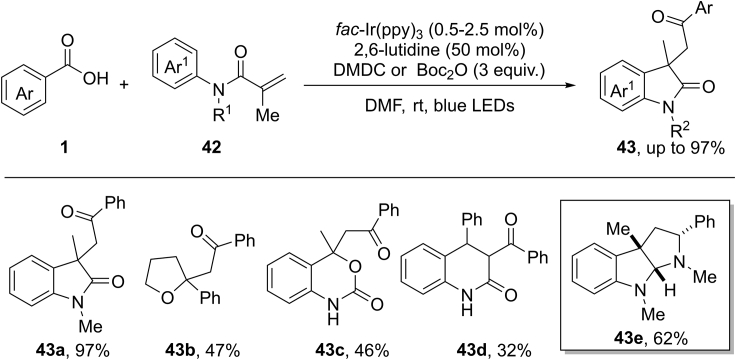
Visible-Light-Induced Radical Acylarylation of Methacrylamides.
Scheme 31
Scheme 31
Proposed Mechanism of Light-Induced Radical Acylarylation of Methacrylamides.
Scheme 32
Scheme 32
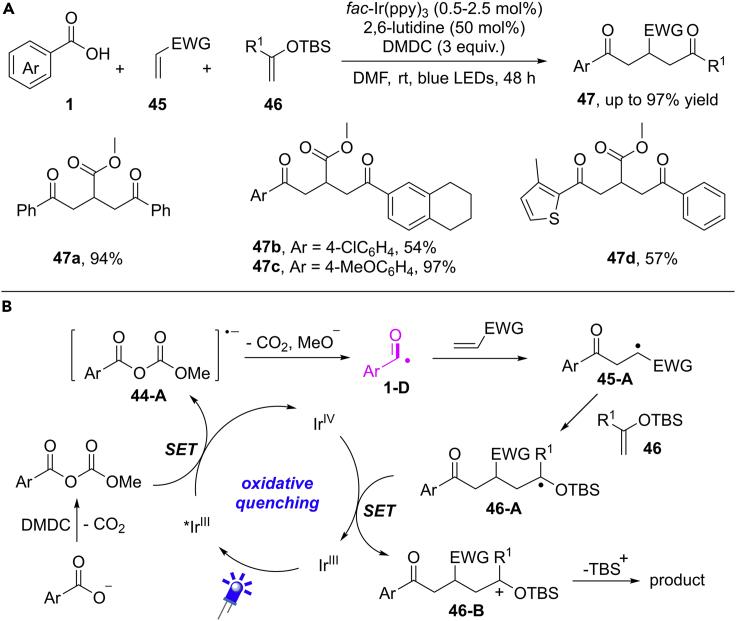
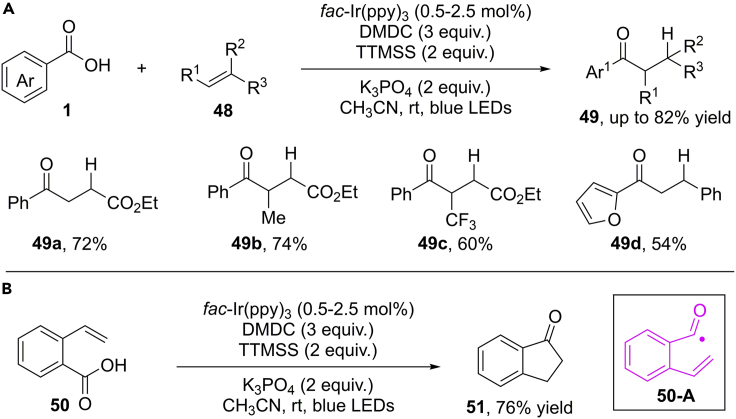
Visible-Light-Induced Multicomponent Reaction of Benzoic Acids.
Scheme 33
Scheme 33
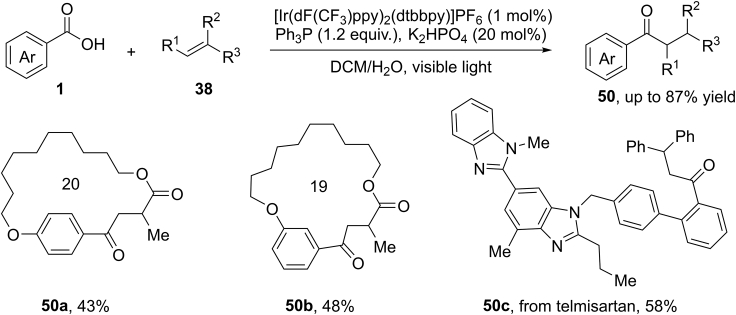
Visible-Light-Induced Photocatalytic Hydroacylation of Alkenes.
Scheme 34
Scheme 34
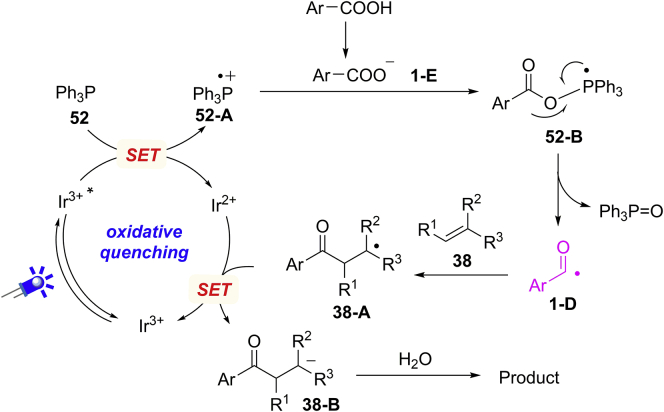
Visible-Light-Induced Deoxygenative Functionalization of Aromatic Carboxylic Acids.
Scheme 35
Scheme 35
Proposed Mechanism for Deoxygenative Functionalization of Carboxylic Acids
Scheme 36
Scheme 36
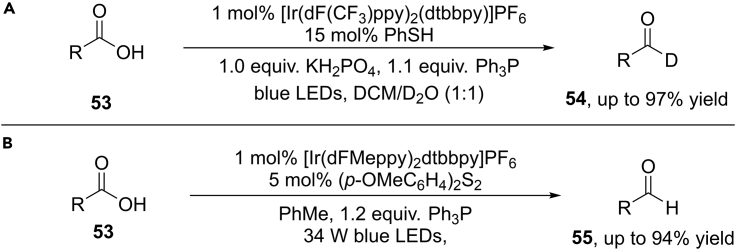
Visible-Light-Induced Deoxygenative Deuteration of Carboxylic Acids.
Scheme 37
Scheme 37
Visible-Light-Induced Intramolecular Acyl Radical Cyclization.

References

    1. Ackermann L. Carboxylate-assisted transition-metal-catalyzed C−H bond functionalizations: mechanism and scope. Chem. Rev. 2011;111:1315–1345. - PubMed
    1. Ackermann L. Metalla-electrocatalyzed C−H activation by earth-abundant 3d metals and beyond. Acc. Chem. Res. 2020;53:84–104. - PubMed
    1. Agasti S., Maiti S., Maity S., Anniyappan M., Talawar M.B., Maiti D. Bismuth nitrate as a source of nitro radical in ipso-nitration of carboxylic acids. Polyhedron. 2019;72:120–124.
    1. Arroniz C., Denis J.G., Ironmonger A., Rassias G., Larrosa I. An organic cation as a silver(i) analogue for the arylation of sp2 and sp3 C–H bonds with iodoarenes. Chem. Sci. 2014;5:3509–3514.
    1. Banerjee A., Lei Z., Ngai M.Y. Acyl radical chemistry via visible-light photoredox catalysis. Synthesis. 2019;51:303–333. - PMC - PubMed

LinkOut - more resources