


The role of sequestosome 1/p62 protein in amyotrophic lateral sclerosis and frontotemporal dementia pathogenesis
- PMID: 32594029
- PMCID: PMC7749485
- DOI: 10.4103/1673-5374.284977
The role of sequestosome 1/p62 protein in amyotrophic lateral sclerosis and frontotemporal dementia pathogenesis
Abstract
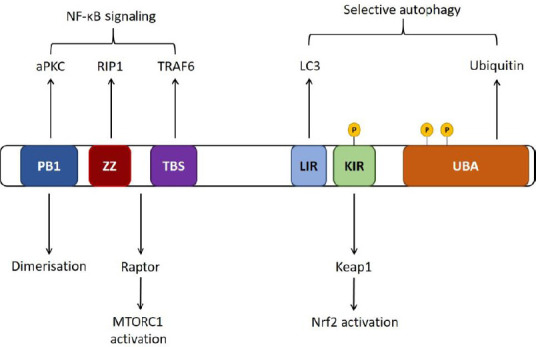
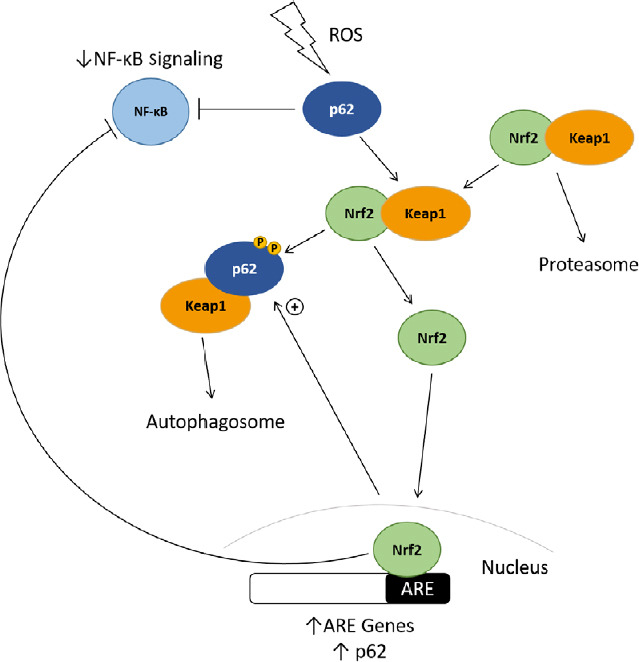
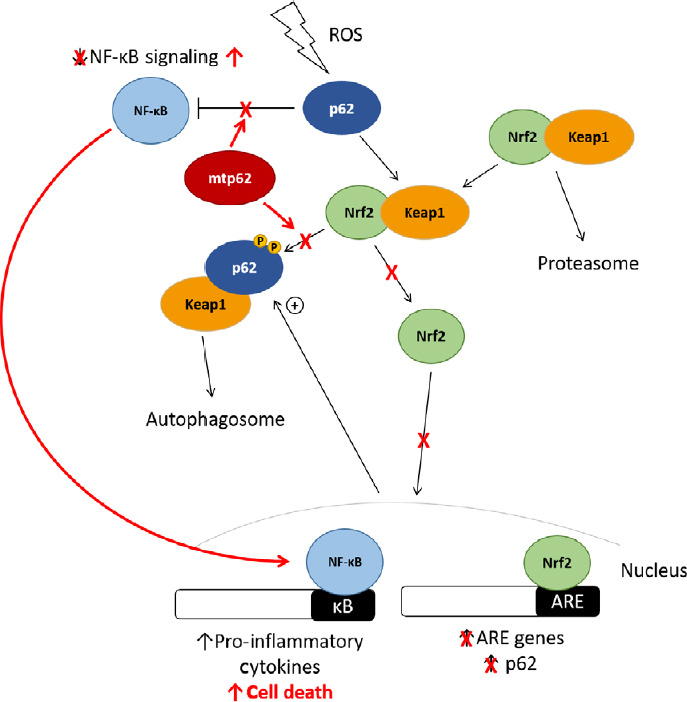
Amyotrophic lateral sclerosis and frontotemporal lobar degeneration are multifaceted diseases with genotypic, pathological and clinical overlap. One such overlap is the presence of SQSTM1/p62 mutations. While traditionally mutations manifesting in the ubiquitin-associated domain of p62 were associated with Paget's disease of bone, mutations affecting all functional domains of p62 have now been identified in amyotrophic lateral sclerosis and frontotemporal lobar degeneration patients. p62 is a multifunctional protein that facilitates protein degradation through autophagy and the ubiquitin-proteasome system, and also regulates cell survival via the Nrf2 antioxidant response pathway, the nuclear factor-kappa B signaling pathway and apoptosis. Dysfunction in these signaling and protein degradation pathways have been observed in amyotrophic lateral sclerosis and frontotemporal lobar degeneration, and mutations that affect the role of p62 in these pathways may contribute to disease pathogenesis. In this review we discuss the role of p62 in these pathways, the effects of p62 mutations and the effect of mutations in the p62 modulator TANK-binding kinase 1, in relation to amyotrophic lateral sclerosis-frontotemporal lobar degeneration pathogenesis.
Keywords: aggregate/inclusion body formation; amyotrophic lateral sclerosis-frontotemporal lobar degeneration; autophagy; cell signaling; mitophagy; p62/SQSTM1; protein degradation.
Conflict of interest statement
None
Figures
References
-
- Alves S, Cormier-Dequaire F, Marinello M, Marais T, Muriel MP, Beaumatin F, Charbonnier-Beaupel F, Tahiri K, Seilhean D, El Hachimi K, Ruberg M, Stevanin G, Barkats M, den Dunnen W, Priault M, Brice A, Durr A, Corvol JC, Sittler A. The autophagy/lysosome pathway is impaired in SCA7 patients and SCA7 knock-in mice. Acta Neuropathol. 2014;128:705–722. - PubMed
-
- Arai T, Nonaka T, Hasegawa M, Akiyama H, Yoshida M, Hashizume Y, Tsuchiya K, Oda T, Ikeda K. Neuronal and glial inclusions in frontotemporal dementia with or without motor neuron disease are immunopositive for p62. Neurosci Lett. 2003;342:41–44. - PubMed
-
- Babu JR, Geetha T, Wooten MW. Sequestosome 1/p62 shuttles polyubiquitinated tau for proteasomal degradation. J Neurochem. 2005;94:192–203. - PubMed
-
- Ramesh Babu J, Lamar Seibenhener M, Peng J, Strom AL, Kemppainen R, Cox N, Zhu H, Wooten MC, Diaz-Meco MT, Moscat J, Wooten MW. Genetic inactivation of p62 leads to accumulation of hyperphosphorylated tau and neurodegeneration. J Neurochem. 2008;106:107–120. - PubMed
Publication types
LinkOut - more resources
Full Text Sources
